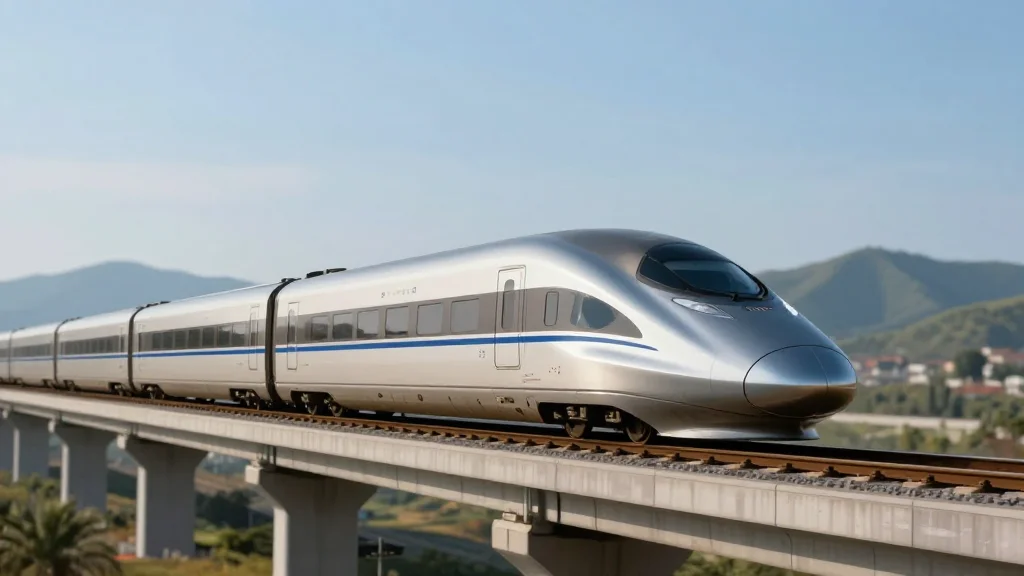
Renfe Suspends Plans for High-Speed Service to Paris
Why It Matters
The suspension delays a major trans‑European corridor, limiting passenger options ahead of the Paris Olympics and exposing regulatory bottlenecks that could curb rail market integration.
Key Takeaways
- •Renfe returns reserved high‑speed paths to France
- •Talgo series 106 approval delays stall Paris service
- •Barcelona‑Paris launch missed 2024 Olympic deadline
- •Existing cross‑border routes use Alstom series 100
- •Regulatory uncertainty hampers European rail expansion
Pulse Analysis
Renfe’s decision to suspend its high‑speed service to Paris underscores the growing complexity of rolling‑stock certification across Europe. The Talgo series 106, marketed as "Avril," promises higher speeds and greater capacity, but its entry into the French network requires safety validation from the European Union Agency for Railways (ERA). Delays in this process have forced Renfe to relinquish the train‑paths it had secured for a direct Barcelona‑Paris line, a route that was intended to capture Olympic‑related travel demand and to compete with airlines on a lucrative corridor.
The operational impact extends beyond the Paris link. Renfe’s existing cross‑border services—Madrid‑Marseille and Barcelona‑Lyon—continue with Alstom’s series 100 trains, yet the stalled projects to connect Barcelona with Toulouse and Paris limit the operator’s ability to expand its market share in France. Meanwhile, new entrant Le Train is leveraging the same Talgo series 106 for its own high‑speed services, highlighting a competitive landscape where certification timelines can become decisive factors. The postponement also reduces the anticipated passenger flow that would have supported regional economies and tourism ahead of the 2024 Games.
At a strategic level, the episode illustrates the broader challenges facing European rail operators seeking to harmonize fleets across borders. While the ERA’s safety framework aims to ensure uniform standards, the lengthy approval cycles can deter investment and slow network integration. Operators may need to adopt dual‑certified rolling stock or negotiate interim agreements to mitigate such risks. For policymakers, streamlining certification while maintaining safety could accelerate the rollout of high‑speed corridors, fostering a more connected and competitive European rail market.
Renfe suspends plans for high-speed service to Paris
Comments
Want to join the conversation?
Loading comments...