Rescued by the Welder’s Whip and Anchored by the Painter’s Spray Gun
Companies Mentioned
Why It Matters
Escalating material and energy costs will push U.S. maritime operators toward costly life‑extension projects, while limited shipyard capacity threatens timely delivery of both defense and commercial vessels. The funding gap underscores the strategic risk of falling behind global shipbuilding competitors.
Key Takeaways
- •U.S. shipbuilding grants total $657 million for ferry upgrades and emissions.
- •Domestic ATB conversions cut costs to one‑third versus new builds.
- •Aluminum price surge from Saudi plant shutdown raises U.S. construction expenses.
- •U.S. Navy and Coast Guard contracts will strain limited shipyard capacity.
Pulse Analysis
The 2027 Maritime budget’s $1.5 trillion allocation signals a federal push to revitalize America’s naval and commercial fleets, yet the reality on the slipway tells a different story. Energy price spikes—exacerbated by Iranian drone attacks on Saudi chemical facilities—have already driven up raw material costs, notably aluminum, which feeds directly into ship hull construction. As a result, shipbuilders are seeing cost overruns of 30‑plus percent, prompting owners to seek cheaper alternatives such as life‑extension conversions rather than new builds.
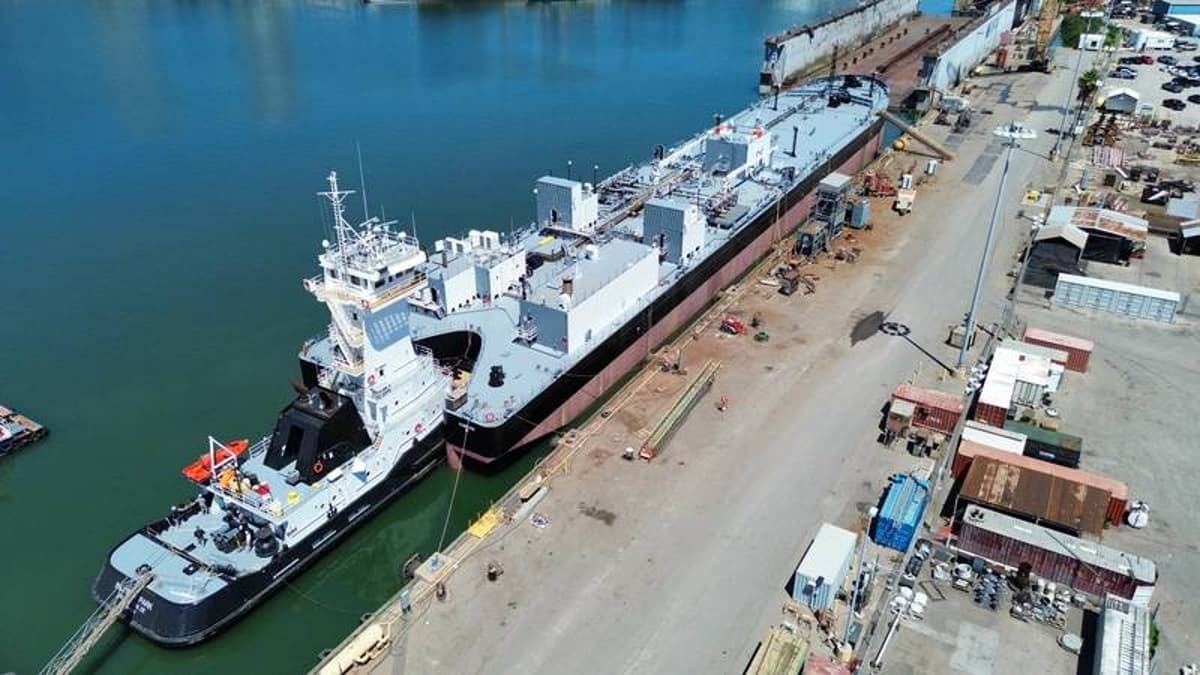
Amtech’s recent ATB Battery Park & MAM 141 conversion illustrates how retrofitting can deliver a 15‑year service life at roughly one‑third the price of a brand‑new barge‑tug pair. By applying Advanced Polymers Coatings Marine Line 784—a high‑performance polymer coating previously used only abroad—Amtech achieved chemical‑resistant tanks capable of handling a broader cargo mix, from caustic soda to bio‑fuels. This project underscores a broader industry trend: leveraging existing hulls, modern AI navigation, and domestic coating technology to offset soaring construction expenses while maintaining compliance with evolving emission standards.
However, the surge in defense contracts—from new ice‑breakers to autonomous logistics vessels—will consume much of the limited dry‑dock capacity in U.S. yards. The $657 million ferry grant, while beneficial for regional connectivity, adds another layer of demand on already strained facilities. Stakeholders must therefore balance immediate retrofit opportunities with long‑term workforce development and infrastructure investment, or risk a widening capability gap that could erode America’s maritime competitiveness.
Rescued by the Welder’s Whip and Anchored by the Painter’s Spray Gun
Comments
Want to join the conversation?
Loading comments...