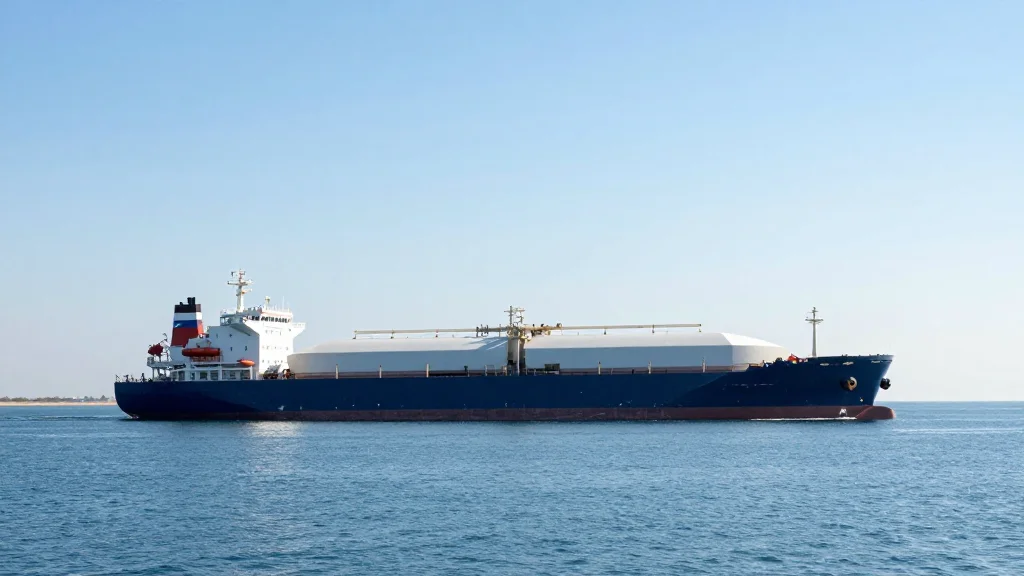
Revenue for Russian LNG Exports Decreases as Shift to Asia Doubles Costs
Why It Matters
Doubling transport costs threaten Russia’s LNG earnings and could reshape global gas supply dynamics, pressuring Asian buyers with higher prices.
Key Takeaways
- •EU bans Russian LNG imports completely by 2027
- •India freight costs average $3 per mmBtu, double Europe
- •Northern Sea Route costs $3.8 per mmBtu, most expensive
- •Suez Canal route cheapest at $2.6 per mmBtu
Pulse Analysis
The European Union’s decision to eliminate Russian liquefied natural gas imports by 2027 marks a decisive shift in the continent’s energy strategy, forcing Moscow to pivot toward Asian markets. While the move aligns with broader sanctions aimed at curbing revenue for the war in Ukraine, it also exposes Russian exporters to longer voyages and higher freight rates. Asian buyers, particularly in India and China, now face transport costs that are roughly double those to Europe, compressing margins and potentially limiting the volume Russia can sell at competitive prices.
Logistics underpin the new cost structure. A Yamal LNG cargo to Europe travels 17‑20 days, costing $1‑$1.5 per million British thermal units (mmBtu). In contrast, routes to Asia stretch 50‑80 days, with the Suez Canal offering the lowest freight at $2.6‑$2.7 per mmBtu after trans‑shipment in Murmansk. The Northern Sea Route, once touted as a strategic advantage, now costs $3.3‑$3.8 per mmBtu due to ice‑class tanker scarcity and higher tonnage fees. Even optimized NSR‑Kamchatka combos only shave a few cents off the per‑mmBtu price, underscoring the steep premium Asian customers must absorb.
The broader market implications are significant. Higher Russian LNG prices could accelerate Asian importers’ shift toward alternative suppliers such as the United States, Qatar, or Australia, reshaping global trade flows. For Russia, the revenue dip may prompt a reassessment of its Arctic shipping investments and a push for more favorable financing or subsidies to offset freight expenses. Meanwhile, European buyers are likely to deepen contracts with non‑Russian sources, reinforcing the continent’s diversification agenda. In this evolving landscape, cost‑effective logistics will be as decisive as the gas itself in determining market share.
Revenue for Russian LNG Exports Decreases as Shift to Asia Doubles Costs
Comments
Want to join the conversation?
Loading comments...