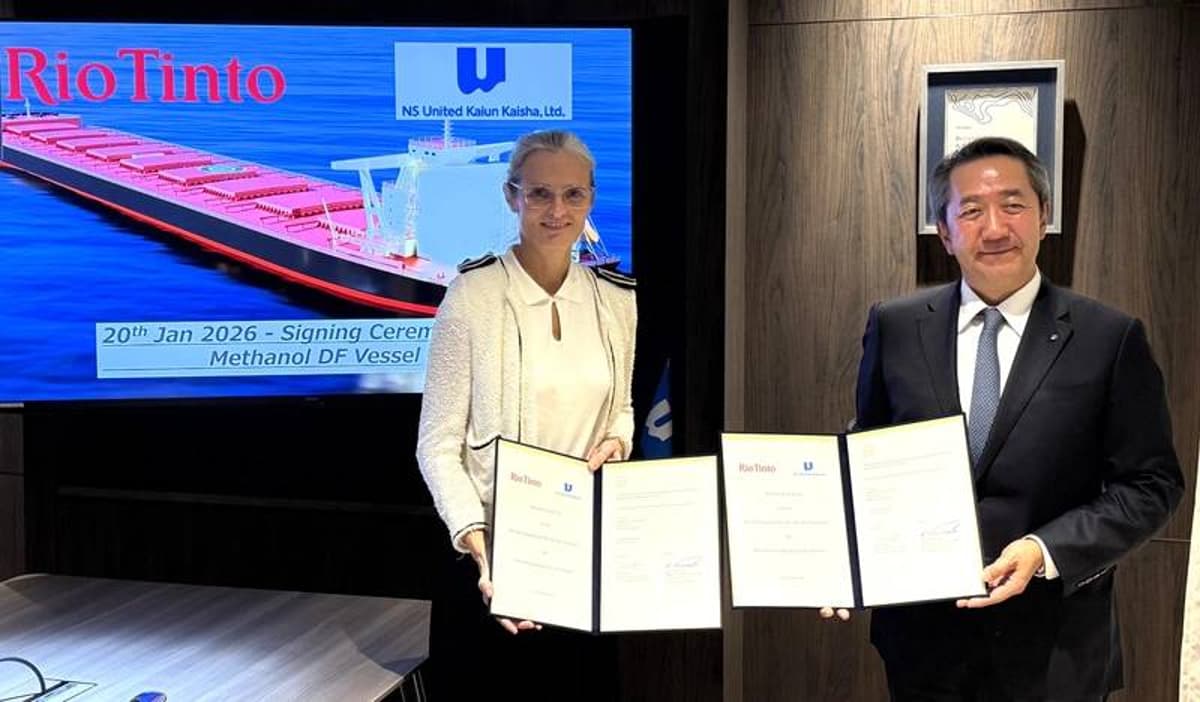
Rio Tinto Charters Two Methanol-Capable Newcastlemax Bulk Carriers
Companies Mentioned
Why It Matters
Securing methanol‑capable bulk carriers gives Rio Tinto a versatile, lower‑carbon transport option, helping it meet tightening emissions targets and maintain competitive shipping costs.
Key Takeaways
- •Rio Tinto charters two methanol‑capable Newcastlemax vessels from 2028.
- •Dual‑fuel ships can run on methanol, diesel, or other fuels.
- •Charter supports Rio Tinto’s flexible, low‑carbon freight strategy.
- •Regulators pushing decarbonisation increase demand for alternative‑fuel vessels.
Pulse Analysis
The global shipping sector is under mounting pressure to cut greenhouse‑gas emissions, with the International Maritime Organization targeting a 40% reduction by 2030 compared with 2008 levels. Methanol, produced from natural gas or renewable sources, has emerged as a promising transitional fuel because it burns cleaner than heavy fuel oil and can be stored on existing tankers with modest modifications. Shipowners are increasingly offering dual‑fuel vessels that can switch between methanol and conventional bunker, providing operators with a hedge against volatile fuel markets while aligning with future regulatory frameworks.
Against this backdrop, Rio Tinto’s charter of two Newcastlemax bulk carriers from NS United Kaiun Kaisha marks a strategic bet on fuel flexibility. The vessels, slated for delivery from 2028, are designed to run on methanol as well as traditional marine diesel, allowing the miner to route iron ore and other bulk commodities on a lower‑carbon pathway without committing to a single fuel technology. By locking in capacity now, Rio Tinto not only secures predictable shipping rates but also signals confidence in methanol’s commercial viability as the industry’s fuel mix evolves.
The agreement underscores a broader shift in the value chain, where commodity producers, shipowners, and fuel suppliers are collaborating to de‑risk the transition to greener propulsion. For mining companies, access to methanol‑capable ships can reduce scope 3 emissions and improve ESG scores, which are increasingly tied to investor capital. Meanwhile, shipowners benefit from long‑term charters that fund the retrofitting or construction of dual‑fuel assets, accelerating the build‑out of alternative‑fuel fleets. As technologies such as ammonia and hydrogen mature, the flexibility built into today’s contracts will likely become a template for future low‑carbon logistics.
Rio Tinto Charters Two Methanol-Capable Newcastlemax Bulk Carriers
Comments
Want to join the conversation?
Loading comments...