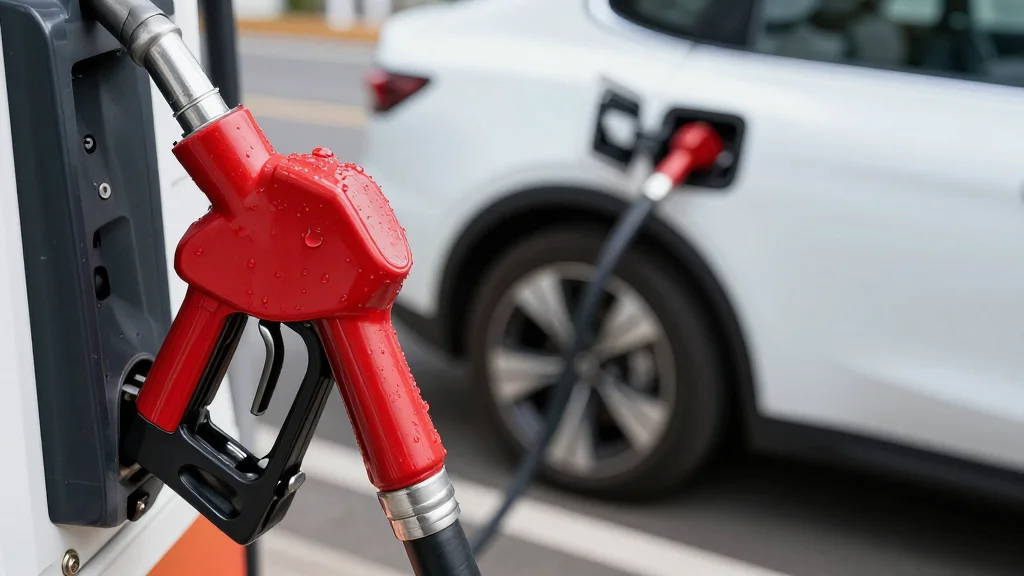
Rising Gas Prices Make the Market Ripe for Electric Vehicles, but US Automakers Can’t Seize the Moment
Companies Mentioned
Why It Matters
The lagging EV adoption threatens U.S. climate targets and erodes the country’s competitive edge against foreign manufacturers, especially as global EV demand accelerates.
Key Takeaways
- •Gasoline averaged >$4/gal, briefly boosting fuel‑cost concerns.
- •US EV market share dropped to 5.8% in Q1 2026.
- •Federal EV tax credit eliminated, reducing buyer incentives.
- •Major US makers cancelled low‑price EVs, shrinking affordable options.
- •Analysts warn prolonged price spikes needed for sizable EV adoption.
Pulse Analysis
The recent surge in U.S. gasoline prices, driven by geopolitical tensions, mirrors past spikes that temporarily nudged consumers toward more fuel‑efficient vehicles. However, the modern marketplace offers a broader palette of powertrains, and research shows that brief price hikes generate only marginal shifts in purchasing patterns. Consumers typically plan vehicle purchases on a multi‑year horizon, and a one‑ or two‑month price shock rarely outweighs the perceived risk of a costly, unfamiliar technology. Consequently, the immediate impact on EV demand remains limited, even as fuel costs strain household budgets.
Compounding the price‑driven inertia, policy and product availability have moved in the opposite direction of a rapid EV transition. The 2025 repeal of the $7,500 federal tax credit for new EVs and the $4,000 credit for used models removed a key financial lever that previously softened the higher upfront cost of electric cars. Simultaneously, major U.S. manufacturers—Ford, GM, Honda, and Volkswagen—have trimmed or halted low‑price EV programs, shrinking the segment where most buyers would consider a switch. The resulting scarcity of budget‑friendly models undermines market penetration, especially for consumers most sensitive to total cost of ownership.
Globally, EV sales are accelerating, with Europe and China outpacing the United States. The U.S. risk is twofold: losing market share to foreign competitors and missing the economic benefits of a domestic clean‑transport supply chain. To reverse the trend, policymakers must restore meaningful incentives and align them with a robust portfolio of affordable EVs. Automakers, in turn, need to commit to scalable, low‑cost models that address the price barrier. Only a coordinated, long‑term strategy—supported by sustained fuel price pressure—can unlock the sizable shift that analysts predict is essential for the United States to remain a leader in the emerging electric mobility era.
Rising Gas Prices Make the Market Ripe for Electric Vehicles, but US Automakers Can’t Seize the Moment
Comments
Want to join the conversation?
Loading comments...