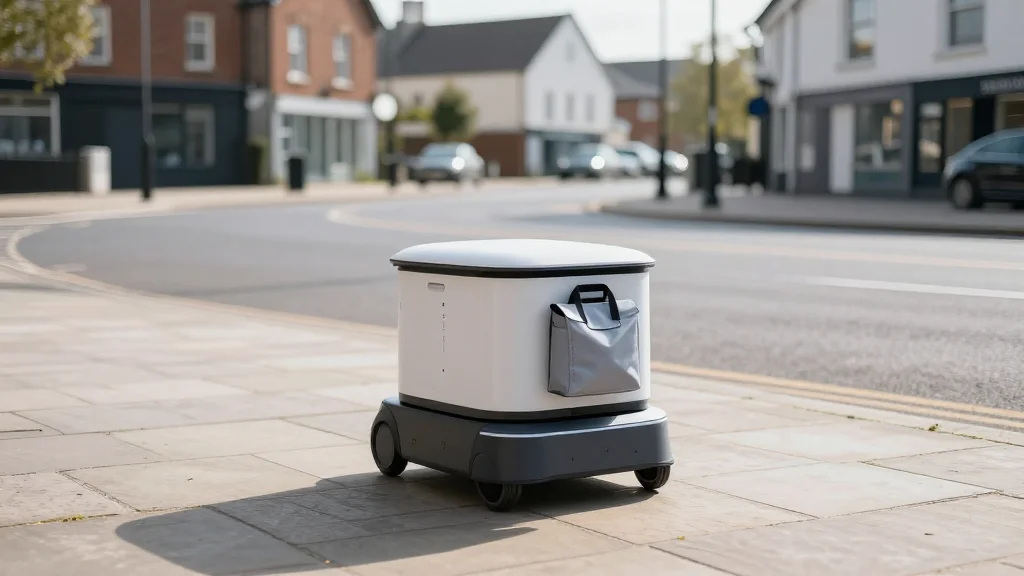
Robots Could Soon Be Delivering Your Pizza
Companies Mentioned
Why It Matters
If robots can consistently undercut human delivery costs, the model could reshape the last‑mile delivery market, pressuring traditional courier firms and accelerating automation adoption across Europe and beyond.
Key Takeaways
- •Starship’s UK market leads its global robot‑delivery deployments.
- •Robots navigate Milton Keynes’ roundabouts without human intervention.
- •Delivery cost per order drops below conventional courier rates.
- •Pilot shows 15‑minute average delivery time for groceries.
Pulse Analysis
Starship Technologies, founded in 2014 in Tallinn, has become the most visible player in autonomous last‑mile logistics. After successful pilots in the United States and Europe, the company chose Milton Keynes as its flagship UK site because the city’s compact layout and high density of roundabouts provide a rigorous testbed for navigation algorithms. By leveraging low‑speed, electric robots that travel on sidewalks, Starship sidesteps traffic congestion and reduces fuel costs, allowing it to quote delivery fees that undercut traditional courier pricing.
Operationally, the robots carry up to 10 kilograms and use a combination of LiDAR, computer vision, and GPS to map routes in real time. They can pause at traffic lights, avoid pedestrians, and even climb modest curbs, making them suitable for suburban neighborhoods. Regulatory approval in the UK has been relatively swift, as the vehicles are classified as low‑risk and operate below 5 km/h. For retailers, the model promises a 30‑40% reduction in delivery expenses, while consumers benefit from 15‑minute average wait times. However, the technology raises labor concerns, as gig‑economy drivers could see demand erode if robot fleets scale.
The broader implications extend beyond food and grocery delivery. Logistics firms are watching Starship’s progress to gauge the viability of robot fleets for parcel delivery, especially as e‑commerce volumes surge. Investors have poured over $300 million into autonomous delivery startups this year, betting on economies of scale and data‑driven route optimization. If Milton Keynes proves a sustainable micro‑market, other European cities with similar street patterns may follow, accelerating the transition toward fully automated urban logistics ecosystems.
Robots could soon be delivering your pizza
Comments
Want to join the conversation?
Loading comments...