Robots for the Rest of Us: Warehouse Automation Gets Easier
Companies Mentioned

Why It Matters
Broad adoption signals a structural shift in supply‑chain economics, helping firms curb rising labor costs and improve throughput. The trend forces technology providers to prioritize connectivity and ROI‑focused solutions.
Key Takeaways
- •52% of firms use warehouse robots in 2026, up from 48%
- •45% plan to increase robotics spending in 2026
- •Modular robots let smaller firms automate tasks without full redesign
- •Software integration now drives ROI more than hardware alone
Pulse Analysis
The surge in warehouse robot adoption reflects falling hardware prices and a maturing ecosystem of vendors offering ready‑to‑deploy solutions. According to the 2026 Peerless Research Group study, more than half of all distribution centers now field at least one autonomous unit, a jump driven primarily by persistent labor shortages and escalating wage pressures. This democratization is reshaping the cost‑benefit calculus, allowing even midsize e‑commerce operators to justify incremental automation projects that target high‑frequency, repetitive motions.
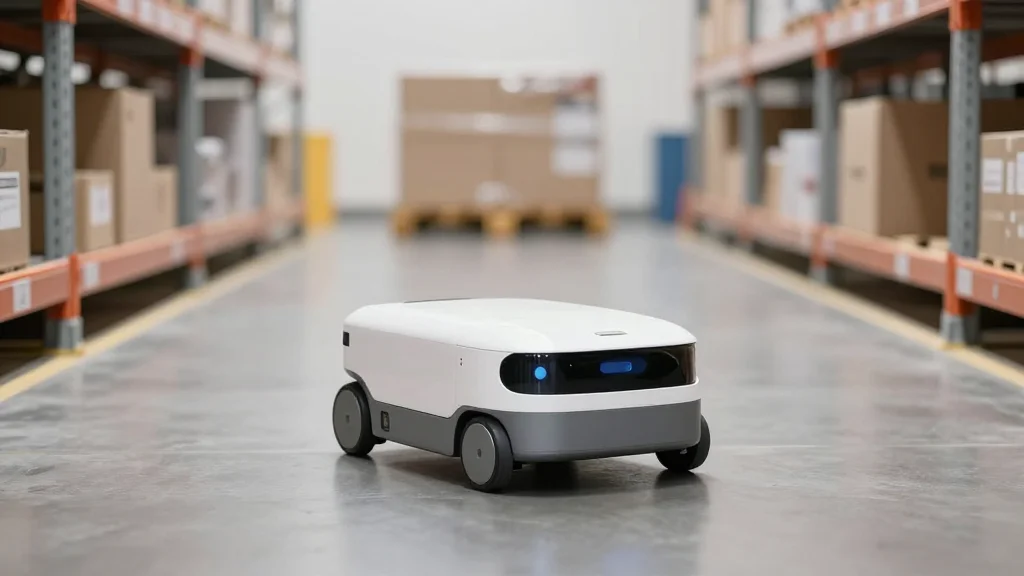
Modular, plug‑and‑play robots are the linchpin of this new wave. Companies like Piaggio Fast Forward showcase cargo‑carrying bots that can be dropped into a picking lane or a receiving dock without extensive retrofitting. Such systems address niche pain points—high SKU counts, non‑conveyable items, or irregular order profiles—while preserving human oversight. The result is a scalable model where firms start with a single use case, prove the ROI, and then expand the fleet, avoiding the all‑or‑nothing capital outlay that once deterred adoption.
However, hardware alone no longer guarantees success. As Michael Harris of Ocado Intelligent Automation notes, the real value lies in the orchestration layer that unifies disparate robots, warehouse management systems, and analytics platforms. Disconnected solutions can create silos, eroding efficiency gains and inflating integration costs. Forward‑looking operators are therefore vetting vendors on software openness, API standards, and the ability to evolve with future automation needs, ensuring that today’s robot becomes a sustainable component of a broader, connected fulfillment strategy.
Robots for the Rest of Us: Warehouse Automation Gets Easier
Comments
Want to join the conversation?
Loading comments...