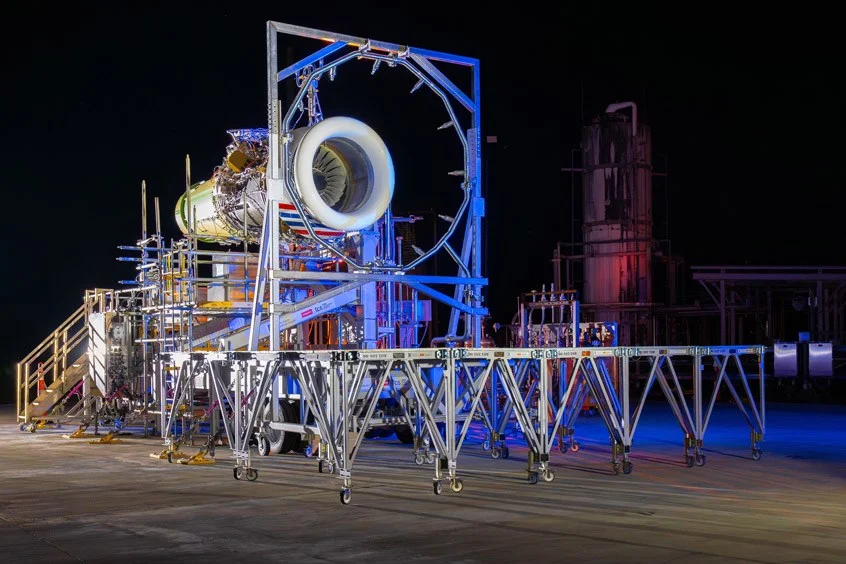
Rolls-Royce, easyJet Complete Successful 100% H2 Aeroengine Test for Future Narrowbodies
Why It Matters
The test proves hydrogen can replace conventional jet fuel in existing engine architectures, fast‑tracking carbon‑free aviation and reshaping airline fleet strategies.
Key Takeaways
- •First 100% hydrogen test at full takeoff power on a narrow‑body engine
- •Completed at NASA’s Stennis, covering startup, cruise, landing cycles
- •Provides data for Rolls‑Royce UltraFan and future hydrogen‑powered aircraft
- •Demonstrates hydrogen’s operational safety and performance parity with kerosene
- •Four‑year partnership accelerates industry’s hydrogen propulsion roadmap
Pulse Analysis
The aviation sector faces mounting pressure to cut CO₂ emissions, with the International Air Transport Association targeting net‑zero growth by 2050. Hydrogen, especially when produced from renewable electricity, has emerged as the most promising zero‑carbon fuel for short‑haul routes, offering higher energy density than batteries and the ability to use existing airport infrastructure. Yet the technology gap remains large; jet engines must be re‑engineered to handle cryogenic storage, different combustion chemistry, and new safety protocols. The recent Rolls‑Royce and easyJet milestone narrows that gap by proving a core component can run on pure hydrogen without sacrificing performance.
The test used a modified Rolls‑Royce Pearl 15 turbofan, the powerplant that currently drives many Airbus A320neo and Boeing 737 MAX families. At NASA’s Stennis Space Center the engine achieved full takeoff thrust, then completed a simulated flight envelope that included start‑up, climb, cruise, and landing phases—all on gaseous hydrogen. Engineers validated combustion stability, fuel‑flow control and thermal‑material behavior across fault scenarios, delivering data that can be fed directly into the design of the upcoming UltraFan. By keeping the engine’s architecture largely unchanged, the program shows a realistic pathway to retrofit or new‑design narrow‑body aircraft.
For airlines, the demonstration shortens the timeline to a commercially viable hydrogen fleet. easyJet, which operates a large single‑aisle network, can now model route economics that factor in hydrogen fuel costs, storage weight penalties, and potential carbon‑credit benefits. Rolls‑Royce’s data will also inform certification bodies as they draft standards for hydrogen‑fueled turbines. With major OEMs and governments pledging billions toward hydrogen production and airport retrofits, the successful test could trigger a wave of investment, positioning hydrogen as the cornerstone of the next generation of sustainable aviation.
Rolls-Royce, easyJet complete successful 100% H2 aeroengine test for future narrowbodies
Comments
Want to join the conversation?
Loading comments...