Rotor Sail Wind Propulsion Design Gains Approval for MR Tankers
Companies Mentioned
Why It Matters
The AiP provides a certified, low‑impact solution for reducing emissions in the MR tanker segment, accelerating industry adoption of wind‑assisted technology. This could help operators meet tightening regulatory targets and lower operating costs.
Key Takeaways
- •DNV granted Approval in Principle for Anemoi’s MR tanker Rotor Sail design.
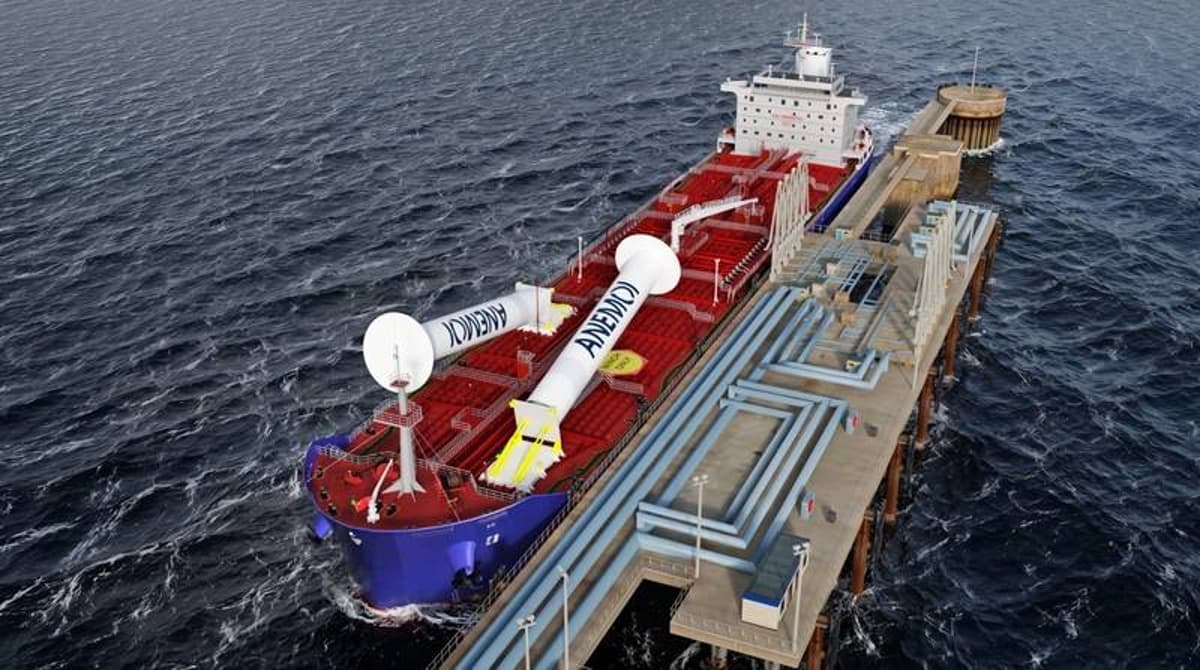
- •Two 5 × 35 m folding, explosion‑rated sails integrate without underdeck reinforcement.
- •Lightweight deck seat enables maintenance access while preserving cargo space.
- •Project shows wind‑assisted propulsion can cut EEDI/EEXI metrics for product tankers.
Pulse Analysis
The shipping industry faces mounting pressure to cut greenhouse‑gas emissions as the International Maritime Organization tightens fuel‑efficiency standards. Medium‑range product tankers, which transport refined fuels and chemicals, are especially scrutinized because they operate on tight schedules and limited deck space. Wind‑assisted propulsion, long used on bulk carriers and container ships, is emerging as a viable supplement for these vessels, offering fuel savings without sacrificing cargo capacity. By harnessing renewable wind energy, operators can improve their Energy Efficiency Design Index (EEDI) scores and defer costly retrofits.
Anemoi Marine Technologies’ latest Rotor Sail system addresses the unique constraints of MR tankers. The design incorporates two 5 × 35 m folding sails that meet explosion‑proof certifications, allowing installation on decks that handle hazardous cargoes. A lightweight deck seat eliminates the need for extensive underdeck reinforcement, preserving structural integrity and simplifying maintenance. DNV’s Approval in Principle validates the engineering calculations, including compliance with the Energy Efficiency Existing Ship Index (EEXI). The certification gives shipowners a ready‑made, safety‑approved blueprint, reducing the time and capital required for deployment.
The DNV endorsement is likely to accelerate commercial interest in wind‑assisted retrofits across the product tanker fleet, which numbers over 1,200 vessels globally. Operators can anticipate lower fuel expenditures and a clearer path to meeting upcoming carbon‑pricing regimes. Moreover, the modular nature of the Rotor Sail allows incremental adoption, letting owners test performance on a single vessel before scaling fleet‑wide. As more classification societies recognize similar designs, the market could see a wave of green‑technology investments, reshaping the economics of tanker operations for the next decade.
Rotor Sail Wind Propulsion Design Gains Approval for MR Tankers
Comments
Want to join the conversation?
Loading comments...