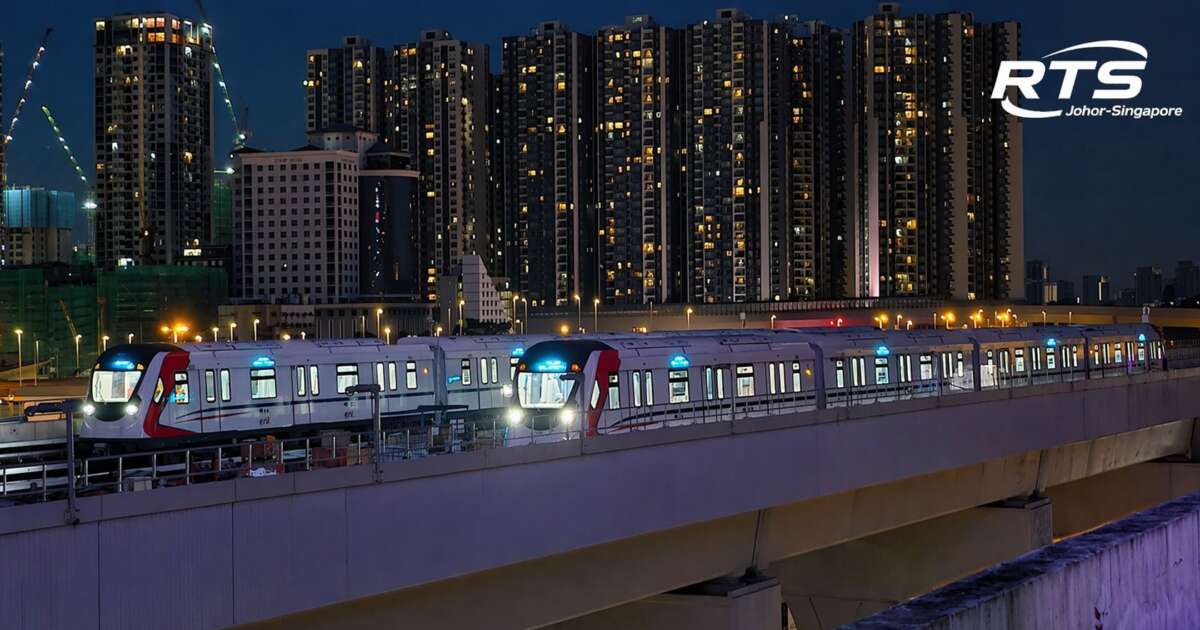
RTS Link Successfully Runs Multi-Train High-Speed Trial
Why It Matters
The trial demonstrates that the cross‑border rail can meet safety and performance targets, accelerating a major infrastructure project that will reshape daily commuting between Malaysia and Singapore. Faster, higher‑capacity service promises economic gains and reduced congestion at the Woodlands checkpoint.
Key Takeaways
- •Multi‑train high‑speed trial completed, confirming system safety
- •Regenerative braking and other key systems validated during test
- •RTS Link on schedule for Dec 2026 finish, Jan 2027 launch
- •Expected fare $4‑$5 per trip, comparable to current shuttle
- •Capacity 10,000 passengers per hour per direction
Pulse Analysis
The Johor Bahru‑Singapore Rapid Transit System (RTS) Link is a four‑kilometre, driverless, cross‑border rail corridor designed to streamline movement between Malaysia’s southern city and Singapore’s Woodlands North station. By replacing the ageing KTM Shuttle Tebrau, the RTS aims to cut travel times, increase reliability, and support the broader goal of regional integration under the ASEAN connectivity agenda. Its design capacity of 10,000 passengers per hour per direction reflects the growing demand for seamless commuter flows across the busy border.
The recent multi‑train high‑speed trial is a pivotal step toward full system readiness. Conducted under strict safety protocols, the test confirmed that multiple train sets can operate together at elevated speeds while regenerative braking systems functioned as intended. Such validation reduces technical risk and keeps the project on schedule for a December 2026 completion, with commercial operations slated for January 2027. Fare projections of roughly $4‑$5 per trip place the RTS Link competitively against existing shuttle services, offering a cost‑effective alternative for daily commuters.
Beyond the immediate commuter benefits, the RTS Link is set to generate wider economic ripple effects. Faster cross‑border travel can boost tourism, facilitate labor mobility, and attract investment to both sides of the border. The driverless technology and high capacity also position the line as a model for future regional rail projects, potentially encouraging similar initiatives in other parts of Southeast Asia. However, successful integration will depend on coordinated customs and immigration processes, as well as sustained political cooperation, to fully realize the line’s promise of reduced congestion and enhanced bilateral trade.
RTS Link successfully runs multi-train high-speed trial
Comments
Want to join the conversation?
Loading comments...