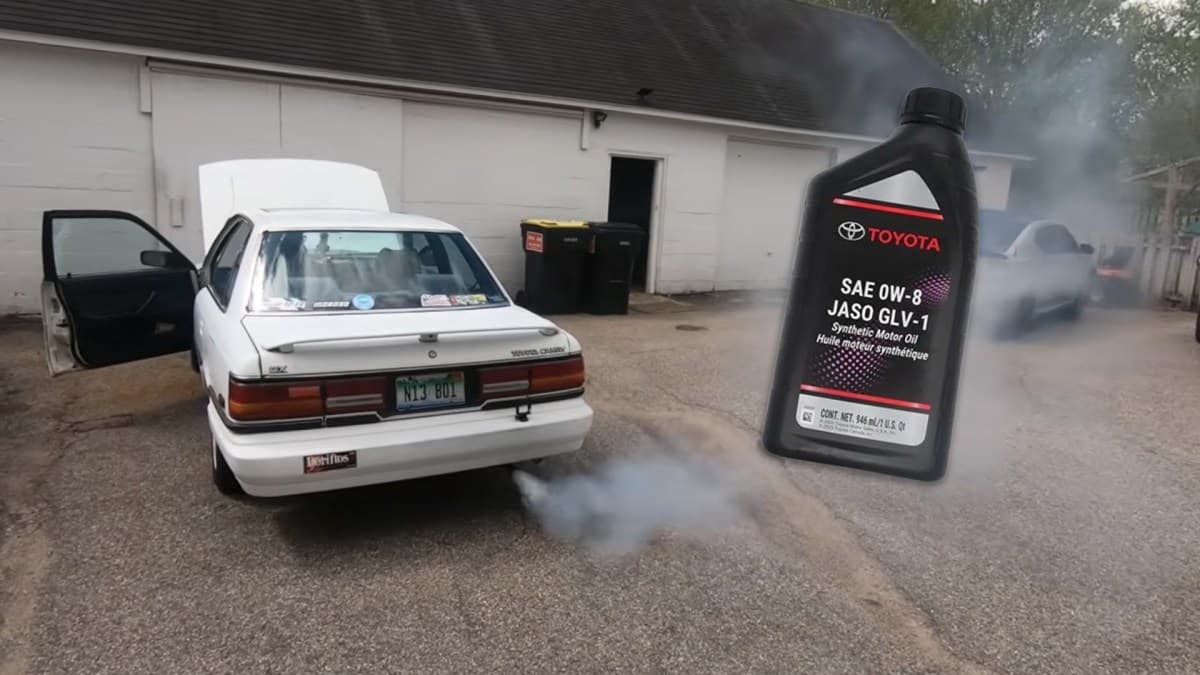
Running 0W-8 Oil in a 330,000-Mile Toyota Camry Results In Extreme Consumption
Why It Matters
The experiment highlights the mismatch between modern low‑viscosity lubricants and high‑mileage engines, warning owners of costly wear and maintenance if they ignore manufacturer specifications.
Key Takeaways
- •0W-8 oil burned 2.7 quarts over 530 miles in 1991 Camry.
- •Engine oil capacity 4.3 quarts, requiring full change under 1,000 miles.
- •Oil consumption rate equals ~37:1 fuel‑oil mix, similar to two‑stroke engines.
- •At $4.54/gal fuel and $11.50/quart oil, cost exceeds $230 per 1,000 miles.
- •Owner plans additive test; lab analysis pending to explain excessive burn.
Pulse Analysis
Modern powertrains increasingly rely on tight tolerances and hybrid assistance, prompting manufacturers to adopt ultra‑low‑viscosity oils like 0W‑8. These fluids reduce friction in newer engines designed for precise clearances, but older platforms such as the 1991 Camry’s 2.0‑liter 3S‑FE were engineered around thicker oils that provide a protective film for worn piston rings and larger bearing gaps. When a thin synthetic is forced through decades‑old wear patterns, it can bypass critical sealing surfaces, leading to rapid oil loss.
The YouTuber’s data shows the Camry drinking roughly one quart every 200 miles, translating to a 37:1 fuel‑to‑oil ratio—comparable to a two‑stroke engine mixture. At today’s national average of $4.54 per gallon of regular gasoline and $11.50 per quart of genuine 0W‑8, the combined fuel and oil expense tops $230 for every 1,000 miles driven. Beyond cost, such excessive consumption can signal accelerated wear, overheating, and potential engine failure, especially if the oil level drops below safe limits between changes. The creator’s attempt to mitigate the burn with a B‑12 additive underscores the difficulty of retrofitting modern lubricants onto legacy hardware.
For owners of high‑mileage vehicles, the lesson is clear: match oil viscosity to the engine’s design and condition. While synthetic blends offer superior stability, using the thinnest grades in worn engines can negate those benefits and inflate operating costs. Consulting the vehicle’s service manual, considering higher‑viscosity synthetics, or employing additives designed for older engines can preserve longevity and keep maintenance budgets in check.
Running 0W-8 Oil in a 330,000-Mile Toyota Camry Results In Extreme Consumption
Comments
Want to join the conversation?
Loading comments...