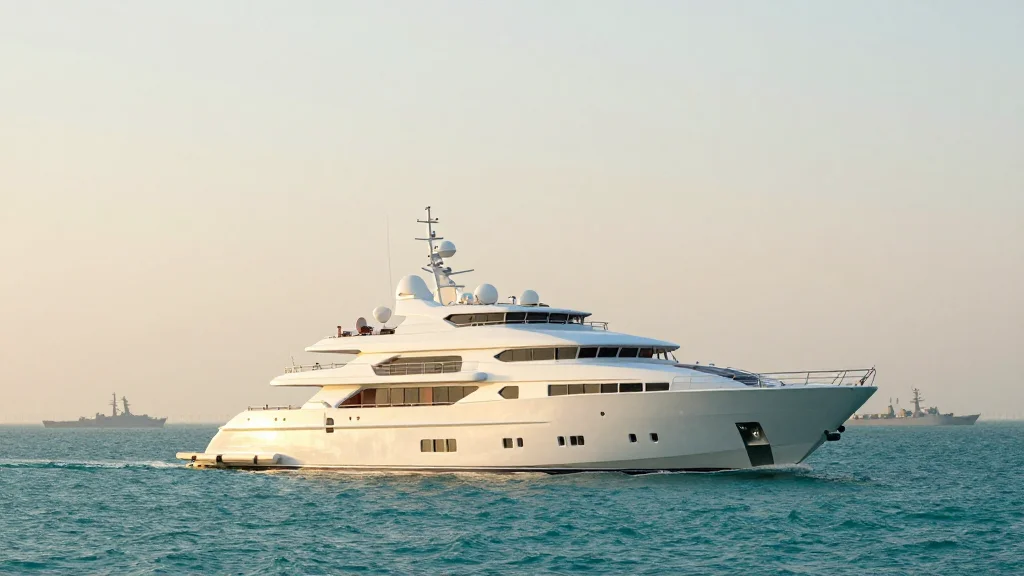
Russian‑Linked $500 Million Superyacht Nord Passes Blockaded Strait of Hormuz

Companies Mentioned
Forbes Magazine

Bloomberg
Why It Matters
The Nord’s passage through a blockaded strait illustrates how wealth and political connections can circumvent sanctions, raising concerns about the efficacy of asset‑freezing regimes. It also signals that even under intense military pressure, civilian vessels—especially those tied to powerful elites—may find pathways, potentially prompting a reassessment of maritime security protocols. For the global oil market, the incident underscores the fragility of the Strait of Hormuz, a chokepoint that moves roughly 20% of the world’s petroleum. Any perception that the waterway can be selectively accessed may affect insurance costs, shipping schedules and the strategic calculations of nations that rely on uninterrupted oil flows. The event therefore has ripple effects across energy pricing, geopolitical risk assessments and the broader debate over how to enforce sanctions in a contested maritime environment.
Key Takeaways
- •The 464‑ft Nord, valued at $500 million, sailed through the Strait of Hormuz on Saturday.
- •The yacht is linked to Russian billionaire Alexei Mordashov, who is under U.S. sanctions.
- •Only 187 vessels transited the strait between March 4 and the end of the month, down from 125‑140 daily pre‑conflict.
- •Iran has been attacking ships in the strait since late February, while the U.S. Navy enforces a blockade.
- •The incident highlights gaps in sanctions enforcement and may prompt tighter monitoring of sanctioned assets at sea.
Pulse Analysis
The Nord’s transit is less a maritime curiosity than a litmus test for the current sanctions architecture. Historically, high‑value assets tied to sanctioned individuals have been immobilized through banking restrictions, asset freezes and, increasingly, maritime interdiction. Yet the yacht’s unimpeded passage suggests that enforcement agencies may lack the legal or operational tools to stop a private vessel that does not carry cargo or pose an immediate security threat. This gap could incentivize other sanctioned owners to route luxury assets through contested zones, leveraging diplomatic channels or exploiting ambiguities in international maritime law.
From a market perspective, the incident may force insurers and shipping firms to differentiate between commercial and private traffic when pricing war‑risk premiums. If private yachts can secure exemptions, commercial operators could argue for similar treatment, potentially eroding the deterrent effect of blockades. Conversely, governments may respond by tightening vessel‑identification protocols, demanding more rigorous proof of ownership and purpose before granting clearance. The Nord’s journey also serves as a reminder that geopolitical alliances—here, Russia’s support for Iran—can create shadow corridors that bypass conventional enforcement, complicating the strategic calculus for the United States and its allies.
Looking ahead, the Nord could become a precedent case. Should U.S. authorities pursue legal action after the yacht’s arrival in Oman, the outcome will shape future enforcement of sanctions at sea. A successful seizure would reinforce the credibility of asset‑freezing regimes; a failure could embolden other sanctioned elites to test the limits of maritime freedom, further blurring the line between private luxury and geopolitical leverage.
Russian‑Linked $500 Million Superyacht Nord Passes Blockaded Strait of Hormuz
Comments
Want to join the conversation?
Loading comments...