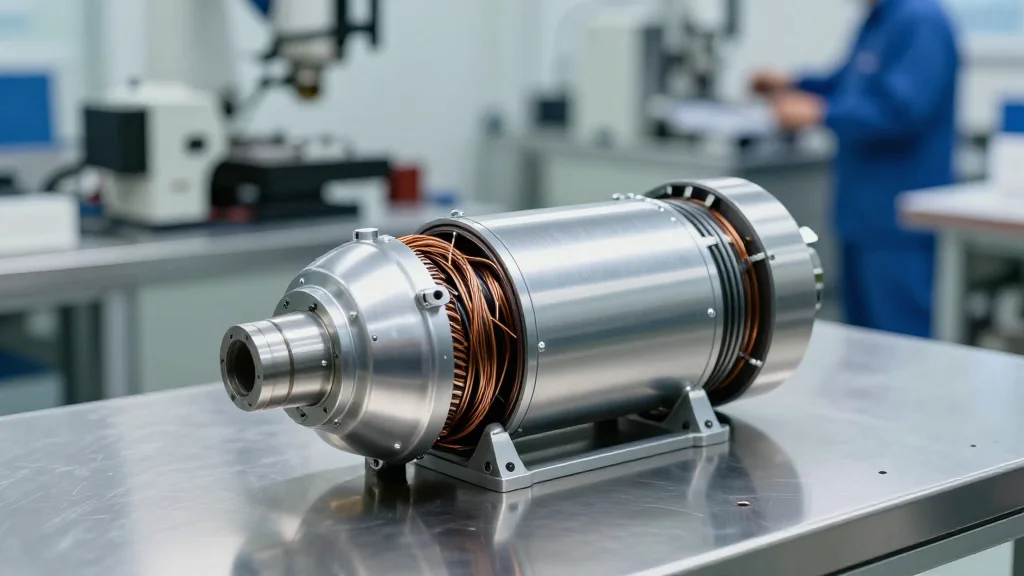
Safran Receives EUR14.7 Million Funding to Support Assembly of Electric Aviation Engines
Companies Mentioned
Why It Matters
The funding accelerates commercial‑scale electric propulsion, positioning Safran as a key supplier in the emerging zero‑emission aircraft market and helping the EU meet its climate goals for aviation.
Key Takeaways
- •Safran receives €14.7 M (~$16 M) from EU Innovation Fund.
- •ENGINeUS motor certified by EASA, ready for series production in 2025.
- •Two semi‑automated lines will produce electric motors for 2‑4 passenger aircraft.
- •Modular design supports hybrid propulsion for 19‑passenger regional planes.
- •Project runs 2026‑2032, aligning with EU 2050 carbon‑neutral aviation goal.
Pulse Analysis
The European Union’s Innovation Fund is channeling €14.7 million into Safran Electrical & Power, a move that underscores the bloc’s commitment to decarbonising aviation. By backing the ENGINeUS PULL initiative, the EU not only supports a domestic technology champion but also helps create a supply chain for electric propulsion that could rival US and Asian competitors. This financial injection is part of a broader strategy to meet the EU’s 2050 carbon‑neutral aviation target, encouraging private‑sector investment in sustainable aircraft technologies.
Safran’s ENGINeUS motor, slated for EASA certification in 2025, represents a significant technical milestone. Its modular architecture allows integration across a spectrum of aircraft, from two‑seat trainers to 19‑seat regional jets, and even potential defense platforms. The company will install two semi‑automated assembly lines at its Niort facility, borrowing lean‑manufacturing practices from the automotive sector to drive cost efficiencies and scalability. By automating key production steps, Safran aims to reduce unit costs, accelerate time‑to‑market, and ensure consistent quality for future electric fleets.
From a market perspective, the ENGINeUS rollout could reshape short‑haul aviation. Operators of electric or hybrid‑electric aircraft stand to benefit from lower operating expenses and compliance with tightening emissions regulations. The seven‑year timeline, ending in 2032, aligns with projected entry of electric air taxis and regional services, positioning Safran to capture early market share. As airlines and OEMs evaluate zero‑emission options, Safran’s funded production capacity may become a critical differentiator, influencing supply dynamics and accelerating the industry’s shift toward greener skies.
Safran receives EUR14.7 million funding to support assembly of electric aviation engines
Comments
Want to join the conversation?
Loading comments...