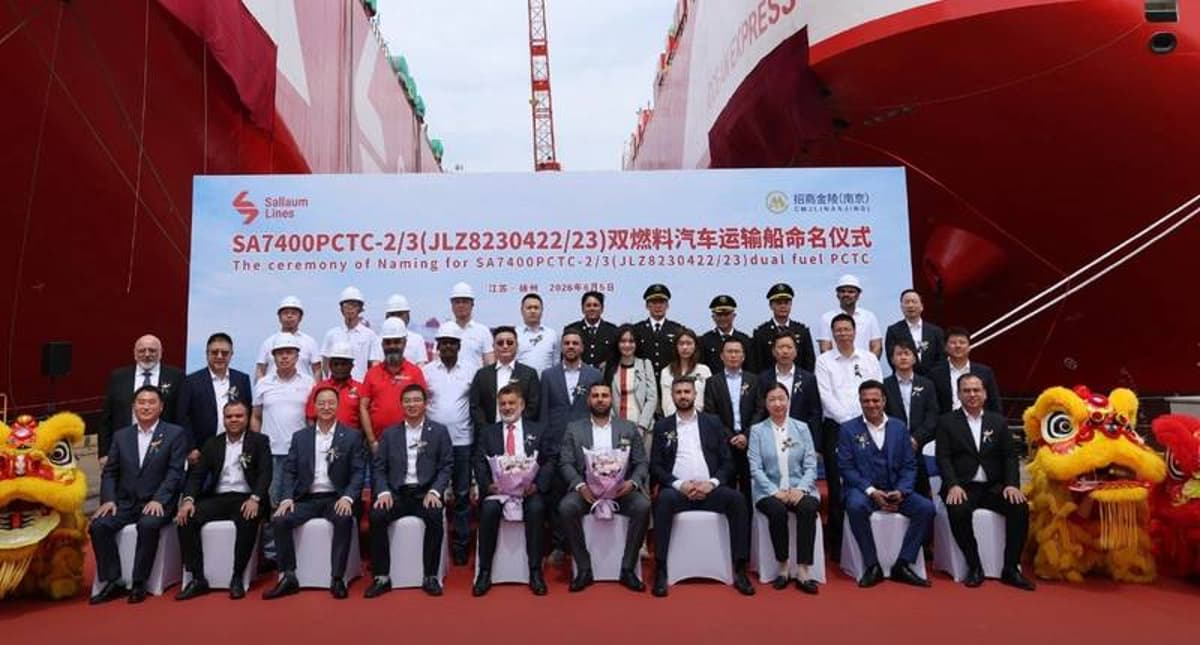
Sallaum Takes Delivery of LNG Dual-Fueled Car Carrier Newbuild Pair
Why It Matters
The added capacity alleviates Sallaum’s current bottlenecks and strengthens its position on the fast‑growing China‑Europe trade lane, while the LNG dual‑fuel setup aligns the company with tightening emissions regulations in maritime transport.
Key Takeaways
- •Two LNG dual‑fuel PCTCs add 14,800 CEU capacity.
- •Vessels built by China Merchants Jinling Shipyard, Cyprus‑flagged.
- •Max vehicle height 5.4 m, width 13.5 m.
- •Supports Sallaum’s planned China‑Europe service in 2027.
- •Dual‑fuel design cuts emissions, aligns with green shipping trends.
Pulse Analysis
The global market for pure car and truck carriers (PCTCs) is expanding as manufacturers and consumers demand faster, more reliable vehicle logistics. Operators are increasingly turning to larger, more versatile ships that can accommodate a mix of passenger cars, commercial trucks, and oversized cargo. In this context, LNG‑powered vessels are gaining traction because they offer longer ranges and lower fuel costs compared to traditional marine diesel, while meeting stricter International Maritime Organization (IMO) emissions standards.
Sallaum Lines’ latest delivery of the MV Ocean Express and MV Ocean Navigator represents a strategic push to capture a larger share of the China‑Europe corridor, one of the world’s busiest maritime routes. With a combined capacity of 14,800 car equivalent units, the new ships lift the company’s total Ocean Class fleet to five vessels, each capable of handling 13 decks and generous height and width clearances. This expansion enables Sallaum to launch a dedicated service in 2027, addressing the capacity constraints that have limited its ability to meet rising customer demand and positioning the firm as a reliable partner for automotive OEMs and logistics providers.
Beyond capacity, the dual‑fuel LNG propulsion system underscores Sallaum’s commitment to sustainability. By reducing sulfur oxides, nitrogen oxides, and CO₂ emissions, the vessels not only comply with upcoming regulatory thresholds but also appeal to environmentally conscious shippers. The adoption of energy‑efficiency technologies signals a broader industry shift toward greener operations, where cost savings and carbon footprints are increasingly intertwined. As more carriers retrofit or order LNG‑compatible ships, Sallaum’s early investment could translate into competitive advantages in pricing, route flexibility, and brand reputation.
Sallaum Takes Delivery of LNG Dual-Fueled Car Carrier Newbuild Pair
Comments
Want to join the conversation?
Loading comments...