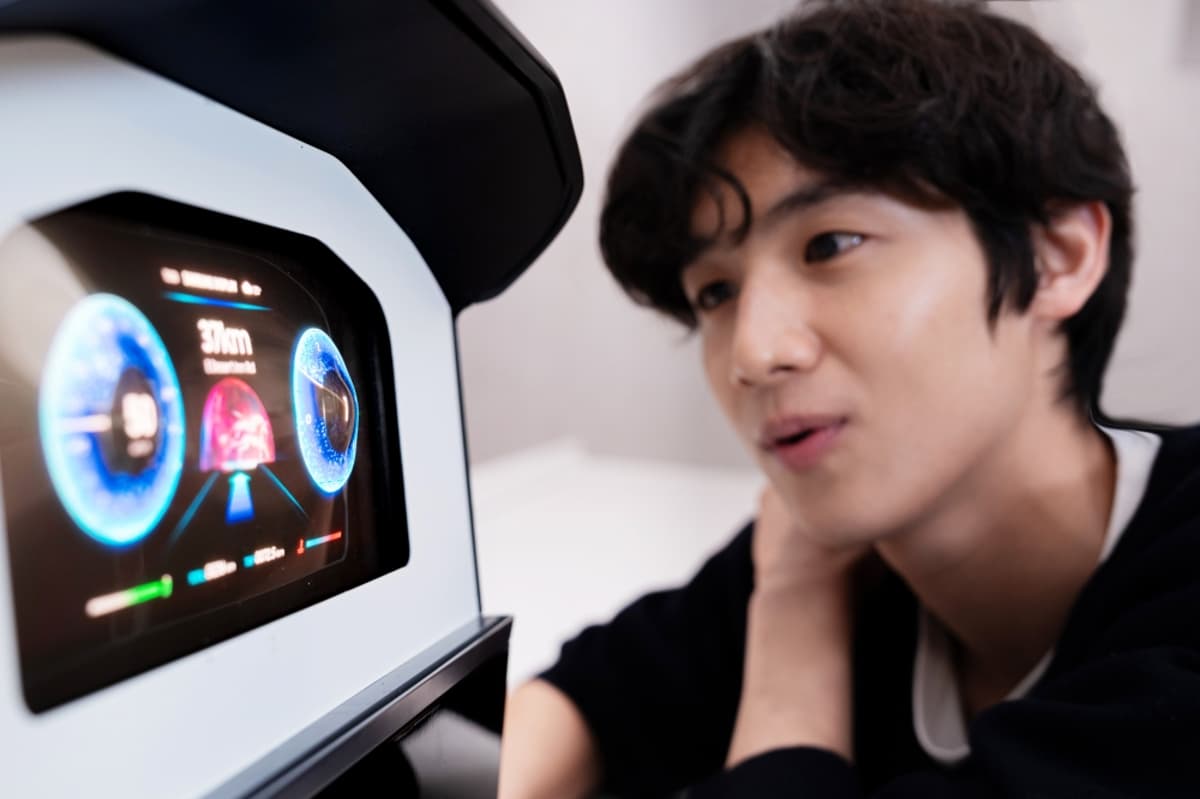
Samsung Reveals Next-Gen Stretchable Display
Companies Mentioned
Why It Matters
Higher‑resolution, adaptable displays give automakers a competitive edge in the rapidly evolving SDV market, where real‑time visual feedback is critical for safety and user experience.
Key Takeaways
- •200 PPI stretchable microLED surpasses previous 120 PPI model.
- •Bridge structure doubles pixel density while retaining stretchability.
- •Dynamic instrument cluster adapts visuals to driving conditions.
- •Integrates with Software Defined Vehicle platforms for real‑time UI changes.
- •Samsung positions itself as leader in automotive display innovation.
Pulse Analysis
The automotive industry is accelerating toward richer, more immersive cockpit experiences, and display resolution is a key differentiator. Traditional LCD and OLED panels have struggled to combine high pixel density with the mechanical flexibility needed for next‑generation instrument clusters. Samsung’s stretchable microLED overcomes these constraints by leveraging self‑emissive LEDs that deliver superior brightness, contrast, and energy efficiency while supporting a 200 PPI density—well above the typical 150‑200 PPI range found in current vehicles. This leap enables sharper graphics, clearer text, and more detailed navigation cues, directly enhancing driver situational awareness.
At the heart of Samsung’s breakthrough is a reengineered bridge structure that interconnects fixed LED islands. By integrating twice as many pixels within these bridges, the company maintains electrical continuity even as the panel stretches or contracts. This architectural innovation reduces the need for complex mechanical actuation and simplifies manufacturing compared with competing flexible OLED approaches, which often suffer from pixel degradation under stress. Moreover, the microLED’s inherent durability and low power draw align with automotive reliability standards, making it a viable candidate for mass‑market deployment.
Beyond the hardware, the display’s compatibility with Software Defined Vehicle platforms unlocks dynamic UI capabilities. As vehicles become more software‑centric, the ability to reconfigure visual layouts in real time—such as expanding a speedometer during high‑speed driving or highlighting critical alerts—offers manufacturers a new lever for differentiating user experience. Samsung’s early entry positions it to capture a sizable share of the automotive display market, pressuring rivals like LG Display and BOE to accelerate their own flexible display roadmaps. In the longer term, the technology could extend to other vehicle surfaces, paving the way for fully reconfigurable interiors that adapt to driver preferences and emerging autonomous driving paradigms.
Samsung reveals next-gen stretchable display
Comments
Want to join the conversation?
Loading comments...