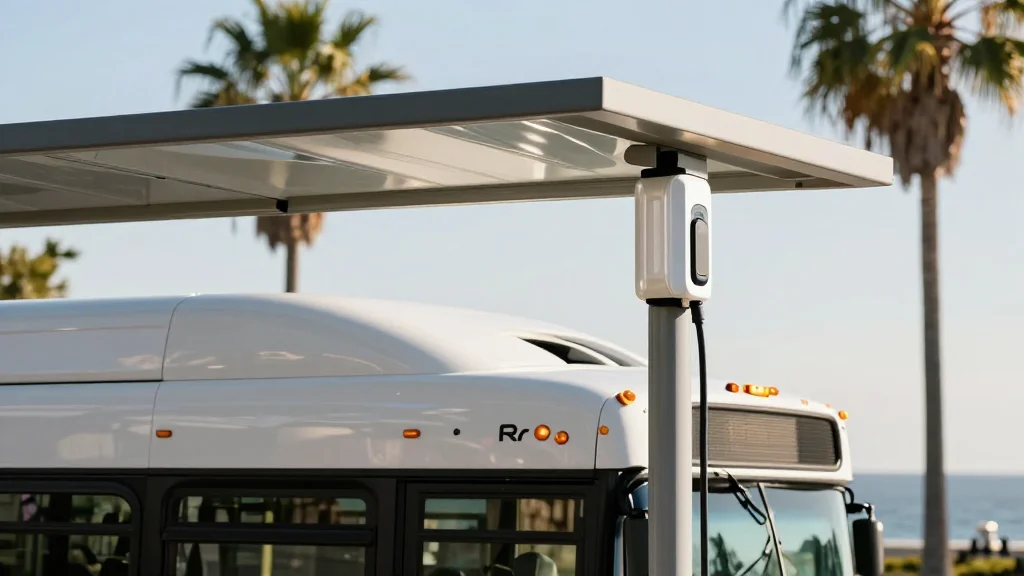
Santa Monica Breaks Ground on $56m Zero-Emission Bus and Charging Project
Why It Matters
The investment fast‑tracks California’s climate targets while delivering measurable cost savings and air‑quality improvements for a major urban transit system. It also proves that large‑scale electric bus rollouts can be deployed quickly and cost‑effectively.
Key Takeaways
- •$56M program funds 195 electric buses and charging gantries.
- •State grant provides $53.3M, covering most project costs.
- •Fleet to reach full zero‑emission status by 2032.
- •Overhead gantry chargers enable rapid depot charging.
- •Expected fuel and maintenance savings improve transit budgets.
Pulse Analysis
California’s aggressive climate agenda has spurred a wave of public‑transport electrification, and Santa Monica’s $56 million rollout stands out as a concrete example of that momentum. Leveraging a $53.3 million grant from the state’s Transit and Intercity Rail Capital Program, the city is able to fund both vehicle procurement and the sophisticated overhead gantry charging infrastructure needed for high‑frequency service. By targeting a fleet of 195 battery‑electric buses, the project aligns with the state’s goal of a zero‑emission public‑transit network by the early 2030s, positioning Santa Monica as an early adopter among mid‑size U.S. municipalities.
The technical design centers on depot‑based gantry chargers that can top up multiple buses simultaneously, dramatically reducing dwell time compared with traditional plug‑in stations. This approach not only supports the city’s existing 34 electric buses but also scales efficiently as additional units are added. Operational benefits include lower fuel expenditures, reduced maintenance cycles due to fewer moving parts, and enhanced grid resilience through managed charging. Moreover, the quieter, emission‑free buses promise immediate improvements in local air quality and noise levels, directly addressing community health concerns.
Beyond the environmental upside, the financial implications are compelling. Early analyses suggest that fuel and maintenance savings could offset a substantial portion of the capital outlay over the buses’ lifecycle, freeing budgetary resources for service expansions or fare subsidies. The project’s rapid start—construction began just 18 months after funding—demonstrates that bureaucratic hurdles can be overcome with clear political will and coordinated planning. As other transit agencies watch Santa Monica’s progress, the city’s model may become a blueprint for scaling electric bus fleets across the United States, accelerating the nation’s transition to sustainable urban mobility.
Santa Monica breaks ground on $56m zero-emission bus and charging project
Comments
Want to join the conversation?
Loading comments...