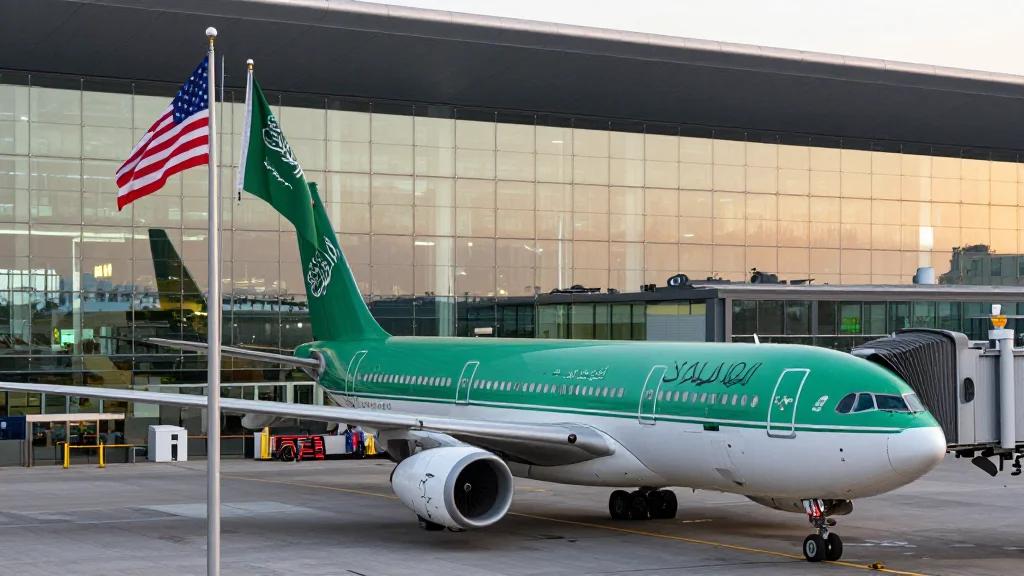
Saudia to Relocate to JFK's $19 B New Terminal One, Boosting US‑Saudi Air Links

Companies Mentioned
Why It Matters
The relocation of Saudia to JFK’s flagship terminal strengthens the United States’ air‑linkage to Saudi Arabia, a market projected to grow as the kingdom diversifies its economy and promotes tourism. For the broader transportation sector, the move illustrates how major infrastructure upgrades can attract legacy carriers seeking modern facilities and premium slots, driving competition and potentially lowering fares for travelers. It also highlights the strategic importance of airport capacity in shaping airline network decisions and regional economic ties. Furthermore, the partnership underscores the role of code‑share agreements in expanding market reach without the need for additional aircraft. Saudia’s deeper integration with Delta could set a template for other Middle‑East carriers looking to tap U.S. domestic networks, influencing future alliance structures and route planning across the Atlantic.
Key Takeaways
- •Saudia will relocate to JFK’s New Terminal One when the first phase opens in 2026.
- •The terminal is part of a $19 billion Port Authority transformation of JFK Airport.
- •Saudia will gain prime slots, new flight timings and increased frequencies on the Jeddah–New York route.
- •More than 20 international airlines, including Air France and Qatar Airways, have committed to the new terminal.
- •The project aims for a Skytrax 5‑star rating and includes diversity targets for minority‑, women‑ and veteran‑owned businesses.
Pulse Analysis
JFK’s $19 billion terminal overhaul is a decisive bet on capacity and premium service at a time when global air traffic is rebounding from pandemic lows. By attracting Saudia, the airport not only fills a critical slot portfolio but also signals to other legacy carriers that the new infrastructure can accommodate growth without the operational constraints of older concourses. This could accelerate a shift where airlines prioritize modern terminals for flagship routes, reshaping hub dynamics in the Northeast.
Saudia’s move also dovetails with Saudi Arabia’s Vision 2030 agenda, which aims to boost inbound tourism to 100 million visitors by the end of the decade. Direct, high‑frequency service from a major U.S. gateway will be a key enabler, feeding both leisure and business travel. The Delta‑Saudia codeshare amplifies this effect, allowing passengers to connect seamlessly to Delta’s extensive domestic network, thereby increasing the airline’s revenue potential beyond the trans‑Atlantic segment.
Looking ahead, the success of New Terminal One will be measured by its ability to deliver on the promised Skytrax 5‑star experience and to sustain high load factors on new routes. If Saudia’s expanded schedule captures strong demand, other Gulf carriers may accelerate similar relocations, intensifying competition for premium slots at JFK. The terminal’s design, with its emphasis on passenger amenities and operational efficiency, could become a benchmark for future airport projects worldwide, reinforcing the link between infrastructure investment and airline strategic positioning.
Saudia to Relocate to JFK's $19 B New Terminal One, Boosting US‑Saudi Air Links
Comments
Want to join the conversation?
Loading comments...