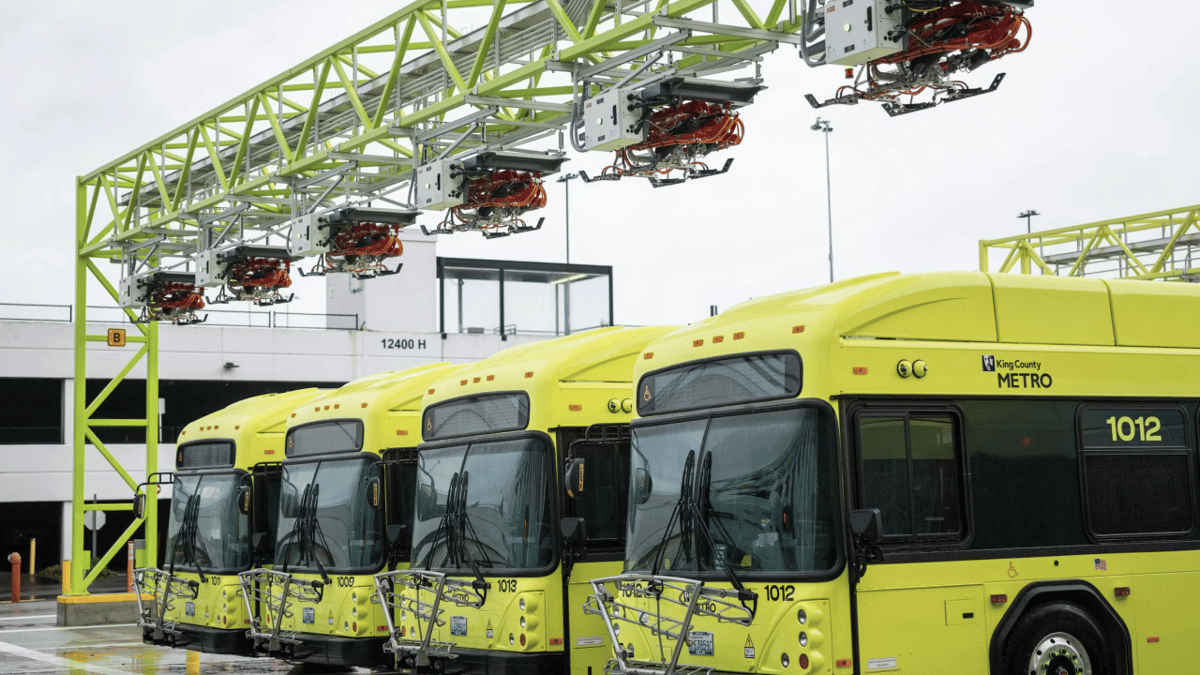
Schunk Supplies 123 Depot Charging Pantographs to King County Metro in Seattle
Companies Mentioned
Why It Matters
The deployment significantly boosts Seattle’s electric‑bus charging infrastructure, accelerating fleet electrification and supporting regional climate targets. It also highlights domestic, Buy‑America‑compliant manufacturing for transit agencies.
Key Takeaways
- •123 Schunk SLS 201 pantographs installed at Tukwila depot
- •Pantographs lower to bus roof rails, enabling fast DC charging
- •Pilot of six units showed zero power interruptions in humid conditions
- •Contract includes US‑made equipment, commissioning, maintenance, and training
Pulse Analysis
Electric‑bus adoption across U.S. cities hinges on reliable, high‑power charging solutions, and King County Metro’s latest contract with Schunk Transit Solutions underscores that reality. With a fleet of roughly 1,200 vehicles—over 300 of them fully electric—the Seattle‑area agency has been scrambling to expand depot capacity. The 123 SLS 201 inverted pantographs represent a scalable approach, embedding the charger in the depot ceiling and allowing a bus to connect via a spring‑driven arm that drops onto four roof‑mounted rails. This design eliminates the need for roof‑mounted hardware on each bus, reducing vehicle weight and maintenance complexity.
The technical merits of the inverted pantograph are notable. By delivering direct‑current power directly from the infrastructure to the battery, the system can replenish a bus’s charge within minutes, supporting both depot‑based top‑off and opportunistic charging at route stops. Schunk’s six‑unit pilot proved the concept’s robustness, reporting no power interruptions despite high humidity and vehicle movement—common challenges for outdoor charging. The four‑rail configuration maintains consistent contact, while the spring‑and‑drive mechanism compensates for minor misalignments, ensuring safe, high‑current transfer.
Beyond the immediate operational benefits, the contract signals a broader shift toward domestically produced transit technology. Schunk manufactures the pantographs at its Wisconsin facility, meeting Buy‑America requirements and U.S. safety certifications, which eases procurement for public agencies. As more transit districts pursue zero‑emission goals, the availability of home‑grown, plug‑and‑play charging hardware could accelerate nationwide fleet electrification, reduce reliance on imported components, and stimulate local job growth in the clean‑transport supply chain.
Schunk supplies 123 depot charging pantographs to King County Metro in Seattle
Comments
Want to join the conversation?
Loading comments...