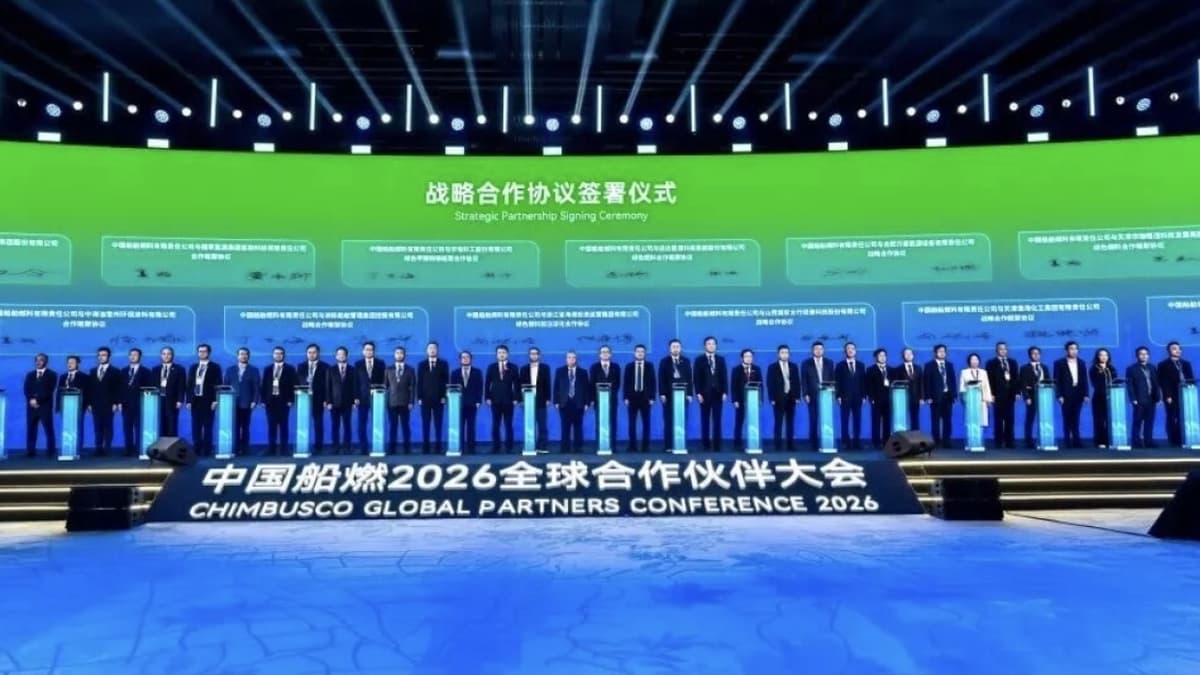
Seacon and China Marine Bunker Formalise Partnership
Why It Matters
The alliance creates a unified, standards‑driven green‑fuel ecosystem that helps Chinese shippers meet tightening emissions rules while positioning both companies for growth in the emerging low‑carbon maritime market.
Key Takeaways
- •Seacon and CHIMBUSCO sign long‑term green fuel cooperation
- •Partnership covers transport, storage, bunkering, and talent training
- •Aligns with China's 2030 low‑carbon shipping roadmap
- •Standardizes green fuel supply chain across Asian markets
Pulse Analysis
China’s maritime sector is at a turning point, driven by aggressive government targets to slash emissions by 2030. The recent *Guiding Opinions on Promoting the Green and Low‑Carbon Transformation of Shipping* set a comprehensive framework for technical standards, safety oversight, and crew training on new‑energy vessels. In this environment, Seacon—a leading fuel logistics provider—and China Marine Bunker (CHIMBUSCO) have joined forces, leveraging their complementary networks to build an end‑to‑end green‑fuel supply chain that can meet the scale of upcoming demand.
The partnership’s scope is unusually broad, encompassing everything from the physical movement and storage of low‑sulphur and alternative fuels to joint R&D on bunkering technologies and safety protocols. By pooling resources for talent development, both firms aim to create a pipeline of specialists versed in hydrogen, ammonia, and bio‑fuel handling—skills that are scarce but essential for compliance with upcoming maritime regulations. Their coordinated approach also promises cost efficiencies for ship owners, who can now source certified green fuel through a single, reliable channel, reducing transaction complexity and mitigating supply‑chain risks.
For the broader market, this collaboration signals that China’s green‑shipping ambitions are moving beyond policy rhetoric toward concrete commercial execution. Investors and global bunker firms will watch how the Seacon‑CHIMBUSCO model scales, potentially setting a benchmark for other regions seeking to harmonise fuel standards and accelerate low‑carbon adoption. If successful, the partnership could catalyse a ripple effect, encouraging further consolidation in the marine fuel sector and hastening the transition to a cleaner, more resilient global shipping ecosystem.
Seacon and China Marine Bunker formalise partnership
Comments
Want to join the conversation?
Loading comments...