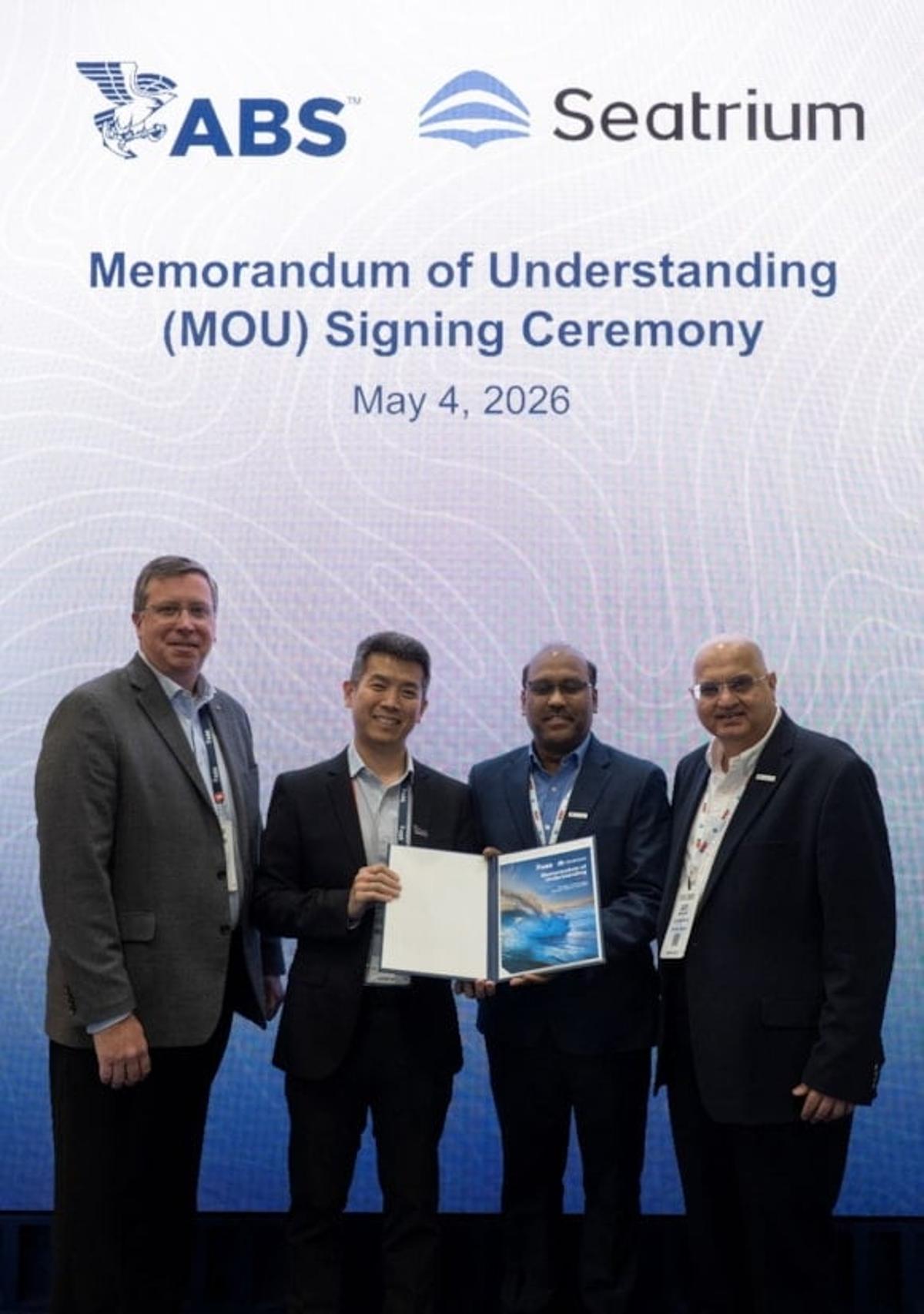
Seatrium and ABS Join Forces to Advance Maritime and Offshore Energy Spheres
Companies Mentioned

Why It Matters
The collaboration bridges technology development with regulatory expertise, speeding market entry for low‑carbon offshore solutions and enhancing safety standards across a rapidly evolving sector.
Key Takeaways
- •ABS and Seatrium sign MOU to boost maritime tech innovation.
- •Collaboration targets decarbonization, autonomous vessels, and harsh‑environment solutions.
- •ABS previously approved FPSO designs for Deltamarin, CMHI, and MISC projects.
- •Partnership aims to streamline regulatory pathways for emerging offshore energy tech.
- •Knowledge exchange will accelerate classification and verification of new energy assets.
Pulse Analysis
Classification societies like ABS have become pivotal gatekeepers as the offshore industry pivots toward greener, more autonomous operations. Their technical authority not only ensures vessel safety but also shapes the regulatory frameworks that govern emerging concepts such as ammonia‑powered FPSOs and autonomous platforms. By aligning with a technology‑focused subsidiary of Seatrium, ABS is positioning itself at the nexus of engineering innovation and compliance, a move that reflects broader industry trends toward integrated solution ecosystems.
The new MOU outlines a structured knowledge‑exchange program that will support Seatrium’s product development pipeline across several high‑impact domains. From maritime decarbonization pathways—such as low‑carbon fuels and carbon‑capture‑ready hulls—to autonomous navigation systems designed for harsh offshore environments, the partnership promises to fast‑track classification, verification, and regulatory readiness. ABS’s recent approvals in principle for FPSO hull designs from Deltamarin, CMHI, MISC and China Offshore illustrate its willingness to endorse novel architectures, providing a clear precedent for future joint projects under the Seatrium‑ABS umbrella.
For investors and stakeholders, the alliance signals a maturing market where technology and compliance are increasingly intertwined. Accelerated regulatory clearance can reduce time‑to‑market for high‑value offshore assets, improving project economics and attracting capital to low‑carbon initiatives. Moreover, the collaboration may influence global standards, prompting other classification societies to adopt similar frameworks. As the offshore sector seeks to meet ambitious climate targets, partnerships that blend technical innovation with regulatory expertise will likely become a cornerstone of industry growth.
Seatrium and ABS join forces to advance maritime and offshore energy spheres
Comments
Want to join the conversation?
Loading comments...