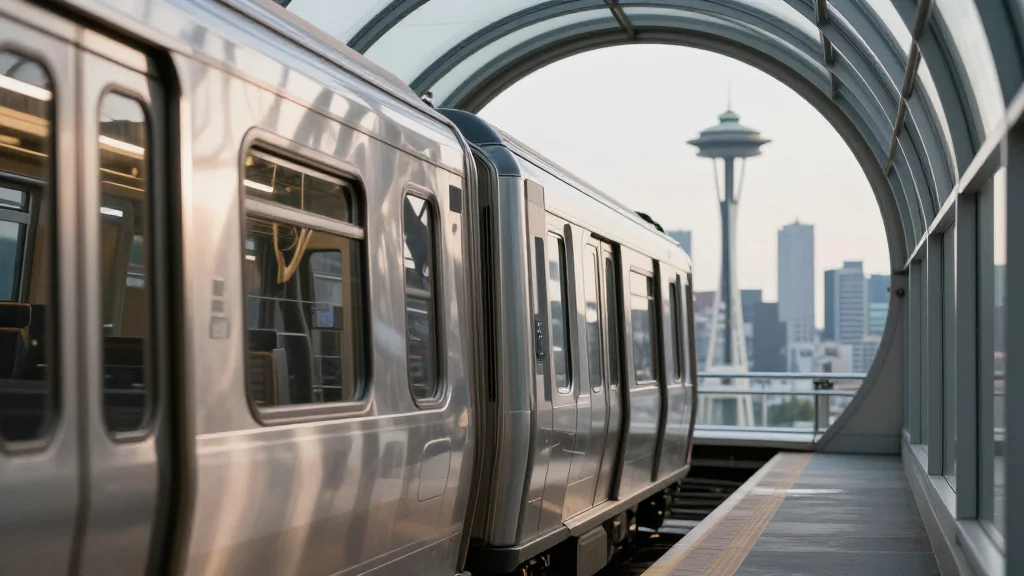
Seattle Light Rail 'Shatters' National Ridership Records with 155,000 Daily Rides
Why It Matters
The record demonstrates strong public demand for high‑capacity transit, bolstering the case for further investment and influencing other cities’ mobility strategies.
Key Takeaways
- •155,000 daily boardings set US light‑rail record.
- •Ridership up 25% after floating‑bridge east‑west line opened.
- •Seattle overtakes Los Angeles, Boston, San Diego in ridership.
- •Complex track‑sharing in downtown tunnel raises scheduling challenges.
- •Success may spur further investment in high‑capacity transit.
Pulse Analysis
Seattle’s latest ridership milestone reflects a broader shift toward urban rail as a primary commuter option. By surpassing 155,000 daily boardings, the city eclipses traditional powerhouses such as Los Angeles and Boston, underscoring how strategic network extensions can rapidly capture market share. Analysts point to the 25 % jump as evidence that riders are willing to trade car trips for reliable, high‑frequency service when connectivity improves, a trend that could reshape transit planning across the United States.
The east‑west 2 Line’s floating rail bridge is more than a headline‑grabbing engineering feat; it solves a geographic bottleneck by spanning Lake Washington without massive piers, allowing higher speeds and smoother rides. However, integrating this line with the existing north‑south 1 Line has introduced complex track‑sharing within Seattle’s downtown tunnel. Precise headways are now essential to avoid cascading delays, prompting Sound Transit to invest in advanced signaling and real‑time dispatch tools. These operational upgrades illustrate the trade‑offs cities face when expanding legacy systems.
Beyond the technical realm, the ridership surge carries significant policy implications. Record‑breaking numbers strengthen the argument for federal and state funding, potentially unlocking new capital for further extensions and rolling stock upgrades. Environmentally, higher rail usage reduces vehicle miles traveled, contributing to regional emissions targets. Other municipalities are watching Seattle’s model closely, considering similar floating‑bridge concepts or aggressive network densification to meet growing demand for sustainable, high‑capacity public transportation.
Seattle light rail 'shatters' national ridership records with 155,000 daily rides
Comments
Want to join the conversation?
Loading comments...