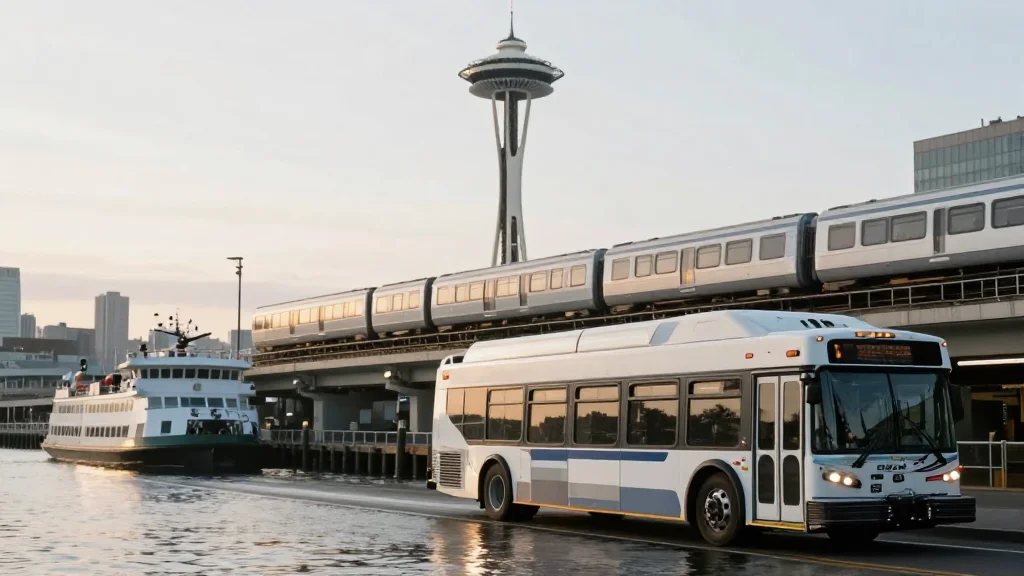
Seattle Rolls Out $0‑Fare Shuttle Network and Road Changes for 750,000 World Cup Fans

Why It Matters
The Seattle plan demonstrates how a host city can leverage free, high‑frequency transit to reduce car dependency during a global sporting event, potentially lowering emissions and easing congestion. By integrating bus, rail, ferry and pedestrian strategies, the city offers a template for future World Cup hosts and other large‑scale gatherings seeking to balance visitor experience with urban mobility. Successful execution could also boost public confidence in Seattle's transit agencies, encouraging longer‑term ridership growth beyond the tournament. Conversely, any shortfalls—such as overcrowded shuttles or unanticipated traffic snarls—might prompt a reevaluation of free‑fare, high‑frequency models for future events.
Key Takeaways
- •Seattle expects 750,000 World Cup visitors and aims for 80% to arrive without a personal vehicle
- •King County Metro adds 60 free "Match Day Shuttle" routes running every 3‑7 minutes
- •Sound Transit extends light‑rail service to 1 a.m. and adds extra Sounder game trains
- •Eighteen ferries plus two standby vessels will shuttle fans across Puget Sound
- •I‑5 Ship Canal Bridge construction paused June 8‑July 10 to reduce congestion
Pulse Analysis
Seattle's transportation blueprint reflects a broader shift toward event‑centric mobility planning that prioritizes public transit over private cars. The decision to offer fare‑free shuttles is a calculated gamble: while it removes a price barrier, it also places pressure on fleet capacity and operational budgets. If ridership hits the 80% target, the city could justify similar subsidies for future large‑scale events, potentially reshaping how municipalities fund transit during peak demand periods.
Historically, World Cup host cities have struggled with traffic bottlenecks and parking shortages. By pre‑emptively closing streets in Pioneer Square and pausing major bridge construction, Seattle is taking a proactive stance that could mitigate the typical post‑event backlash. The integration of ferry services adds a multimodal dimension rarely seen in past tournaments, leveraging the region's natural waterways to disperse crowds and reduce road load.
Looking ahead, the real test will be execution. Real‑time data from the WhatsApp fan channel and incident response teams will be crucial for fine‑tuning service levels. Success could position Seattle as a model for sustainable, high‑volume event logistics, while any operational hiccups may reinforce the argument for more modest, car‑centric approaches in future host cities.
Seattle Rolls Out $0‑Fare Shuttle Network and Road Changes for 750,000 World Cup Fans
Comments
Want to join the conversation?
Loading comments...