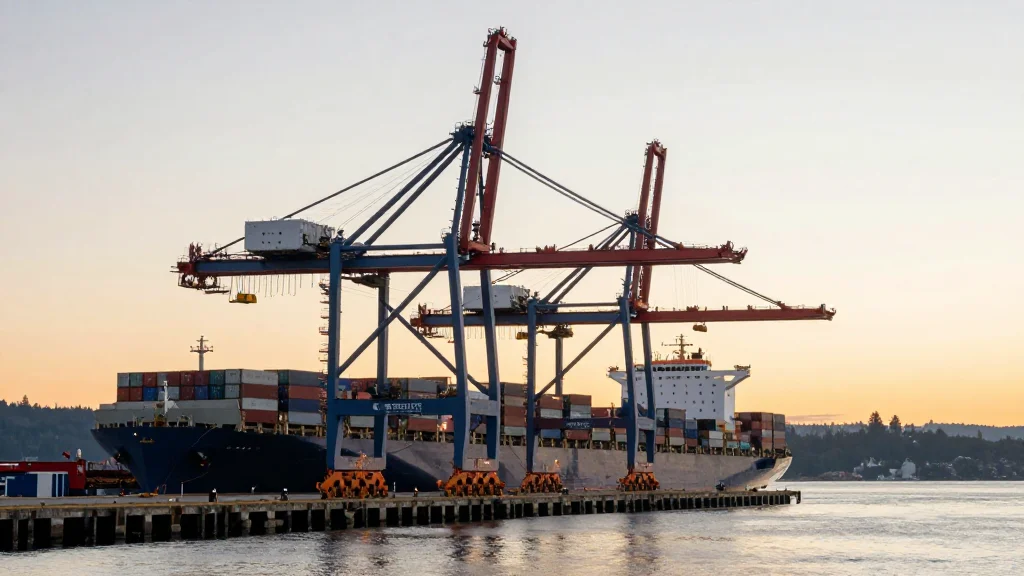
Seattle-Tacoma Evolving Toward Hybrid Landlord-Operating Port Model
Why It Matters
A hybrid operating model could sharpen NWSA’s competitive edge on the West Coast, attracting more shippers and increasing revenue streams. It signals a broader industry trend toward greater port control to meet rising supply‑chain demands.
Key Takeaways
- •NWSA proposes hybrid landlord‑operator model for Seattle and Tacoma terminals
- •Hybrid approach aims to boost responsiveness and operational uniformity
- •Goal: recapture import market share lost to Southern California ports
- •Model could position NWSA as a more competitive West Coast hub
Pulse Analysis
The Northwest Seaport Alliance, which jointly governs Seattle and Tacoma’s major container facilities, has seen its import market share erode to Southern California’s sprawling ports. As global trade rebounds, shippers prioritize speed from the dock to inland rail and truck networks, and any lag in intermodal efficiency can shift cargo to rival gateways. NWSA’s leadership recognizes that merely leasing terminal space may no longer suffice to meet the performance expectations of carriers and logistics providers seeking tighter service guarantees.
In response, the alliance is weighing a hybrid landlord‑operator framework. Under this structure, NWSA would retain ownership of all terminal real estate but assume direct operational control of selected berths, equipment, and workforce functions. This dual role promises faster decision‑making, standardized procedures across Seattle’s single terminal and Tacoma’s three, and the ability to invest in technology upgrades without negotiating lease terms. Similar models have emerged at ports like Los Angeles and Long Beach, where public‑private partnerships blend ownership with hands‑on management to streamline cargo flow and reduce dwell times.
If implemented, the hybrid model could reshape West Coast logistics. Shippers may favor NWSA for its promised reliability, potentially reversing the recent market share drift. The approach also raises questions about capital allocation, labor agreements, and regulatory oversight, as the alliance balances public‑sector responsibilities with private‑sector efficiency. Analysts will watch how quickly NWSA can translate operational control into measurable throughput gains, setting a possible benchmark for other U.S. ports grappling with the same competitive pressures.
Seattle-Tacoma evolving toward hybrid landlord-operating port model
Comments
Want to join the conversation?
Loading comments...