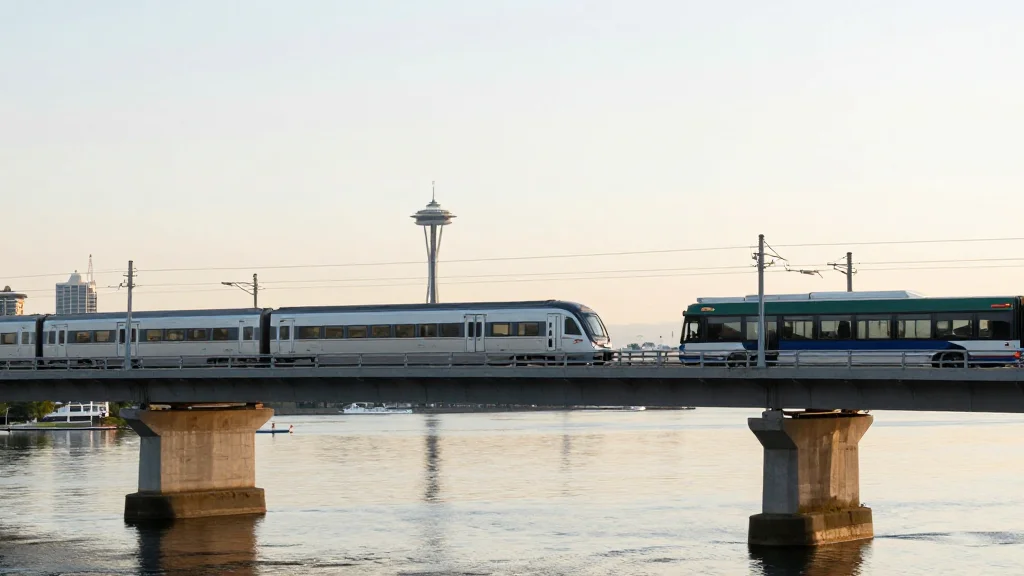
Seattle, Vancouver Align Cross‑Border Transport for 2026 World Cup Surge

Why It Matters
Coordinating transportation across an international border for a mega‑event tests the limits of regional governance and infrastructure. If Seattle and Vancouver can successfully manage a 1.1 million‑visitor surge, the model could be replicated for future cross‑border festivals, trade shows or disaster‑response scenarios, reinforcing the Pacific Northwest’s strategic importance in North‑American logistics. Moreover, the economic upside—billions in visitor spending—offers a compelling incentive for other border cities to invest in shared digital platforms and joint planning frameworks. The initiative also highlights the growing relevance of data‑driven mobility management. By pooling real‑time traffic and customs data, the two cities can make granular, near‑instant decisions that improve traveler experience and reduce congestion, a capability that could spill over into everyday cross‑border commuting and freight movement long after the World Cup concludes.
Key Takeaways
- •Seattle and Vancouver announced a joint cross‑border transport plan for the 2026 World Cup
- •The plan targets over 1.1 million expected visitors
- •Projected economic impact runs into the low‑single‑digit billions of USD
- •Integrated corridor management will share real‑time traffic and border data
- •Joint workshops and drills will be held through mid‑2026 to refine operations
Pulse Analysis
The Seattle‑Vancouver coordination marks a strategic shift from siloed municipal planning to a region‑wide, data‑centric approach that could redefine how North‑American border cities handle peak demand. Historically, cross‑border events have suffered from fragmented customs procedures and mismatched traffic‑control policies, leading to bottlenecks that erode visitor satisfaction and dilute economic returns. By establishing a shared digital backbone, the two cities are not only smoothing the immediate World Cup experience but also laying groundwork for a permanent transnational mobility ecosystem.
From a competitive standpoint, the Pacific Northwest is positioning itself against established soccer‑hosting corridors such as the Dallas‑Houston axis and the New York‑Boston corridor. Those regions benefit from dense rail networks and well‑tested border protocols, but they lack the natural appeal of a bi‑national fan experience. Seattle and Vancouver’s joint branding and seamless transit options could attract a more diverse fan base, driving higher per‑capita spending and extending the economic benefits beyond the tournament window.
Looking ahead, the success of this initiative will hinge on execution. Real‑time data sharing across sovereign agencies raises privacy, security and interoperability challenges that have historically stalled similar projects. If the June 2026 workshop delivers concrete lane‑allocation rules and a robust public‑information platform, the partnership could become a blueprint for future cross‑border collaborations, from climate‑resilient freight corridors to integrated emergency‑response networks. Conversely, any failure to meet performance targets could reinforce skepticism about the feasibility of transnational infrastructure projects, prompting policymakers to revert to more insulated, single‑jurisdiction solutions.
Seattle, Vancouver Align Cross‑Border Transport for 2026 World Cup Surge
Comments
Want to join the conversation?
Loading comments...