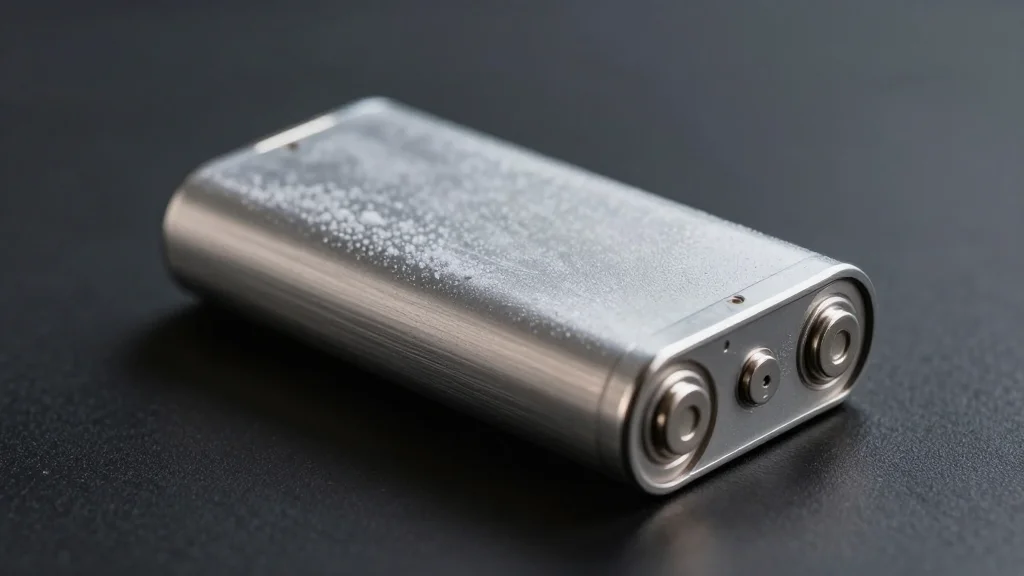
Semi-Solid-State Battery Tech Rolls Into Ebike Territory
Why It Matters
The price‑point demonstrates that semi‑solid‑state batteries are reaching production scale, potentially accelerating e‑bike adoption and reshaping the market’s cost structure. It also pressures rivals to lower prices or accelerate their own technology rollouts.
Key Takeaways
- •Revv1 evo priced at $2,395, undercutting premium semi‑solid rivals.
- •Battery lasts 1,200+ cycles, roughly 8‑10 years of use.
- •Full charge in two hours without accelerated degradation.
- •Retains ~70% capacity at -20 °C, improving cold‑weather performance.
- •750 W motor, 100 Nm torque, 28 mph top speed for commuters.
Pulse Analysis
Semi‑solid‑state batteries occupy a middle ground between traditional lithium‑ion cells and the still‑elusive fully solid‑state designs. By replacing the liquid electrolyte with a gel‑like medium, they reduce fire risk and improve thermal stability while avoiding the costly manufacturing hurdles of true solid‑state packs. Recent advances in electrolyte chemistry and roll‑to‑roll production have lowered material costs, making the technology viable for high‑volume applications such as e‑bikes, where weight, safety, and fast charging are paramount.
Ride1Up’s Revv1 evo leverages these gains to offer a compelling value proposition. At $2,395, it undercuts German competitor Nicolai’s premium semi‑solid e‑mountain bikes, yet delivers comparable performance: a 750 W motor, 100 Nm of torque, and a range of 30‑60 miles per charge. The battery’s 1,200‑plus cycle life translates to an eight‑year service window for a rider who charges three to four times weekly, while a two‑hour full charge eliminates the typical fast‑charge penalty. Cold‑weather retention of roughly 70 % at –20 °C further differentiates it from conventional lithium‑ion e‑bikes that suffer steep capacity loss in winter.
The broader impact lies in the supply‑chain signal. When a technology once confined to boutique prototypes reaches a sub‑$2,500 price tag, manufacturers across the e‑bike sector are likely to adopt similar chemistries to stay competitive. This could compress the price gap between entry‑level and premium e‑bikes, spur higher adoption rates among commuters, and accelerate the shift away from gasoline‑powered mopeds. As semi‑solid production scales, we can expect further cost reductions, enabling even lighter frames and longer ranges, reinforcing the e‑bike’s role in sustainable urban mobility.
Semi-solid-state battery tech rolls into ebike territory
Comments
Want to join the conversation?
Loading comments...