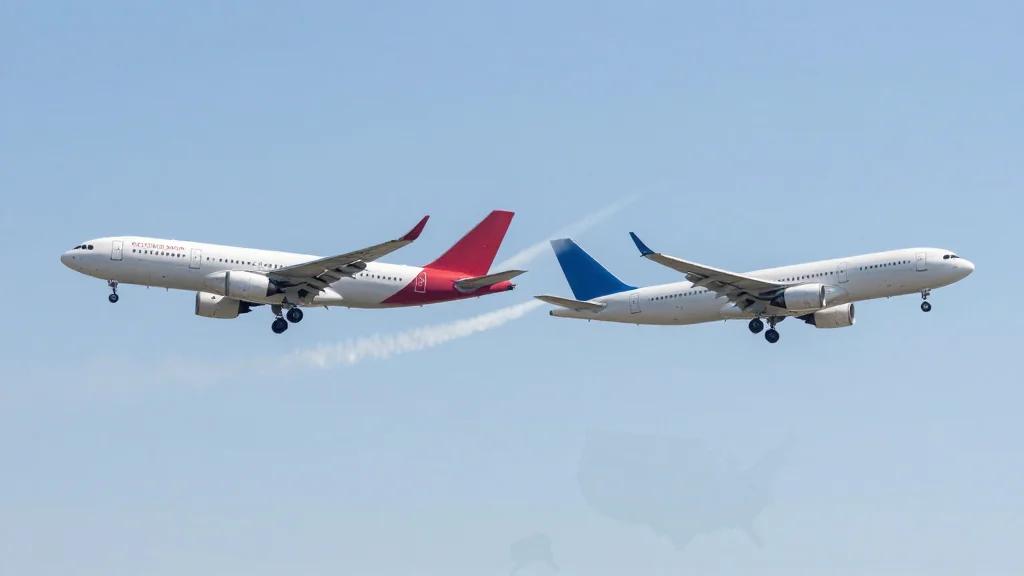
Senators Warn United-American Merger Would Create “Industry Behemoth”
Why It Matters
The warning highlights that any United‑American combination would face immediate bipartisan regulatory resistance, threatening the feasibility of a deal and potentially reshaping the competitive landscape of U.S. aviation.
Key Takeaways
- •United and American would control ~50% of U.S. airline market.
- •Combined fleet would exceed 2,800 aircraft, double next largest carrier.
- •Senators warn merger could raise fares and ancillary fees.
- •Potential route cuts could limit service at overlapping hubs.
- •Consolidation may suppress pilot and crew wages through monopsony power.
Pulse Analysis
The airline industry has been on a consolidation trajectory for decades, with mergers such as Delta‑Northwest and Southwest‑AirTran reshaping market dynamics. A United‑American tie‑up would dwarf those precedents, creating a carrier with roughly half of domestic passenger traffic and a fleet size that eclipses the next biggest airline by a factor of two. Such scale raises antitrust red flags, as the Department of Justice historically scrutinizes deals that could substantially lessen competition, especially in a market already dominated by four major players.
What makes the current debate unique is the bipartisan nature of the political pushback. Senator Warren, a long‑time consumer advocate, and Senator Lee, a fiscal conservative, converge on the view that reduced competition would translate into higher fares and more ancillary fees for travelers. Their letter underscores concerns about route rationalization, particularly at congested hubs like Chicago O’Hare and Dallas‑Fort Worth, where overlapping services could be trimmed to boost profitability. The potential loss of choice for consumers, coupled with the risk of price inflation, positions the merger as a politically volatile proposition.
Beyond consumer pricing, labor implications loom large. A merged entity would wield significant monopsony power over pilots, flight attendants, and ground staff, potentially suppressing wages and eroding bargaining leverage. In an industry already grappling with pilot shortages, such dynamics could exacerbate staffing challenges. While United and American maintain that no formal talks are underway, the senators' demand for detailed answers signals that any future overtures will encounter rigorous scrutiny from regulators, lawmakers, and labor groups, making the path to approval steep and uncertain.
Senators Warn United-American Merger Would Create “Industry Behemoth”
Comments
Want to join the conversation?
Loading comments...