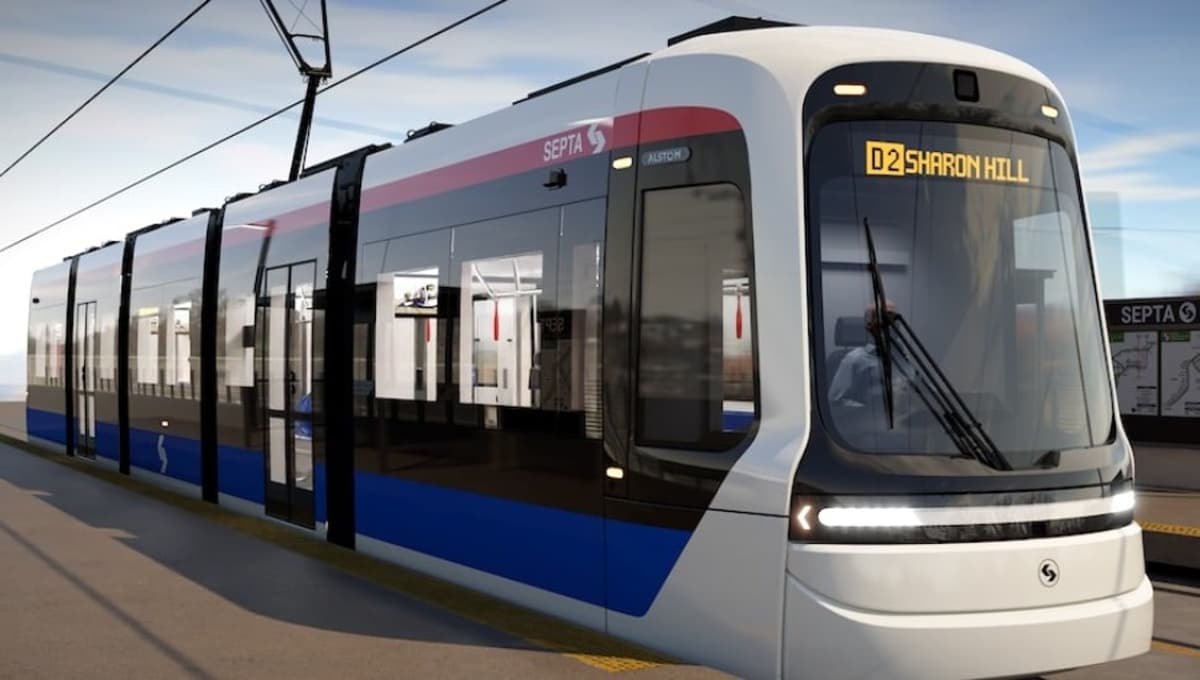
SEPTA Launches CBTC Rail Signalling Upgrade on Media Sharon Hill Line
•February 25, 2026
0
Why It Matters
The CBTC deployment modernizes a legacy trolley corridor, boosting safety and operational efficiency while setting a benchmark for U.S. light‑rail upgrades. It also demonstrates the commercial viability of digital signalling for older transit assets.
Key Takeaways
- •CBTC launched on SEPTA’s Media–Sharon Hill line
- •Hitachi Rail provides SelTrac digital signalling
- •11.9 miles of light rail upgraded
- •Real-time analytics improve capacity and safety
- •Expected lower lifecycle costs and capital spend
Pulse Analysis
The introduction of communications‑based train control on SEPTA’s Media–Sharon Hill line marks a pivotal shift for one of America’s few remaining interurban trolley systems. While many U.S. transit agencies still rely on decades‑old fixed‑block signalling, the new SelTrac CBTC platform delivers continuous, high‑resolution train positioning that eliminates the need for traditional trackside signals. This transition aligns Philadelphia’s regional rail with global best practices, where digital signalling is standard on new metro and commuter networks, and signals a broader commitment to modernising aging infrastructure.
At the heart of the upgrade is Hitachi Rail’s SelTrac technology, which integrates automatic train protection (ATP) and automatic train supervision (ATS) into a single, scalable architecture. By leveraging wayside transponders and onboard sensors, the system enforces speed limits, prevents unsafe movements, and dynamically adjusts headways to maximize line capacity. Real‑time data analytics enable operators to monitor performance metrics, anticipate bottlenecks, and respond swiftly to service disruptions, translating into more reliable journeys for passengers and higher throughput for the corridor.
Beyond immediate operational gains, the CBTC rollout carries strategic implications for transit agencies confronting legacy assets. The digital platform reduces maintenance overhead by retiring mechanical signal equipment, thereby lowering long‑term capital expenditures. Moreover, the upgrade positions the Media–Sharon Hill line for future enhancements such as driver‑assist features or full automation, supporting long‑term resilience and growth. Hitachi’s involvement underscores its century‑long legacy in rail signalling, reinforcing confidence that proven expertise can drive the digital transformation of North American light‑rail networks.
SEPTA launches CBTC Rail signalling upgrade on Media Sharon Hill line
0
Comments
Want to join the conversation?
Loading comments...