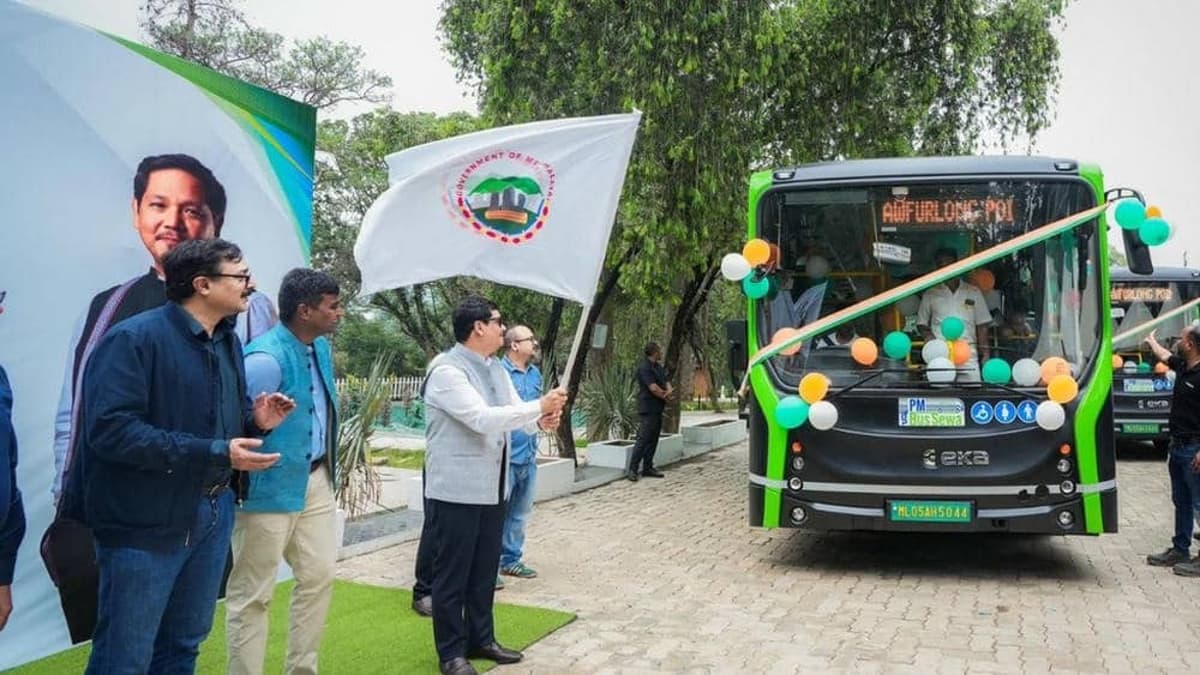
Shillong Starts Deployment of 55 EKA Electric Buses Under PM eBus Sewa Scheme
Why It Matters
By proving that scheduled, electric bus services can thrive in challenging terrain, Shillong’s model could guide the rollout of sustainable mass transit across India’s 4,000+ cities, accelerating emissions reductions and inclusive mobility.
Key Takeaways
- •Shillong adds 55 EKA electric buses under PM eBus Sewa.
- •GCC model pays operators for service quality, not passenger count.
- •Ridership rose tenfold to ~3,000 daily after diesel pilot.
- •Fleet aims for 150 buses serving 60,000 commuters within six months.
- •Project tests electric bus operations in hilly, low‑density Indian city.
Pulse Analysis
India’s PM eBus Sewa scheme represents the government’s most ambitious push to replace diesel‑run buses with zero‑emission fleets. While procurement subsidies have been plentiful, the real hurdle has been operational reliability—keeping buses on schedule, maintaining ridership, and ensuring financial viability. The scheme’s success hinges on replicable models that can work in diverse urban contexts, from dense metros to remote hill towns where terrain and low population density traditionally deter mass transit investments.
Shillong’s rollout tackles these challenges head‑on. The city adopted a Gross Cost Contract (GCC) framework, paying operators for adherence to service standards rather than fare collection, a model proven in London and Singapore. Early data from a 15‑bus diesel pilot showed daily riders surge from roughly 300 to nearly 3,000 within months, indicating strong latent demand when service is reliable. The new 55‑bus EKA fleet, built for steep gradients with a 150‑200 km range, includes GPS tracking, e‑ticketing and wheelchair access, and a dedicated charging depot is under construction. Officials aim for a 150‑bus network serving 60,000 commuters in six months, a scale that could reshape mobility in the 350,000‑strong urban agglomeration.
If Shillong can sustain punctual, electric service in a hilly, low‑density environment, it offers a blueprint for the 4,000+ Indian towns lacking viable public transport. Replicating the GCC model with electric buses could accelerate the country’s decarbonization goals, reduce reliance on private cars, and create local jobs. Policymakers and investors are watching closely, as the outcomes may dictate the next wave of funding and regulatory support for electric mobility across the subcontinent.
Shillong starts deployment of 55 EKA electric buses under PM eBus Sewa scheme
Comments
Want to join the conversation?
Loading comments...