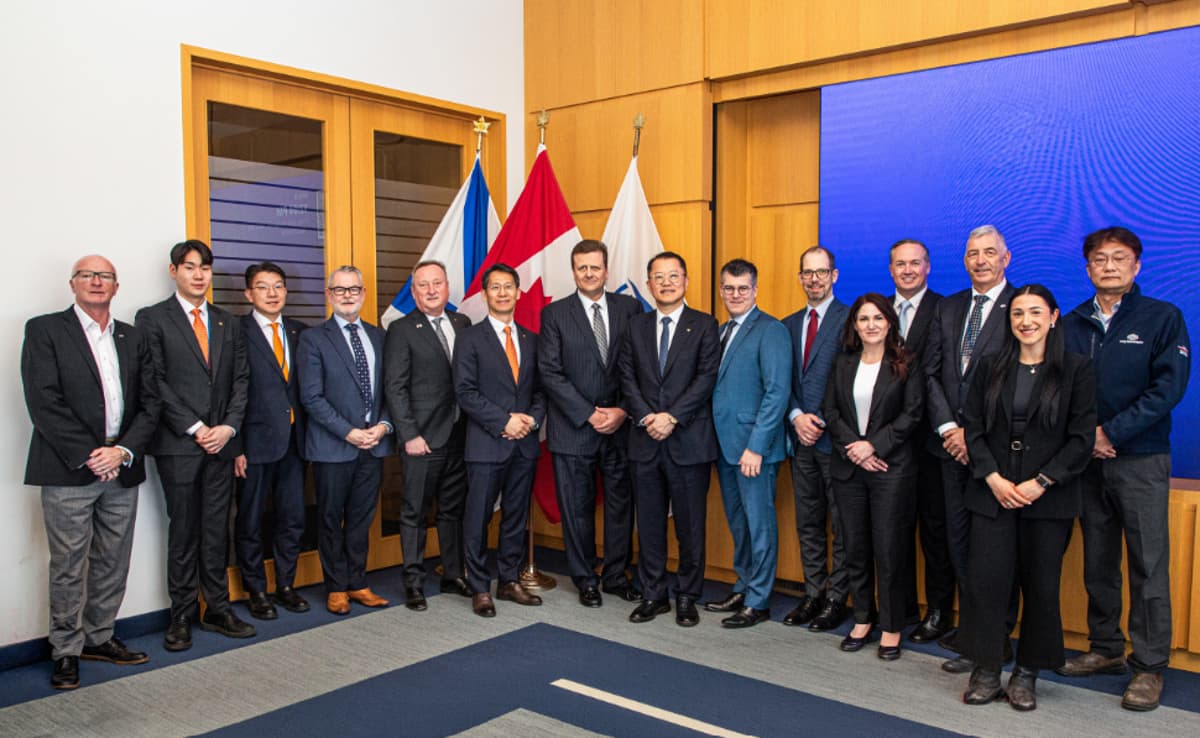
Shipbuilding Majors Discuss Expanded Naval Collaboration in Canada
Why It Matters
The alliance could accelerate Canada’s submarine program while embedding advanced Korean shipbuilding expertise into the domestic supply chain, strengthening national defense readiness. It also signals deeper Indo‑Pacific‑North Atlantic industrial ties amid rising maritime competition.
Key Takeaways
- •Hanwha Ocean brings four decades of submarine expertise to Canada
- •Irving Shipbuilding leverages 700‑plus Canadian suppliers for naval projects
- •Collaboration targets sustainment, workforce development, and supply‑chain modernization
- •Potential joint work could support Canada’s sovereign submarine program
- •Partnership may deepen South Korean tech transfer into Canadian shipyards
Pulse Analysis
The high‑level meeting between Hanwha Ocean and Irving Shipbuilding reflects a growing trend of cross‑border cooperation in defense shipbuilding. Hanwha, a South Korean heavyweight with a portfolio that includes the KSS‑I, KSS‑II and KSS‑III submarine classes, is seeking to export its engineering know‑how beyond the Korean Peninsula. Irving, the cornerstone of Canada’s National Shipbuilding Strategy, brings a mature domestic ecosystem of more than 700 suppliers and ongoing yard upgrades in Halifax. By aligning their complementary strengths, the two firms aim to create a joint value chain that can handle everything from design to life‑cycle support.
For Canada, the partnership offers a pragmatic path to achieving a sovereign submarine capability without starting from scratch. Leveraging Hanwha’s proven sustainment processes could shorten the learning curve for Canadian crews and maintenance crews, while Irving’s deep ties to local firms ensure that a significant portion of the work stays in‑country, preserving jobs and fostering skill development. Workforce initiatives discussed in Halifax could include joint training programs, apprenticeships and technology transfer, helping to address the talent gap that has long challenged the Canadian naval sector.
Strategically, the collaboration signals a broader realignment of maritime industrial alliances as nations seek resilient supply chains amid geopolitical uncertainty. South Korea’s advanced submarine technology, combined with Canada’s Atlantic shipbuilding infrastructure, could serve as a model for other countries looking to blend indigenous capacity with foreign expertise. If the talks progress to formal agreements, the joint effort may also influence procurement decisions for future Canadian surface combatants, potentially reshaping the North Atlantic defense market for years to come.
Shipbuilding majors discuss expanded naval collaboration in Canada
Comments
Want to join the conversation?
Loading comments...