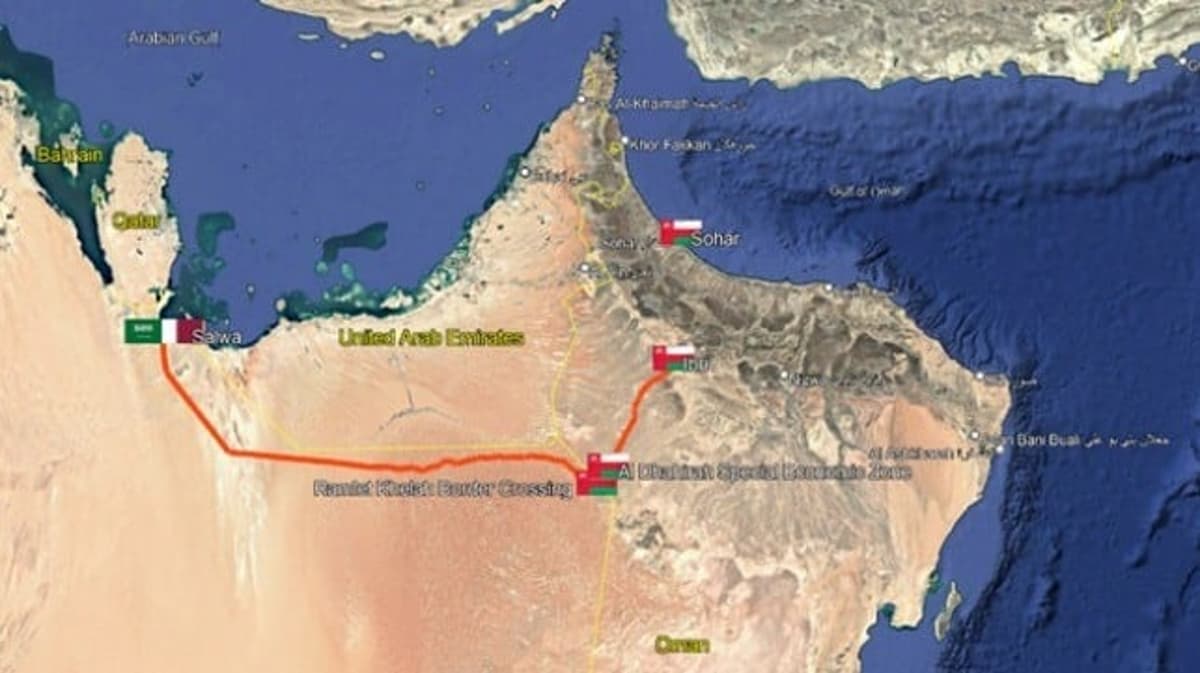
Shipping Companies Leverage Arabian Peninsula Truck Routes to Bypass Hormuz
Companies Mentioned
Why It Matters
These alternative land corridors restore Gulf supply‑chain resilience and offset revenue losses from the Hormuz blockage, while attracting new logistics revenue and spurring regional infrastructure investment.
Key Takeaways
- •Route 95 cuts travel time by 16 hours between Saudi and Oman
- •Border crossing value jumped to $830 million in March, tripling February
- •Ramool Transportation earned more in March 2026 than all of 2025
- •New EZAD zone will host manufacturers, not just logistics, opening 2027
- •MSC launches Antwerp‑to‑Gulf sea‑land service starting May 2026
Pulse Analysis
The abrupt shutdown of the Strait of Hormuz has compelled Gulf exporters and importers to seek overland alternatives, and Route 95 quickly emerged as the most efficient corridor. By skirting the Empty Quarter’s shifting sands, the highway slashes transit time by roughly 16 hours, eliminating the need for lengthy desert detours or UAE customs delays. The rapid escalation in cross‑border trade—evidenced by a jump to $830 million in March—underscores how quickly market participants can reconfigure logistics when geopolitical shocks arise.
Beyond the immediate route, Saudi Arabia is accelerating a broader multimodal strategy. Five new freight rail lines are being built to shift cargo from congested highways to rail, while Highway 85 is being upgraded to a dual‑carriageway that now offers a reliable link to the Mediterranean via Syria. Simultaneously, the Al Dhahirah Special Economic Zone, a joint Saudi‑Omani venture, will open next year with a focus on manufacturing rather than pure logistics, signaling a shift toward value‑added activities that can leverage the new transport arteries.
Global carriers are also adapting, with MSC rolling out a sea‑land service that moves containers from Antwerp to Jeddah, then onto trucks bound for Dammam and onward to Gulf ports such as Jebel Ali. However, port capacity remains a bottleneck; while Salalah ranks among the world’s most efficient terminals, facilities like Khor Fakkan and Fujairah operate far below their potential TEU throughput. The industry’s near‑term challenge will be balancing the surge in overland traffic with limited maritime handling space, a dynamic that will shape Gulf logistics for years to come.
Shipping Companies Leverage Arabian Peninsula Truck Routes to Bypass Hormuz
Comments
Want to join the conversation?
Loading comments...