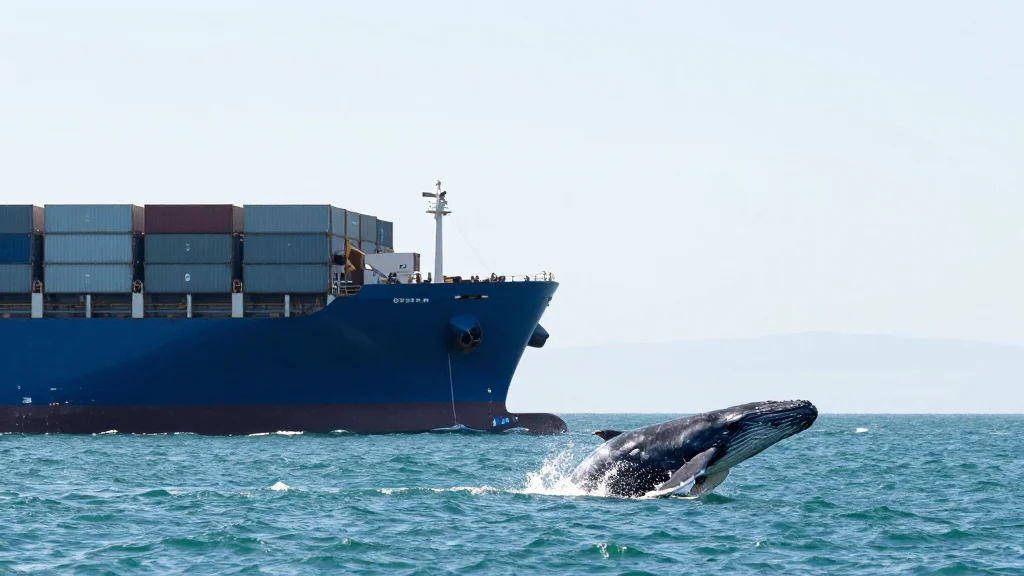
Shipping Reroutes Around South Africa Quadruple Whale‑Strike Risk for Bryde’s Whales

Why It Matters
The rise in ship‑whale collisions threatens Bryde’s whales, a species already classified as vulnerable, and could trigger broader ecosystem disruptions along South Africa’s biodiverse coastline. At the same time, the shipping industry faces a dilemma: maintaining efficient trade flows amid geopolitical instability while meeting growing environmental expectations. Implementing speed limits and routing guidelines could set a precedent for reconciling commercial imperatives with marine conservation, influencing policy in other high‑traffic regions such as the Gulf of Aden and the South China Sea. Beyond biodiversity, the issue underscores the cascading effects of geopolitical conflicts on global supply chains. Rerouting around the Cape adds fuel consumption, emissions, and costs, pressuring carriers to seek operational efficiencies that may conflict with ecological safeguards. A coordinated regulatory response could mitigate both environmental damage and economic inefficiencies, reinforcing the case for integrated maritime governance.
Key Takeaways
- •Four‑fold rise in vessels >15 knots through South African waters (Dec 2023‑Dec 2024)
- •Two Bryde’s whales stranded on Dyer Island in April with propeller damage
- •Rerouting driven by Houthi attacks in the Red Sea and Hormuz Strait blockade
- •Proposed 10‑knot speed limit modeled on U.S. East Coast measures
- •IWC to consider regional shipping guidelines later in 2026
Pulse Analysis
The surge in traffic around the Cape of Good Hope illustrates how geopolitical shocks can reshape maritime risk landscapes far beyond the immediate conflict zones. Historically, the Cape has served as a fallback route, but the current volume—quadrupled high‑speed transits—exceeds the capacity for passive mitigation. Speed‑related strike risk scales non‑linearly; a vessel traveling at 15 knots can cover a 30‑meter whale in under two seconds, leaving little reaction time for either party. This physics‑driven hazard makes speed caps far more effective than route adjustments alone.
From an industry perspective, carriers are caught between cost pressures and emerging ESG (environmental, social, governance) mandates. While speed reductions raise fuel costs, they also lower emissions, aligning with the International Maritime Organization’s 2050 decarbonisation targets. Shipping firms that proactively adopt speed‑limit protocols could gain a competitive edge, positioning themselves as low‑impact operators for environmentally conscious shippers.
Regulatory momentum is building. The IWC’s upcoming session could codify voluntary speed limits, but enforcement will likely depend on national flag states and port authorities. South Africa’s willingness to collaborate with the IMO suggests a pathway for regional standards that could be mirrored in other chokepoints. If successful, this model could become a template for balancing trade resilience with marine protection in an era where geopolitical volatility increasingly forces trade routes to adapt.
Shipping Reroutes Around South Africa Quadruple Whale‑Strike Risk for Bryde’s Whales
Comments
Want to join the conversation?
Loading comments...