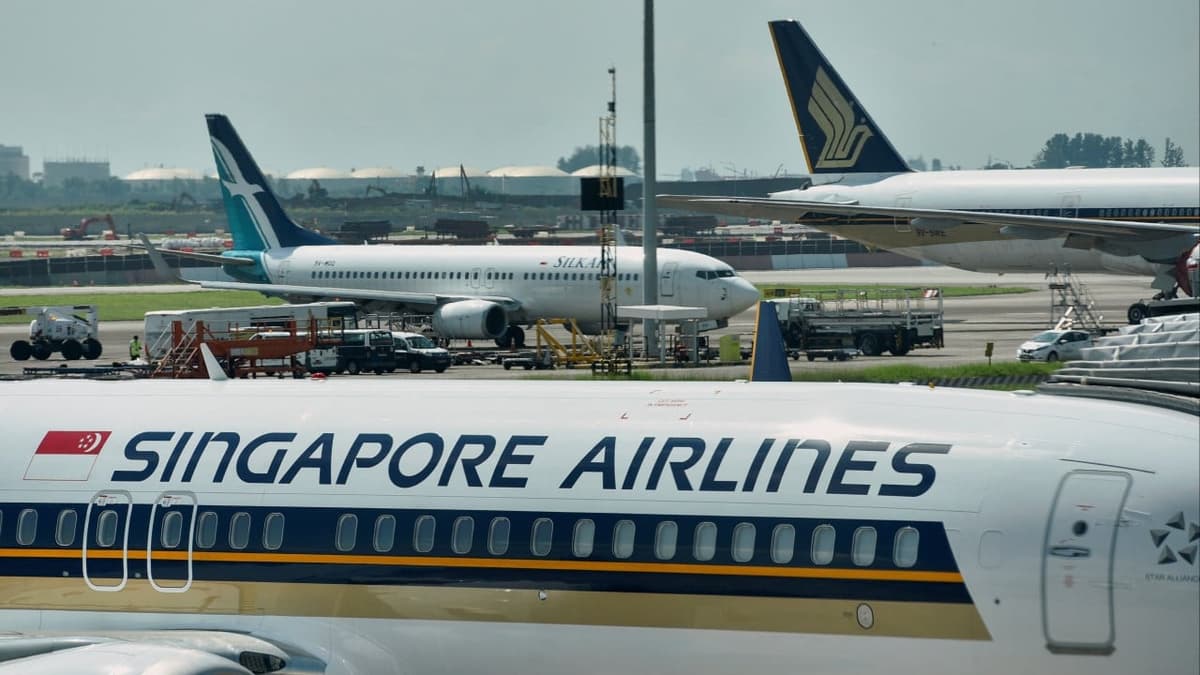
Singapore Airlines Faces Narrow Window to Gain Market Share From Gulf Rivals
Companies Mentioned
Why It Matters
SIA’s expansion positions it as a premium alternative to Gulf carriers, potentially reshaping Asia‑Europe traffic flows and boosting yields for a financially resilient airline. The strategy also highlights how hedging discipline can create competitive advantage during energy price shocks.
Key Takeaways
- •SIA adds Manchester, Milan, Munich, London Gatwick, Madrid routes.
- •Strong balance sheet and fuel hedges shield SIA from price spikes.
- •Gulf carriers restoring capacity narrows SIA's window to capture market.
- •Affluent APAC travelers favor premium Asia‑Europe flights despite higher fares.
Pulse Analysis
The ongoing Middle‑East conflict has forced Gulf carriers to trim capacity, leaving a gap in premium Asia‑Europe connections. Singapore Airlines is seizing this moment by launching additional long‑haul flights to key European hubs, a tactic supported by its robust financials—its debt‑to‑equity ratio sits at 0.62 and it holds roughly S$12 billion (about US$9.4 billion) in liquidity. Coupled with a rare dual‑hedge on Brent crude and jet fuel, SIA can absorb elevated fuel costs that are squeezing competitors, allowing it to maintain yields while rivals grapple with price volatility.
Analysts see SIA’s strategy as a “demand capture counter‑move,” targeting affluent Asia‑Pacific travelers who account for 75 % of new regional spending and are less price‑sensitive. By routing passengers directly through Singapore rather than through Gulf hubs, the airline can offer faster, premium service and build loyalty among business and high‑net‑worth travelers. The new routes to Manchester, Milan, Munich, London Gatwick and Madrid are positioned to attract both leisure and business demand, especially as Visa data shows a shift toward intra‑APAC travel but still strong appetite for Europe among the wealthy.
Nevertheless, the opportunity is time‑bound. Gulf airlines are incrementally restoring capacity, and global jet‑fuel prices remain elevated, eroding the cost advantage SIA enjoys. Fleet constraints mean SIA is reallocating existing wide‑body slots rather than adding new aircraft, limiting the scale of growth. If fuel prices stay high, even well‑capitalised carriers may face pressure to cut less profitable frequencies, underscoring the importance of SIA’s hedging discipline and balance‑sheet depth as decisive factors in sustaining its market‑share gains.
Singapore Airlines faces narrow window to gain market share from Gulf rivals
Comments
Want to join the conversation?
Loading comments...