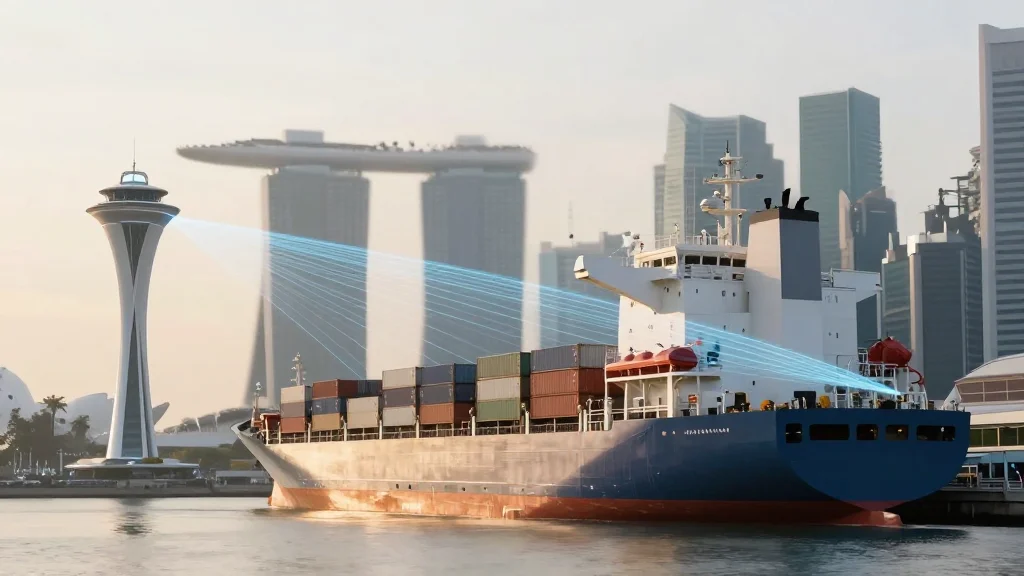
Singapore Unveils OCEANS‑X Platform to Streamline Global Maritime Data Exchange

Why It Matters
OCEANS‑X addresses a long‑standing bottleneck in global shipping: the lack of a common, secure digital layer for data exchange. By enabling real‑time, trusted data sharing, the platform can cut turnaround times at ports, lower operational costs, and improve supply‑chain predictability. In an era where shipping volumes are rebounding after pandemic disruptions, such efficiencies are critical to meeting rising demand without exacerbating congestion. The platform also provides the technical foundation for next‑generation sustainability initiatives. With standardized APIs, carbon‑tracking tools and emissions‑reporting services can be embedded directly into port and vessel operations, helping the industry meet International Maritime Organization (IMO) decarbonisation targets. As regulators worldwide tighten reporting requirements, OCEANS‑X could become a de‑facto conduit for compliance data, giving Singapore a strategic advantage in the competitive maritime hub race.
Key Takeaways
- •Singapore launched OCEANS‑X, a secure API exchange platform, at Singapore Maritime Week 2026
- •Platform aims to enable interoperable data exchange among regulators, ports, shipping lines and international partners
- •SMW 2026 hosts over 20,000 participants from nearly 80 countries, highlighting global interest in maritime digitalisation
- •OCEANS‑X is positioned to improve port efficiency, reduce paperwork and support AI‑driven analytics
- •The platform could accelerate maritime decarbonisation by enabling real‑time emissions tracking and optimal routing
Pulse Analysis
The OCEANS‑X debut reflects Singapore’s strategic bet that digital infrastructure will become the next competitive moat in maritime logistics. Historically, ports have competed on physical attributes—depth, crane capacity, hinterland connectivity. Today, the ability to move data as quickly as cargo is emerging as an equally decisive factor. By offering a government‑backed, standards‑based API marketplace, Singapore is attempting to lock in network effects: the more participants adopt the platform, the more valuable it becomes for everyone, creating a virtuous cycle of data richness and service innovation.
However, the platform’s success hinges on overcoming entrenched silos. Many shipping lines and terminal operators have invested heavily in proprietary IT stacks, and transitioning to an open API model may involve costly integration work and cultural change. The MPA’s outreach during SMW—drawing 20,000 maritime professionals—signals an awareness of this hurdle, but concrete incentives, such as reduced fees for early adopters or guaranteed data‑quality certifications, will be essential to drive uptake.
If OCEANS‑X gains traction, it could reshape the economics of maritime trade. Faster data flows translate into shorter berth times, which directly improve vessel utilisation rates and reduce fuel burn. Moreover, the platform could become a launchpad for value‑added services—predictive maintenance alerts, dynamic pricing for berth slots, or real‑time carbon‑offset marketplaces—creating new revenue streams for both public and private actors. In the longer term, Singapore’s model may inspire similar initiatives in other major hubs, potentially leading to a globally interoperable maritime data layer that standardises trade documentation, enhances supply‑chain resilience, and accelerates the industry’s green transition.
Singapore Unveils OCEANS‑X Platform to Streamline Global Maritime Data Exchange
Comments
Want to join the conversation?
Loading comments...