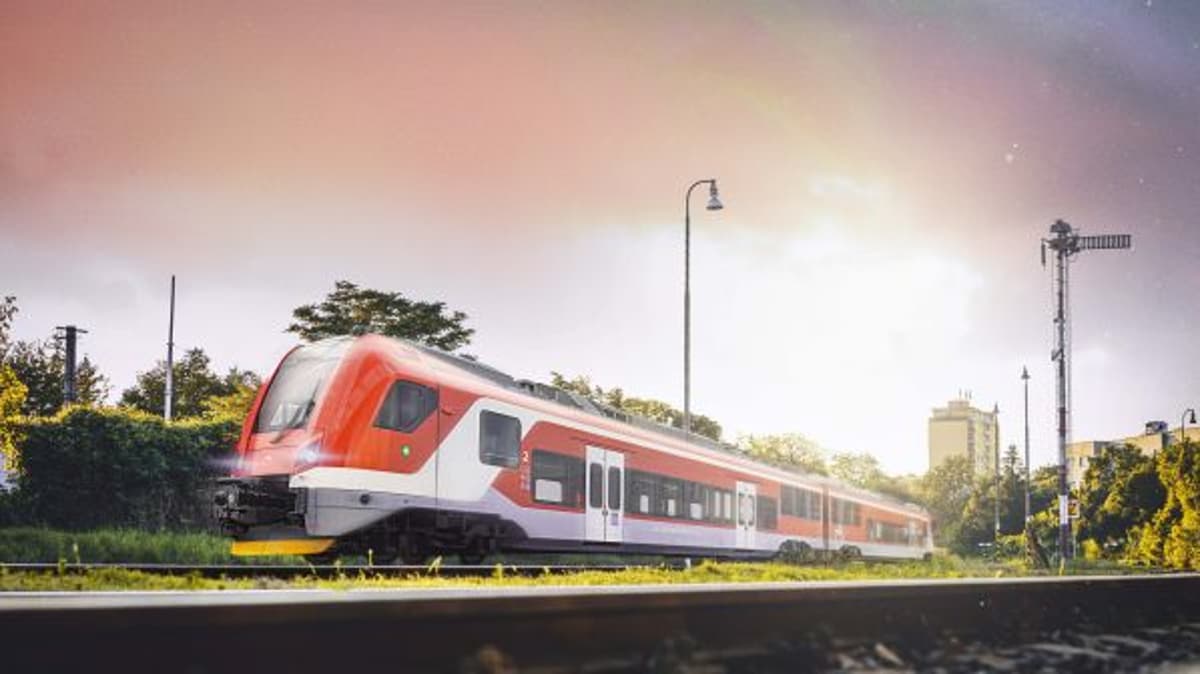
Slovakia Secures EU Funding for BEMU Fleet Order
Why It Matters
The financing fast‑tracks rail decarbonisation without the high cost of full electrification, positioning Slovakia as a Central European leader in battery‑powered passenger service and demonstrating the impact of EU climate‑finance tools.
Key Takeaways
- •€144 million EU grant (~$157 million) funds 16 BEMUs for ZSSK.
- •Trains cost roughly €9 million ($9.8 million) each, with 20‑train option.
- •Delivery begins 2028, serving non‑electrified lines (~55% of network).
- •First Slovak operator to run zero‑emission battery‑electric trains.
- •EU Cohesion Fund and RRF finance decarbonisation without new electrification.
Pulse Analysis
The European Union’s Cohesion Fund and Recovery and Resilience Facility are increasingly channeling money into low‑carbon transport projects, and Slovakia’s recent BEMU order is a prime example. By earmarking €144 million for 16 battery‑electric multiple units, the EU not only supports modern rolling stock but also validates its strategy of leveraging existing rail corridors to achieve emissions cuts. The funding structure—non‑refundable and tied to a firm order—reduces financial risk for ZSSK while ensuring that the procurement aligns with broader EU climate objectives.
Battery‑electric trains offer a pragmatic bridge between diesel traction and full electrification. In Slovakia, only 1,585 km of the 3,630 km network is electrified, leaving more than half of routes dependent on diesel. Electrifying these lines would require substantial capital outlays for catenary, substations and signalling upgrades. BEMUs, priced at roughly €9 million ($9.8 million) each, can run on existing tracks and recharge on short electrified sections, delivering zero‑emission service at a fraction of the infrastructure cost. The option for an additional 20 units gives ZSSK flexibility to scale the technology as performance data and passenger demand evolve.
Regionally, Slovakia’s move may trigger a ripple effect across Central and Eastern Europe, where many operators face similar electrification gaps. Battery‑electric technology, backed by EU financing, could become the default upgrade path for non‑electrified corridors, accelerating the continent’s shift toward greener mobility. Moreover, the successful deployment of these BEMUs will provide valuable operational data that could inform future EU policy and funding allocations, reinforcing the role of climate‑focused financial instruments in reshaping the rail sector.
Slovakia secures EU funding for BEMU fleet order
Comments
Want to join the conversation?
Loading comments...