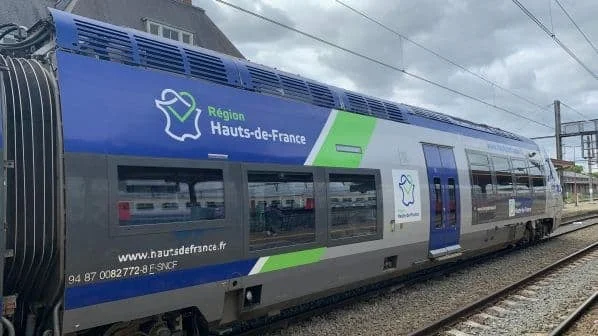
SNCF Wins Another French Operating Contract
Why It Matters
The award reinforces SNCF’s dominance in French regional rail while injecting significant capital into northern France’s transport infrastructure, improving airport connectivity and supporting regional economic growth.
Key Takeaways
- •SNCF wins €3 bn (≈$3.2 bn) nine‑year TER contract.
- •Contract covers 70 stations, 70,000 daily passengers.
- •New 6.5 km Roissy‑Picardie link to open Dec 2027.
- •Fleet expands from 70 to 103 trains, including bi‑mode units.
- •Dedicated subsidiary will employ ~1,200 staff for operations.
Pulse Analysis
France’s shift toward long‑term operating contracts marks a strategic pivot from traditional franchise models, and SNCF’s latest win in Hauts‑de‑France underscores that trend. The €3 billion agreement, one of the largest of its kind since the country began awarding such contracts, provides the rail operator with a stable revenue stream while obligating it to meet performance targets, such as a 14% increase in passenger‑kilometres over the next decade. This framework encourages efficiency and aligns operator incentives with public‑service goals, a model increasingly favored by European transport ministries.
The contract’s operational scope is extensive, covering 70 stations and serving about 70,000 passengers each day—roughly 45% of the region’s total rail traffic. The addition of the 6.5 km Roissy‑Picardie link, slated for December 2027, will directly connect the Picardy area to Paris‑Charles‑de‑Gaulle airport, a move expected to capture significant airport‑bound demand and relieve congestion on existing routes. Coupled with an expanded fleet—rising from 70 to 103 units, including bi‑mode Régiolis and double‑deck EMUs—the service upgrade positions the region to meet growing commuter and intercity travel needs, especially as post‑pandemic mobility rebounds.
For the broader rail industry, SNCF’s ability to secure a contract of this magnitude signals confidence in its operational capabilities and its willingness to invest in modern rolling stock. The creation of a dedicated subsidiary with a 1,200‑strong workforce illustrates a focused approach to regional service delivery, potentially setting a benchmark for future public‑private partnerships across Europe. As EU policy continues to emphasize sustainable transport and integrated multimodal networks, contracts like this could become a template for aligning national rail operators with regional development objectives while delivering measurable performance outcomes.
SNCF wins another French operating contract
Comments
Want to join the conversation?
Loading comments...