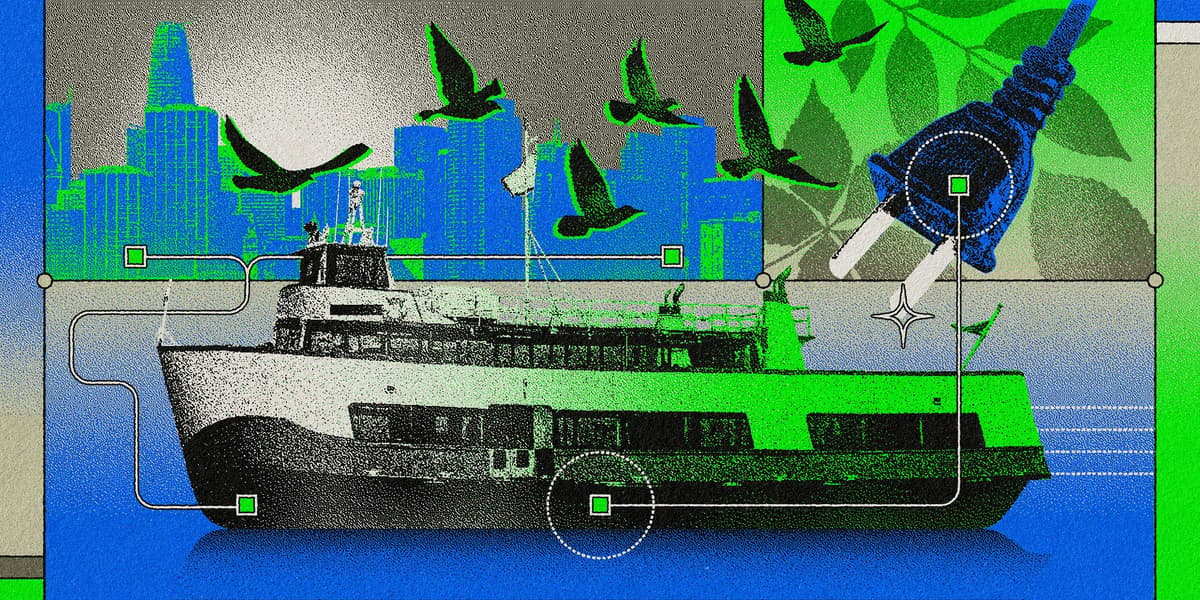
So Long, ‘Ferrynoia.’ Green Maritime Technology Is Here
Companies Mentioned
Why It Matters
The Harbor Charger proves hybrid‑electric ferries can deliver faster, quieter service while cutting emissions and operating costs, accelerating maritime decarbonization. Its adoption signals a shift that could prompt other coastal cities to replace diesel fleets, supporting broader climate goals.
Key Takeaways
- •Harbor Charger carries 1,200 passengers, 30 vehicles, hybrid‑electric power
- •Cuts CO2 emissions by at least 600 tons annually
- •66% faster than 70‑year‑old diesel ferry, 10‑minute crossing
- •Expected $200k yearly fuel savings; full electric adds 800 tons reduction
- •San Francisco aims zero‑emission ferry fleet by 2035 with $55M grant
Pulse Analysis
Hybrid‑electric ferries are emerging as a practical solution to the maritime sector’s carbon challenge, and New York’s Harbor Charger is a flagship example. Designed by Elliott Bay Design Group and built for $33 million, the 66‑foot vessel combines 22 Siemens lithium‑ion battery packs with diesel generators, delivering a 10‑minute crossing that’s 66% faster than the legacy diesel ferry. By operating on battery power for up to 90 minutes, it eliminates roughly 600 tons of CO2 each year and trims fuel costs by about $200,000, offering a compelling business case for greener water transport.
Beyond environmental gains, the Harbor Charger brings operational advantages that address traditional concerns about electrifying vessels. The quieter, smoother ride improves passenger experience, while the simplified drivetrain reduces maintenance complexity. Operators are tackling “ferrynoia”—the fear of system failures—through rigorous crew training on digital controls and battery management. Early interest from other cities suggests the model could catalyze a wave of retrofits and new builds, turning hybrid ferries into a new standard for commuter and tourist routes across congested waterways.
The momentum extends nationwide, with San Francisco Bay Ferry preparing its first fully battery‑electric catamaran, supported by a $55 million federal grant. The city plans to deploy five electric vessels by 2027 and achieve a zero‑emission fleet by 2035, mirroring broader federal and state climate objectives. As dockside rapid‑charging infrastructure matures, the transition from hybrid to fully electric operation will accelerate, delivering additional CO2 reductions—potentially another 800 tons per year per vessel—and reshaping waterfront mobility for commuters, tourists, and freight alike.
So Long, ‘Ferrynoia.’ Green Maritime Technology Is Here
Comments
Want to join the conversation?
Loading comments...