Solar Flexibility
Companies Mentioned
Why It Matters
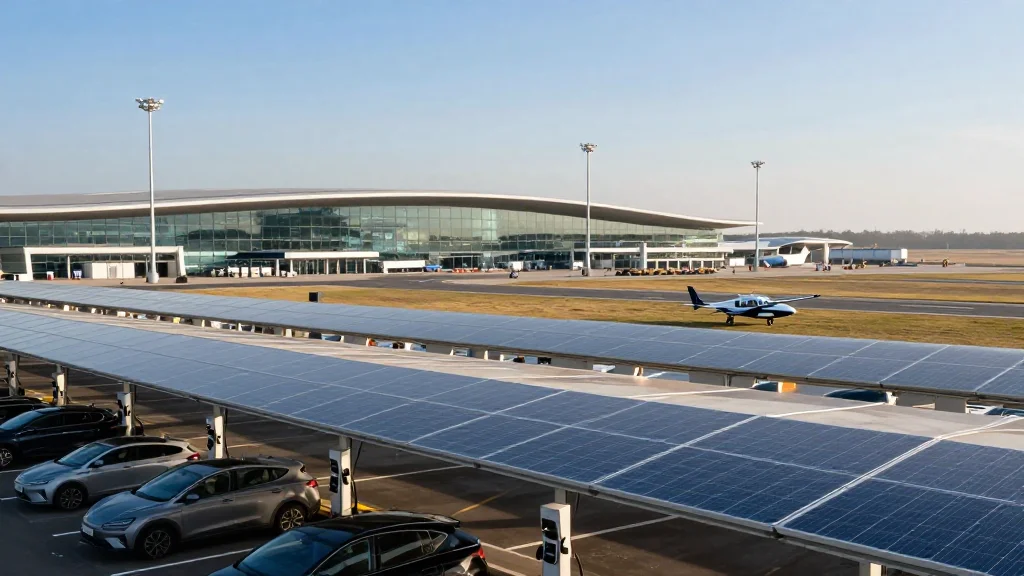
Deploying solar carports gives airports a dual benefit of cutting energy costs and meeting tightening carbon‑reduction mandates, strengthening their financial resilience as passenger traffic rebounds.
Key Takeaways
- •UK airports spend 10‑15% of budgets on electricity.
- •Over 500,000 UK parking spaces could host solar carports.
- •Heathrow’s 51,500 spaces could generate ~1.3 GW annually.
- •Solar carports can power EV charging and airport operations.
- •PPAs let airports install carports at no upfront cost.
Pulse Analysis
The resurgence of air travel in the United Kingdom has reignited the sector’s carbon dilemma. In 2024, nearly one million flights generated 34.1 million tonnes of CO₂, a 6.2 % rise over the previous year, while flight volumes approached 91 % of pre‑pandemic levels. At the same time, soaring electricity prices are forcing airports to allocate between 10 % and 15 % of their total operating budgets to power alone. This convergence of higher demand, tighter emissions targets, and volatile energy costs creates a compelling incentive for airports to secure on‑site renewable generation.
Solar carports emerge as a uniquely suited solution because they turn existing parking infrastructure into power plants. RenEnergy estimates that more than 500,000 UK parking bays could accommodate photovoltaic canopies, delivering roughly 1.3 GW of clean electricity each year—enough to supply over 350,000 homes or keep the Houses of Parliament lit for 28 years. Heathrow Airport alone hosts 51,500 spaces, representing a substantial untapped resource. Beyond grid‑fed electricity, these structures can host EV chargers, LED lighting, CCTV and motion‑sensing controls, creating a multi‑functional, revenue‑generating asset for the airport ecosystem.
Financially, solar carports are increasingly affordable thanks to power purchase agreements that lock in lower electricity rates and often fund installation at no upfront cost to the airport. The regulatory pathway is also streamlined: planning permission is typically unnecessary, with only grid‑capacity coordination required. European peers such as France and Slovenia already mandate solar canopies for car parks exceeding 80 spaces, demonstrating a proven policy model. By leveraging these incentives, UK airports can reduce operating expenses, meet net‑zero by 2050 commitments, and future‑proof their infrastructure against both climate and market volatility.
Solar flexibility
Comments
Want to join the conversation?
Loading comments...