Some Call It The Worst-Looking Chevy Corvette Ever Made, Others Just See An Old C4
•March 6, 2026
0
Companies Mentioned
Why It Matters
The replica provides collectors with an affordable entry into Indy 500 memorabilia, while its scarcity and unique branding can drive niche market appreciation.
Key Takeaways
- •Only 527 units produced, making it rare
- •Prices range $16k–$40k, below six figures
- •Shares LT1 5.7L V8 with standard ’95 C4
- •Unique purple/white paint and Indy decals attract enthusiasts
- •Premium over regular C4 about $3k for badge value
Pulse Analysis
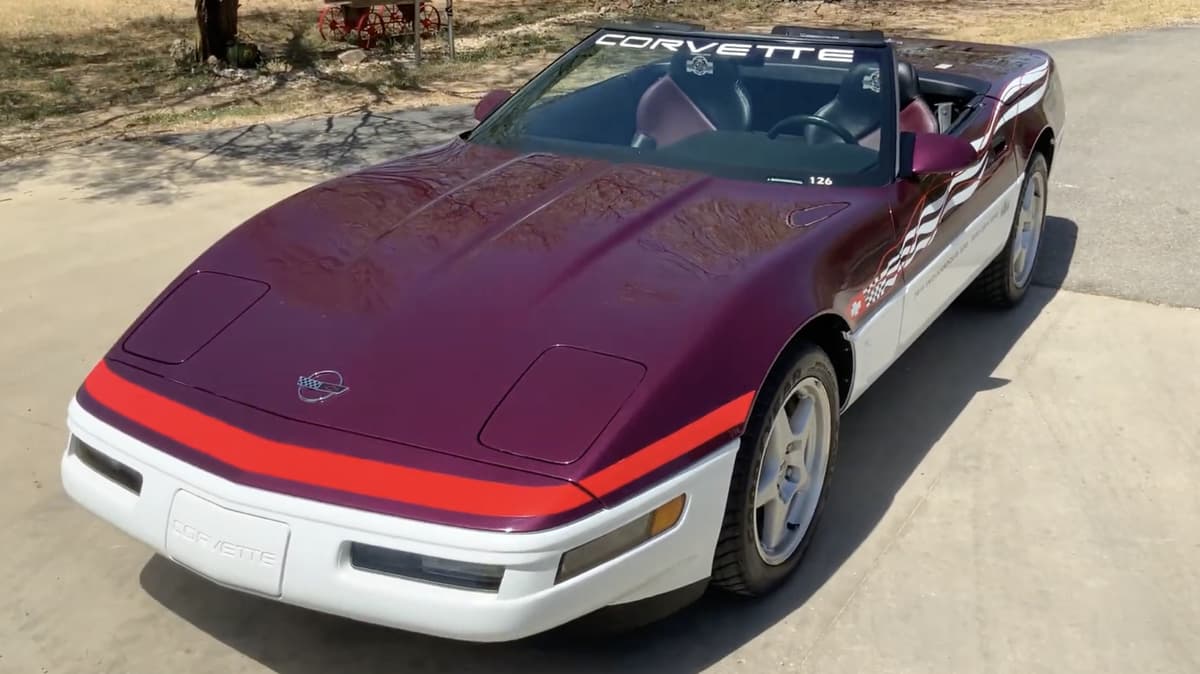
The 1995 Chevrolet Corvette Indy 500 pace‑car replica sits at the intersection of automotive history and polarizing design. Built on the C4 platform that ran from 1984 to 1996, the special‑edition model was painted in a bold Dark Metallic Purple with Arctic White accents, a color scheme that still divides enthusiasts. Only 527 examples were produced, each bearing official Indy 500 decals, a wavy flag‑ribbon graphic, and the same 5.7‑liter LT1 V8 that powered the standard ’95 Corvette. While the paint job earned the moniker “worst‑looking Corvette,” the wind‑tunnel‑informed bodywork and ZR‑1‑sized wheels give the car a distinct presence on the road.
From a market perspective, the pace‑car replica offers a rare collectible at a relatively modest price point. Hagerty values a well‑preserved example around $16,000, while Hemmings notes that even concours‑level specimens rarely exceed $40,000—far below the six‑figure sums often associated with limited‑run performance cars. The premium over a comparable regular ’95 C4, roughly $3,000, reflects the added badge value of Indy heritage rather than any mechanical advantage; the powertrain remains the 300‑horsepower LT1 paired with a four‑speed automatic. By contrast, a C4 ZR‑1, with its 375‑horsepower LT5 and six‑speed manual, can be sourced for under $30,000, offering superior performance for a similar investment.
For collectors, the appeal lies less in performance and more in provenance. Owning an official Indy 500 pace‑car replica provides a tangible link to one of motorsport’s most storied events, a niche that can enhance resale potential as the pool of surviving examples shrinks. The model also illustrates how manufacturers leverage special‑edition branding to create micro‑markets within the broader classic‑car segment. As interest in 1990s American sports cars resurges, the 1995 Corvette pace‑car may see incremental appreciation, especially among enthusiasts who value racing memorabilia as much as horsepower.
Some Call It The Worst-Looking Chevy Corvette Ever Made, Others Just See An Old C4
0
Comments
Want to join the conversation?
Loading comments...