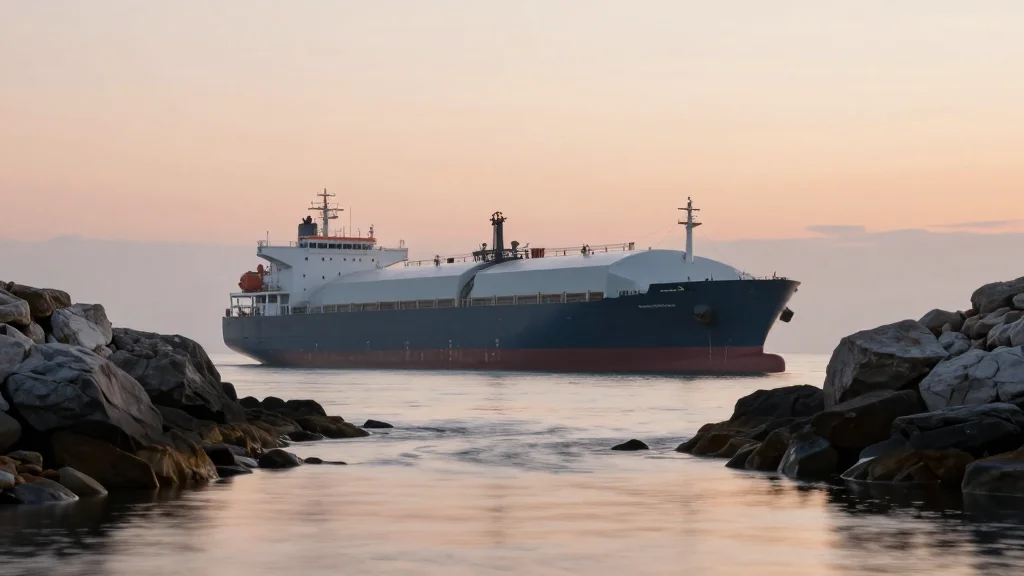
Some LNG Passing Through Strait of Hormuz as Operators Conceal Vessel Movements
Companies Mentioned
Why It Matters
Concealed LNG shipments threaten market visibility and could tighten supply for Asian importers, potentially driving price volatility. The practice also underscores how geopolitical tension reshapes maritime logistics in a critical energy corridor.
Key Takeaways
- •ADNOC hides LNG vessel routes to evade detection in Hormuz.
- •Mubaraz first fully loaded LNG ship through strait since war began.
- •Dark activity reported for Mraweh, bound for Japan, loaded April 24.
- •Concealed movements coincide with US‑Iran peace talks and Gulf fighting.
- •Tracking gaps raise supply‑chain risk for Asian LNG importers.
Pulse Analysis
The Strait of Hormuz remains one of the world’s most strategic chokepoints, funneling roughly 20% of global oil and a growing share of liquefied natural gas. Recent hostilities between Iran and regional actors have heightened naval threats, prompting shippers to reconsider traditional routing. While many vessels continue to broadcast their positions, a subset now employs signal‑blocking tactics to avoid detection, complicating real‑time monitoring and risk assessment for traders and insurers alike.
Kpler’s data reveals that ADNOC, the United Arab Emirates’ energy giant, is actively obscuring the trajectories of at least two LNG carriers. The Mubaraz, loaded on March 2 at Das Island, quietly traversed the strait and is now headed for China, while the Mraweh, loaded on April 24, shows a concealed path toward Japan. By muting AIS signals, these operators aim to sidestep potential interdiction or diplomatic fallout as peace talks between Washington and Tehran progress. However, the lack of transparency introduces uncertainty into freight contracts and spot‑market pricing, as buyers cannot reliably track delivery timelines.
Asian LNG importers, which rely heavily on Middle‑East supplies, face heightened supply‑chain risk when vessel movements go dark. Uncertainty can prompt buyers to secure additional inventory or hedge more aggressively, nudging spot prices upward. Moreover, insurers may raise premiums for voyages through contested waters, further inflating costs. The episode illustrates how geopolitical friction can ripple through global energy markets, prompting both shippers and consumers to adapt to a more opaque and volatile trading environment.
Some LNG Passing Through Strait of Hormuz as Operators Conceal Vessel Movements
Comments
Want to join the conversation?
Loading comments...