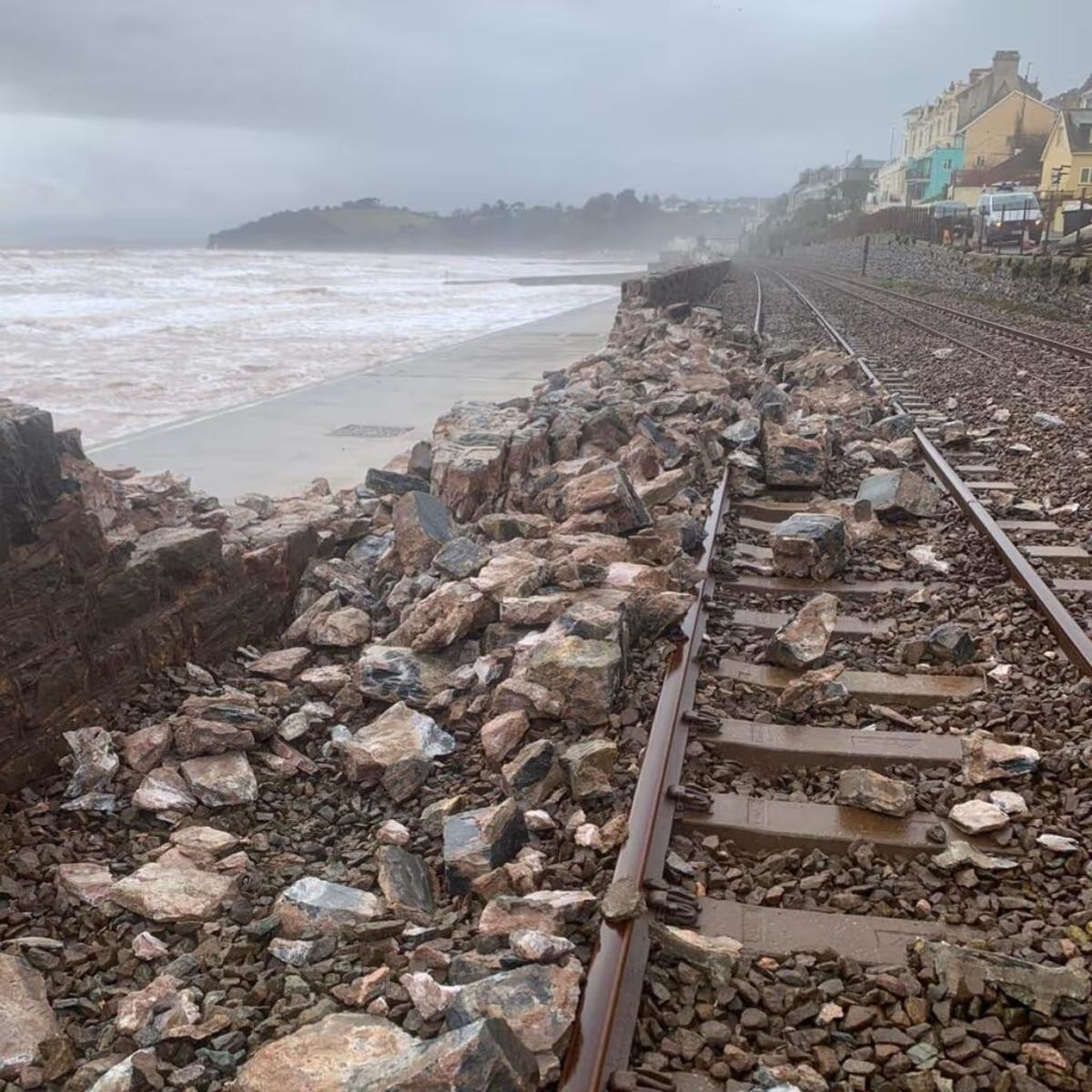
South West Rail Resilience Programme Update
Companies Mentioned
Why It Matters
The line is a vital transport artery for the South West economy, and recurring coastal threats underscore the need for long‑term, resilient infrastructure investment. Successful mitigation will protect regional commerce and reduce costly service disruptions.
Key Takeaways
- •Phase 1‑4 completed by 2024, costing £165 m ($210 m)
- •Storm Ingrid damaged older seawall sections, not the newly strengthened parts
- •Network Rail trials dewatering to stabilize cliffs from Parson’s Tunnel to Teignmouth
- •Final phase cost expected to exceed previous phases, prompting new funding discussions
- •MP Martin Wrigley calls rail line a “crucial lifeline,” urging further investment
Pulse Analysis
Coastal rail corridors like the Paddington‑to‑Penzance line face unique climate‑driven risks that traditional engineering solutions struggle to mitigate. The recent Storm Ingrid episode highlighted how even modest wave action can breach legacy sea‑walls, prompting emergency service suspensions that ripple through the South West’s tourism, freight, and commuter markets. By contrast, the reinforced sections installed under the South West Rail Resilience Programme demonstrated the value of modern, wave‑deflection designs, offering a template for other vulnerable coastal routes worldwide.
Looking ahead, Network Rail’s fifth phase pivots from structural reinforcement to geotechnical innovation. The proposed de‑watering trials aim to lower groundwater pressure within the 70‑metre sandstone cliffs, a primary driver of rock‑falls and sinkholes. If successful, continuous pumping could become a cost‑effective alternative to massive sea‑wall rebuilds, especially where traditional anchoring methods fail. This approach aligns with broader industry trends toward adaptive, data‑driven infrastructure that balances upfront capital outlay with long‑term operational resilience.
The stakes extend beyond engineering; the railway is a lifeline for regional economies, linking ports, factories, and tourist destinations. Prolonged closures can cost millions in lost revenue and erode confidence in the UK’s transport network. Consequently, policymakers and investors are watching the de‑watering pilots closely, as they could unlock new funding pathways and justify the higher expenditures projected for the final phase. Robust, climate‑ready rail infrastructure will be essential for sustaining growth and competitiveness in the South West as extreme weather events become the new normal.
South West Rail Resilience Programme update
Comments
Want to join the conversation?
Loading comments...