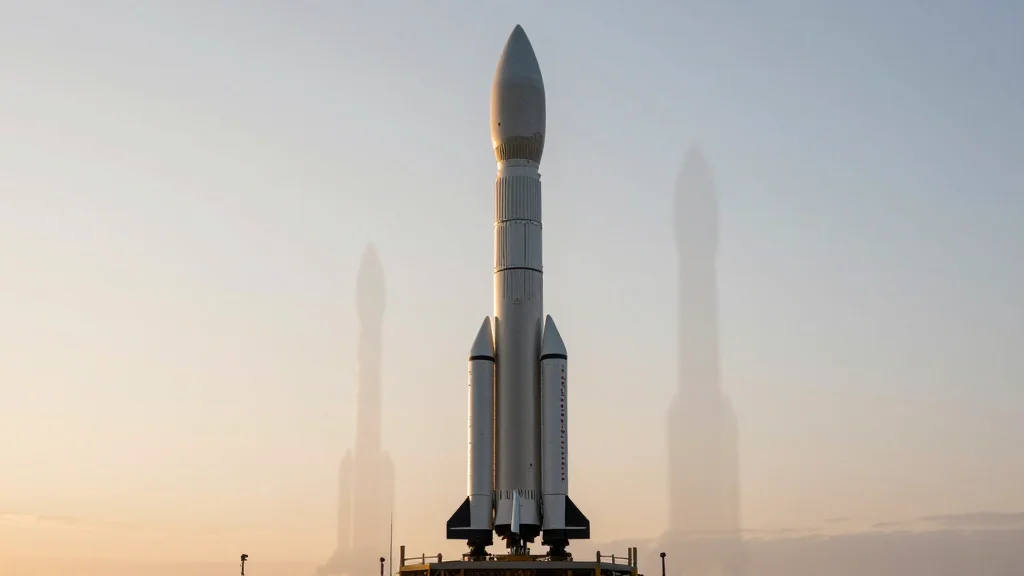
SpaceX Aims for 10,000 Annual Launches Within Five Years, FAA Says
Companies Mentioned
Why It Matters
Achieving such a launch cadence would reshape satellite broadband, AI infrastructure, and the commercial space market, while the FAA’s safety gatekeeping will determine how quickly the industry can expand.
Key Takeaways
- •SpaceX launched 170 missions in 2025, deploying 2,500 satellites.
- •Goal: 10,000 launches per year within five years.
- •FAA requires higher reliability before approving such launch volume.
- •Regulatory constraints could become bottleneck without increased FAA funding.
- •Musk envisions 1 million‑satellite constellation to power AI data centers.
Pulse Analysis
SpaceX’s declaration that it could scale to 10,000 launches a year reflects a seismic shift in the commercial launch market. The company already performed 170 missions in 2025, placing roughly 2,500 satellites into orbit, and is laying the groundwork for a planned megaconstellation of one million satellites that would feed solar‑powered AI data centers. Such a launch cadence would dwarf the current global total, compressing years of orbital deployment into a single decade and reshaping the economics of satellite broadband, Earth‑observation, and low‑latency connectivity. The sheer logistics of processing, fueling, and recovering that many vehicles also demand advances in reusable rocket technology.
The Federal Aviation Administration, which licenses every U.S. commercial launch, has signaled that reliability must improve before it can endorse such a volume. FAA Administrator Bryan Bedford emphasized the need for consistent success rates to protect passenger air traffic and to avoid disruptive launch‑area closures. At present, the agency’s budget constraints limit its ability to scale oversight, raising the prospect that regulatory capacity could become the primary bottleneck. The agency is also exploring automated safety checks and real‑time air‑traffic coordination to mitigate the strain. Until the FAA can demonstrate robust safety analytics and secure additional funding, SpaceX’s stretch goal will remain under close scrutiny.
Beyond regulatory hurdles, a ten‑thousand‑launch schedule would accelerate the economics of satellite manufacturing and launch services, pressuring competitors to innovate or consolidate. The anticipated megaconstellation promises to power AI workloads with clean energy, a proposition that could attract enterprise cloud providers seeking low‑latency, globally distributed compute. Investors will watch how SpaceX balances rapid cadence with safety, as any high‑profile failure could reverberate across insurance markets and national security considerations. If successful, the model could lower entry barriers for smaller operators, spurring a new wave of niche satellite services. Ultimately, the FAA’s response will shape the tempo at which the broader space economy expands.
SpaceX aims for 10,000 annual launches within five years, FAA says
Comments
Want to join the conversation?
Loading comments...