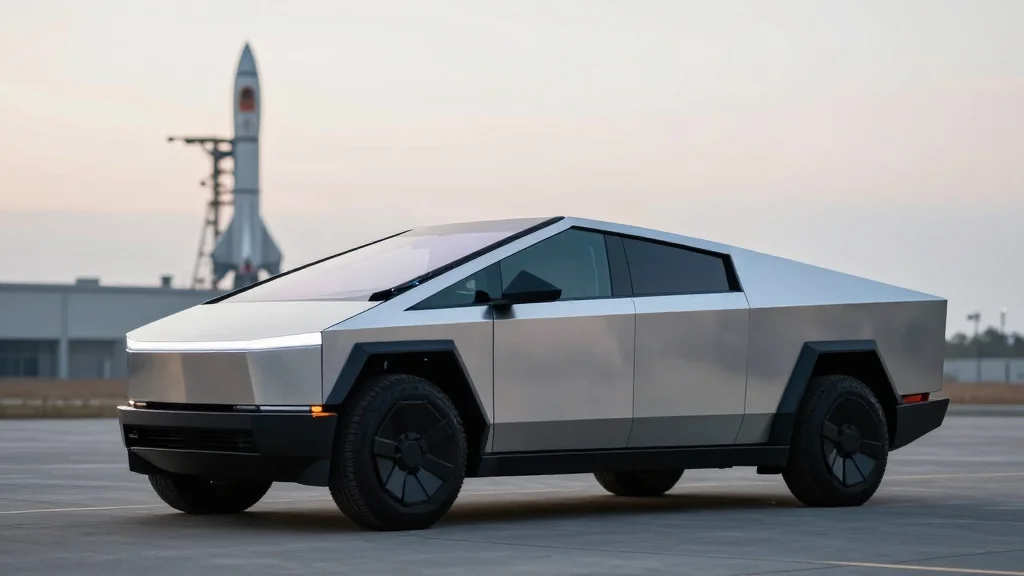
SpaceX Bought Nearly 20% Of Tesla Cybertrucks Sold In Q4
Companies Mentioned
Why It Matters
The internal buying masks weak market demand for EV pickups and boosts SpaceX’s operational fleet, while signaling Tesla’s reliance on cross‑company support to sustain revenue. Analysts see this as a red flag for the broader EV pickup segment and for Tesla’s growth outlook.
Key Takeaways
- •SpaceX bought 1,279 Cybertrucks in Q4 2025, ~19% of sales
- •Tesla sold 7,071 Cybertrucks in Q4, down from 39,000 in 2024
- •Musk’s firms spent at least $100 million on the trucks
- •Purchases aim to replace SpaceX’s gas fleet and support internal projects
- •Cybertruck sales slump highlights EV pickup market challenges
Pulse Analysis
The Tesla Cybertruck launched amid fanfare in 2019, but its sales trajectory has stalled. After a robust debut year of roughly 39,000 units in 2024, deliveries fell to just over 7,000 in the fourth quarter of 2025, reflecting broader consumer hesitancy toward high‑cost EV pickups and lingering range concerns. Industry analysts attribute the slowdown to the truck’s premium price point, limited charging infrastructure for heavy-duty use, and competition from traditional manufacturers that are accelerating their own electric truck programs.
Inter‑company purchases by SpaceX and other Musk‑affiliated firms have become a notable footnote in the sales data. S&P Global Mobility data, cited by Bloomberg, reveals SpaceX alone ordered 1,279 Cybertrucks, while the Boring Company, Neuralink and xAI added another 60. Valued at roughly $100 million, the fleet replaces SpaceX’s aging gasoline support vehicles, offering a unified electric platform for launch site logistics and test‑range operations. The transactions also provide Tesla with a modest revenue boost and a showcase of the truck’s durability in demanding environments, albeit at the cost of inflating internal demand figures.
The broader implication for the EV pickup market is sobering. Weak consumer uptake signals that price, payload capacity, and charging convenience remain critical hurdles. Tesla’s reliance on internal sales to prop up the Cybertruck underscores the urgency for a more affordable, mass‑market offering—a need Tesla appears to be addressing with rumors of a smaller, lower‑priced crossover. Investors will watch how these cross‑company dynamics affect Tesla’s top line and whether the Cybertruck can regain momentum without continued internal subsidies.
SpaceX Bought Nearly 20% Of Tesla Cybertrucks Sold In Q4
Comments
Want to join the conversation?
Loading comments...