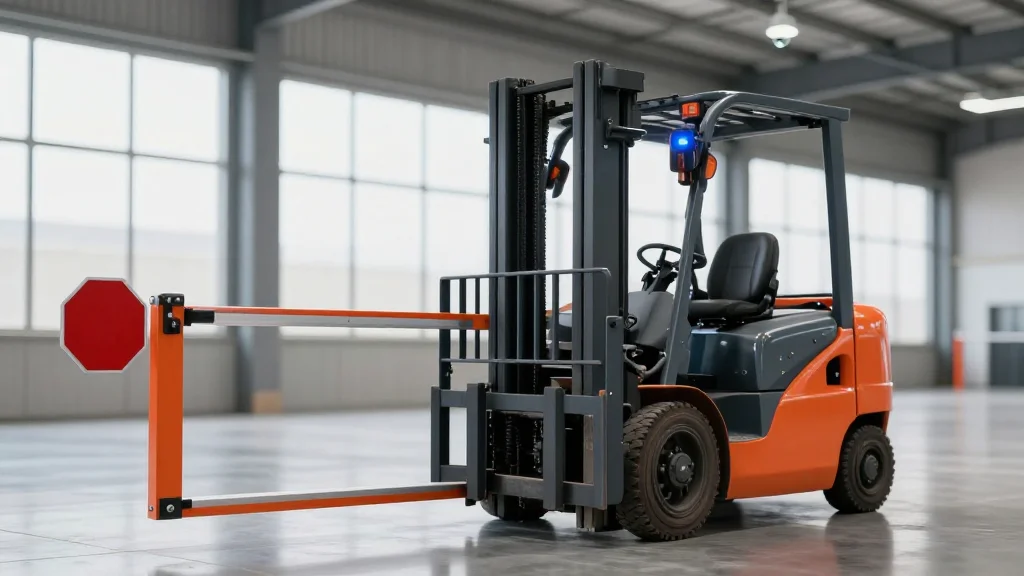
Special Report: Lower Your Pedestrian Safety Risk
Why It Matters
A comprehensive safety stack cuts injury risk while delivering measurable operational gains, making it a strategic priority for any high‑throughput warehouse.
Key Takeaways
- •OSHA reports 85 forklift deaths, 34,900 serious injuries annually.
- •Layered safety—training, passive barriers, active sensors—reduces pedestrian collisions.
- •Smart guardrails with sensors provide real‑time data for targeted training.
- •Proximity cameras can auto‑decelerate forklifts when pedestrians detected.
- •Visibility dashboards enable fleet managers to benchmark site safety performance.
Pulse Analysis
Warehouse operators face mounting pressure to move faster, yet the human‑machine interface remains a leading source of injury. OSHA’s grim statistics underscore that most incidents are preventable with better training and systematic safety design. By mapping high‑risk zones—blind corners, intersecting aisles, and high‑speed corridors—managers can prioritize interventions that separate pedestrians from forklifts, laying the groundwork for a culture where safety drives efficiency.
Passive measures such as guardrails, gates, and illuminated crosswalks create a physical barrier, but they alone cannot account for dynamic floor plans or distracted workers. Active solutions fill that gap: Speedshield’s AiVA system uses stereoscopic lenses to continuously scan for pedestrians, delivering visual, audible, and haptic alerts to operators. Similarly, Hyster‑Yale’s pedestrian‑detection camera can trigger an automatic deceleration if a person is identified, turning a near‑miss into a non‑event. These technologies act as a second set of eyes that never tire, dramatically lowering collision probability even in noisy, fast‑moving environments.
The true differentiator is data. Smart guardrails equipped with impact sensors feed incident metrics into centralized dashboards, revealing patterns such as peak‑time hotspots or recurring near‑misses. Fleet managers can compare sites, adjust traffic flows, and refine training modules based on concrete evidence rather than intuition. This visibility not only satisfies compliance requirements but also fuels continuous improvement, turning safety from a reactive checklist into a proactive, measurable driver of operational excellence.
Special Report: Lower your pedestrian safety risk
Comments
Want to join the conversation?
Loading comments...