Spy Coffee, Robots, and Akio AI: A Visit to Toyota’s Futuristic Woven City
Companies Mentioned
Why It Matters
Woven City provides Toyota with live data and user feedback to accelerate mobility‑tech development, potentially reshaping automotive and smart‑city products for global markets. Its experimental model could become a template for other manufacturers seeking rapid, real‑world validation.
Key Takeaways
- •100 residents and 200 workers currently inhabit Woven City.
- •UCC café feeds vision AI with real‑time customer behavior data.
- •Z‑kai pilots tablet that projects annotations onto students’ notebooks.
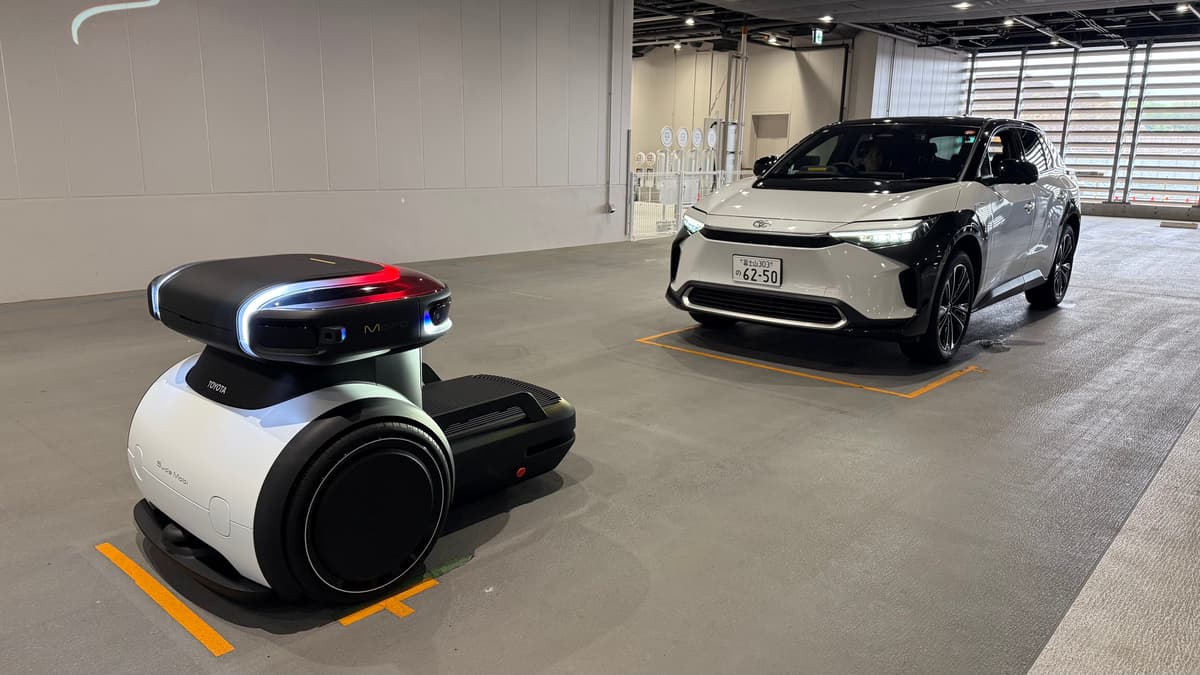
- •Guide Mobi robot can tow vehicles without lidar sensors.
- •Phase 1 completed; thousands expected as city expands.
Pulse Analysis
Toyota’s Woven City is more than a showcase; it is a living laboratory where the automaker tests the next generation of mobility solutions in a controlled yet authentic environment. By situating engineers, partner firms, and families together, Toyota gathers continuous, real‑world feedback that accelerates the transition from prototype to production. The city’s phased rollout—starting with 100 residents and a handful of pioneering companies—mirrors a sandbox approach, allowing rapid iteration while mitigating the risk of large‑scale failures.
The experiments unfolding inside Woven City illustrate how data‑driven insights can reshape everyday experiences. UCC’s coffee shop streams video to the Woven City AI Vision Engine, teaching the system to recognize attention patterns that could later inform driver‑monitoring features in RAV4s. Meanwhile, Z‑kai’s vertical tablet blends physical notebooks with digital overlays, a technology that may soon appear in remote‑learning platforms worldwide. Daikin’s pollen‑less space and Toyota’s Guide Mobi robot, which can tow vehicles without costly lidar, further demonstrate the breadth of applications—from indoor air quality to low‑cost autonomous services.
If the city reaches its target population of thousands, the volume and diversity of data will enable Toyota to refine its Arene software platform and scale innovations across its vehicle lineup and beyond. The success of these proof‑of‑concepts could accelerate the industry’s shift toward integrated mobility ecosystems, where cars, homes, and public spaces share intelligence. For investors and competitors, Woven City signals Toyota’s commitment to embedding AI, robotics, and human‑centric design into the core of future mobility, potentially redefining how automotive brands create value in the smart‑city era.
Spy Coffee, Robots, and Akio AI: A Visit to Toyota’s Futuristic Woven City
Comments
Want to join the conversation?
Loading comments...