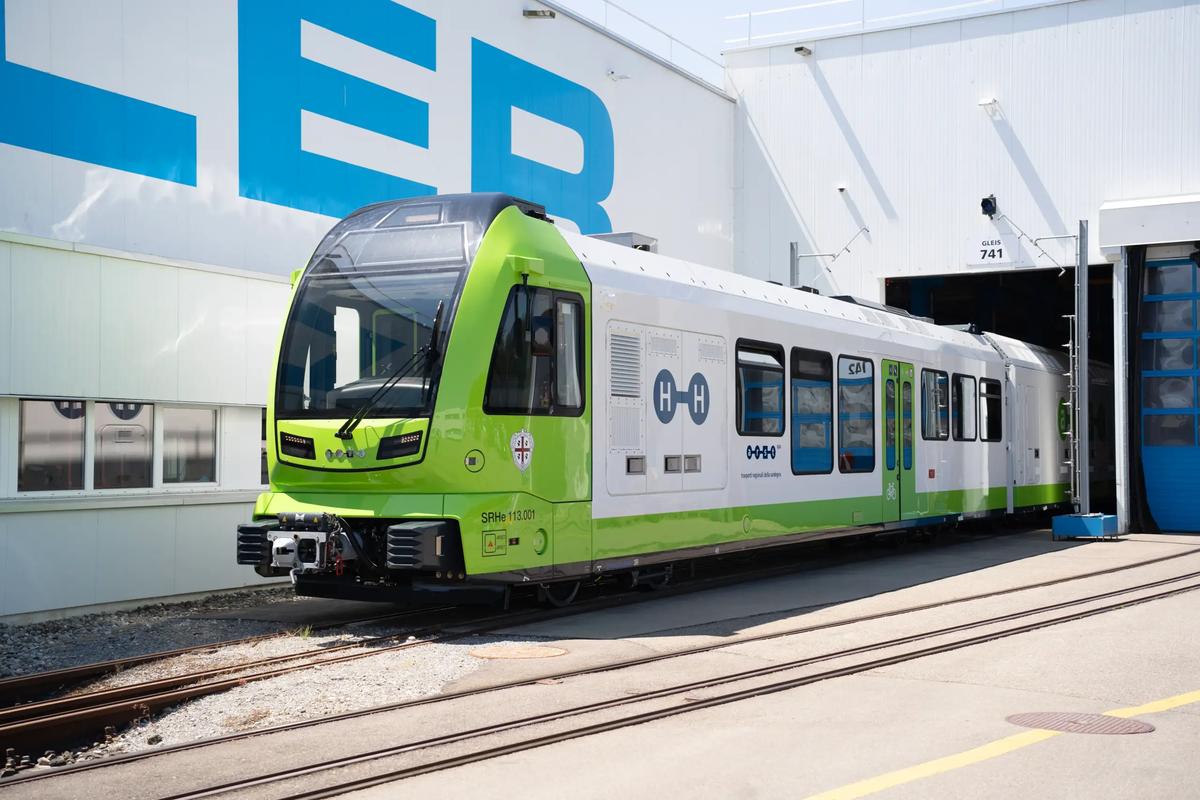
Stadler and ARST Unveil World’s First Narrow-Gauge Hydrogen Train
Why It Matters
It demonstrates that hydrogen can be deployed on constrained, narrow‑gauge infrastructure, opening a sustainable path for many legacy regional lines that lack electrification. The rollout positions Sardinia as a testbed for greener rail and could accelerate similar projects across Europe.
Key Takeaways
- •Ten hydrogen trains ordered for Sardinia, service start 2028.
- •Expected CO2 cut exceeds 2,100 tonnes per year versus diesel.
- •Trains run on non‑electrified narrow‑gauge lines without overhead wires.
- •Hydrogen produced from solar‑powered electricity creates a fully renewable chain.
- •Stadler is sole manufacturer of narrow‑gauge hydrogen trains worldwide.
Pulse Analysis
Hydrogen propulsion has long been touted as a bridge technology for railways where full electrification is cost‑prohibitive. The narrow‑gauge sector, common in mountainous or island regions, presents unique engineering hurdles such as low axle loads and tight curve radii. By integrating lightweight materials and a compact fuel‑cell module, Stadler has shown that hydrogen can meet these constraints, offering a viable alternative to diesel without the extensive capital outlay of catenary systems. This breakthrough expands the applicability of zero‑emission rail beyond standard‑gauge mainlines.
Sardinia’s deployment leverages locally produced solar hydrogen, creating a closed‑loop renewable energy chain that minimizes upstream emissions. The projected annual reduction of over 2,100 tonnes of CO₂ not only supports Italy’s climate targets but also delivers tangible benefits for island residents: quieter, smoother rides and improved accessibility through low‑floor designs. Moreover, the project stimulates regional economic activity, from hydrogen refueling infrastructure to skill development in advanced rail technologies, positioning the island as a showcase for sustainable mobility in peripheral markets.
Globally, the market for hydrogen trains is still nascent, with only a handful of pilots in Germany, the UK and the Netherlands. Stadler’s exclusive capability to produce narrow‑gauge hydrogen units gives it a strategic edge, especially as European funding mechanisms increasingly favour green rail solutions. Competitors will need to address similar technical challenges or risk missing out on contracts in regions where narrow‑gauge lines dominate. As more operators seek to replace diesel fleets, the Sardinian case could become a reference model, accelerating adoption and driving down costs through economies of scale.
Stadler and ARST Unveil World’s First Narrow-Gauge Hydrogen Train
Comments
Want to join the conversation?
Loading comments...