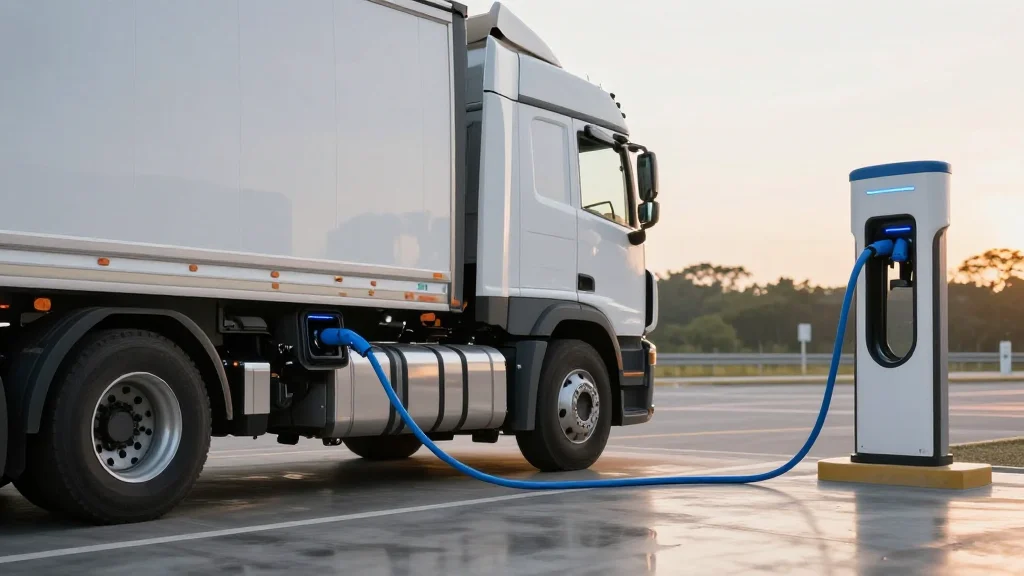
State Puts Out Call for Heavy EV Charging Hubs as Part of Fuel Security Plan
Why It Matters
Large‑scale EV charging and renewable‑fuel projects will reduce NSW’s dependence on imported diesel, lower energy costs for businesses and households, and accelerate the region’s transition to a low‑carbon economy.
Key Takeaways
- •NSW seeks projects ≥AUD 100 million (≈US$66 million) for fuel security
- •Focus on heavy‑vehicle EV charging hubs, excluding passenger cars
- •Renewable fuel projects like green ammonia and biomethane also eligible
- •Deadline for expressions of interest: 22 June 2026, 11:59 am
- •Initiative aims to cut diesel reliance, create jobs, and lower costs
Pulse Analysis
New South Wales is leveraging its Investment Delivery Authority to address a growing vulnerability: reliance on imported diesel and other fossil fuels. By earmarking more than AUD 100 million for projects that improve fuel security, the state is signaling confidence in domestic, low‑carbon solutions. The focus on heavy‑vehicle EV charging hubs reflects a broader shift in logistics, where fleets of trucks and delivery vans are beginning to adopt electric powertrains. This policy move aligns with national emissions targets and offers a clear pathway for private investors to tap into a market that has been under‑served in Australia.
The call for proposals arrives at a pivotal moment for the commercial EV sector. While passenger‑car charging networks have expanded rapidly, heavy‑duty charging infrastructure remains sparse, largely due to higher power requirements and longer dwell times. NSW’s initiative could catalyze the development of high‑capacity charging stations, standardized grid connections, and ancillary services such as battery‑as‑a‑service. For investors, the program reduces project risk through government backing and a defined market need, potentially unlocking financing for megawatt‑scale installations that would otherwise be deemed speculative.
Beyond electricity, the inclusion of renewable fuels—green ammonia, biomethane, renewable diesel—broadens the impact to sectors like aviation and maritime that cannot yet electrify fully. This holistic approach mirrors strategies in Europe and North America, where blended fuel portfolios are used to decarbonize hard‑to‑abate transport. If successful, NSW could become a showcase for integrated fuel‑security planning, encouraging other Australian states to adopt similar frameworks and accelerating the nation’s overall transition to sustainable energy.
State puts out call for heavy EV charging hubs as part of fuel security plan
Comments
Want to join the conversation?
Loading comments...