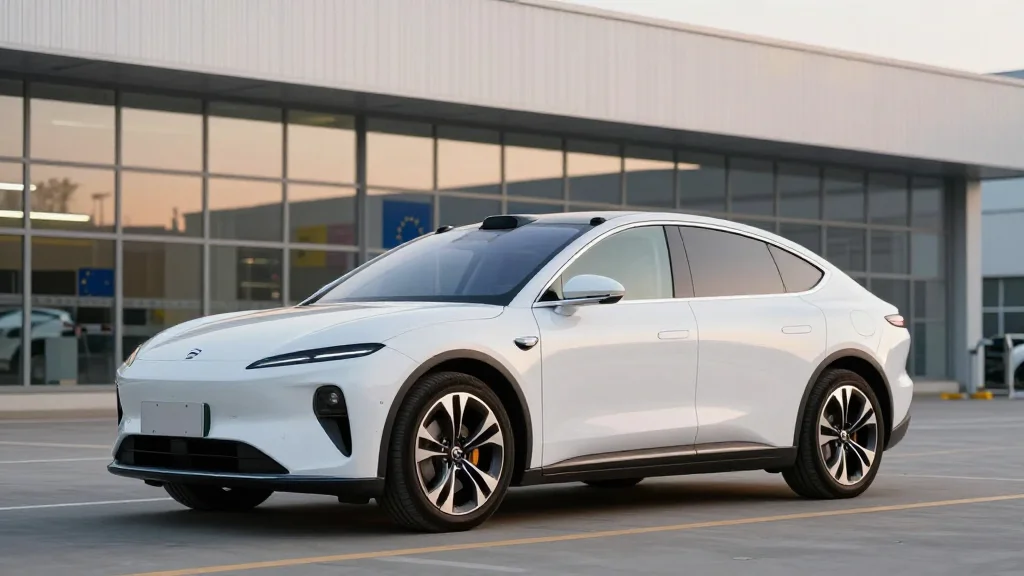
Stellantis Announces Second JV with Dongfeng as Jeep, Peugeot Go to China
Companies Mentioned
Why It Matters
The agreement gives Stellantis a foothold in the fast‑growing premium EV segment while shielding both partners from tariffs, accelerating their global electric‑vehicle rollout.
Key Takeaways
- •Stellantis holds 51% stake in new JV with Dongfeng’s Voyah brand
- •EV production moves to Rennes plant, currently building Citroën models
- •Joint venture avoids EU import duties via “Made‑in‑Europe” rule
- •Combined €1 billion ($1.16 bn) China JV includes Jeep and Peugeot models
- •Stellantis contributes about $142 million; Dongfeng funds two‑thirds
Pulse Analysis
Stellantis is deepening its cross‑border collaboration with Dongfeng as the automaker seeks to cement a presence in the premium electric‑vehicle market. The new joint venture, which gives Stellantis a controlling 51% share, will see a Voyah model—potentially the high‑performance Free SUV—assembled at the Rennes facility that currently produces Citroën cars. This move builds on a broader strategy that already includes a Leapmotor partnership in Spain and a €1 billion ($1.16 bn) China JV for Jeep and Peugeot production, underscoring Stellantis’ ambition to diversify its EV portfolio across both sides of the Atlantic.
By shifting production to Europe, the partnership sidesteps the EU’s “Made‑in‑Europe” tariff regime, delivering cost advantages that can be passed to consumers. Leveraging Stellantis’ extensive dealer and after‑sales network while tapping Dongfeng’s advanced EV ecosystem creates a synergistic supply chain that balances scale with local market insight. The arrangement also spreads financial risk: Stellantis contributes roughly $142 million, while Dongfeng and regional incentives cover the remaining two‑thirds, reflecting a pragmatic financing model that many multinational automakers are adopting.
Looking ahead, the Rennes JV positions Stellantis to compete more aggressively against rivals such as Volkswagen and Renault‑Nissan in the premium EV segment. The collaboration could accelerate the rollout of additional EV models, including upcoming Jeep and Peugeot electric off‑road vehicles slated for 2027. However, success will hinge on harmonizing engineering standards, managing regulatory compliance across jurisdictions, and delivering compelling pricing. If executed well, the venture not only expands Stellantis’ global footprint but also signals a broader industry shift toward localized, partnership‑driven EV manufacturing.
Stellantis announces second JV with Dongfeng as Jeep, Peugeot go to China
Comments
Want to join the conversation?
Loading comments...