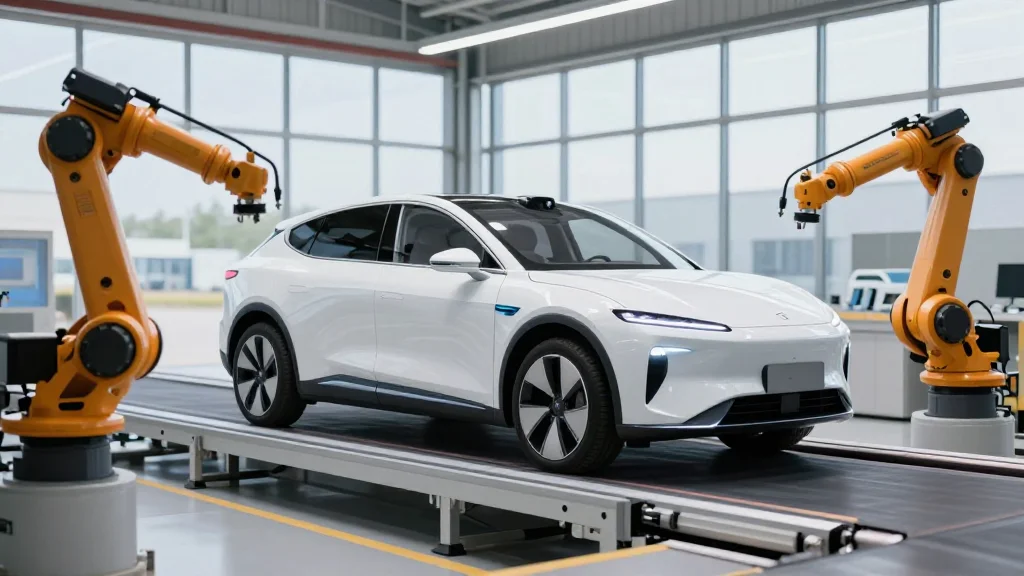
Stellantis Deepens Leapmotor Tie-Up with New Opel EV, Spanish Plant Transfer
Key Takeaways
- •New Opel C‑segment EV SUV to launch from Spain by 2028.
- •Leapmotor B10 EV production may start at Figueruelas plant in 2026.
- •Villaverde plant ownership likely transferred to Leapmotor International’s Spanish arm.
- •Joint purchasing will tap Chinese NEV ecosystem for cost‑effective components.
- •Leapmotor delivered 71,387 vehicles in April 2026, up 73.95% YoY.
Pulse Analysis
Stellantis’ decision to deepen its alliance with Leapmotor reflects a strategic pivot toward leveraging the Chinese new‑energy‑vehicle ecosystem for cost‑efficient production. Since taking a 21% stake in October 2023, the European automaker has co‑owned Leapmotor International, a joint venture that already sells and services Leapmotor models across more than 850 European locations. By integrating Leapmotor’s battery and power‑train technology with Stellantis’ extensive brand portfolio, the partnership aims to accelerate the rollout of affordable electric models without the need for entirely new platforms.
The operational details underscore a pragmatic approach: a new line at the historic Figueruelas plant will assemble an Opel C‑segment electric SUV by 2028, while the same facility could begin building Leapmotor’s B10 SUV as early as 2026. Simultaneously, the Villaverde plant in Madrid is slated for ownership transfer to Leapmotor International’s Spanish subsidiary, converting an idle asset into a Made‑in‑Europe production hub for both European and MEA markets. Joint purchasing through the JV will tap the scale of China’s NEV supply chain, reducing component costs and shortening time‑to‑market, while still drawing on European suppliers to bolster resilience.
For the broader industry, this collaboration signals a maturing Sino‑European partnership model in the EV space. As Europe tightens emissions standards and consumers demand lower‑priced electric cars, manufacturers are seeking ways to combine Chinese cost advantages with local branding and regulatory compliance. Stellantis’ move could pressure rivals to pursue similar joint‑venture structures or risk falling behind in volume and pricing. Meanwhile, Leapmotor gains a credible foothold in a market that has been difficult for non‑European EV entrants, positioning it to compete more directly with established players such as Volkswagen’s ID series and Tesla’s Model Y.
Stellantis deepens Leapmotor tie-up with new Opel EV, Spanish plant transfer
Comments
Want to join the conversation?