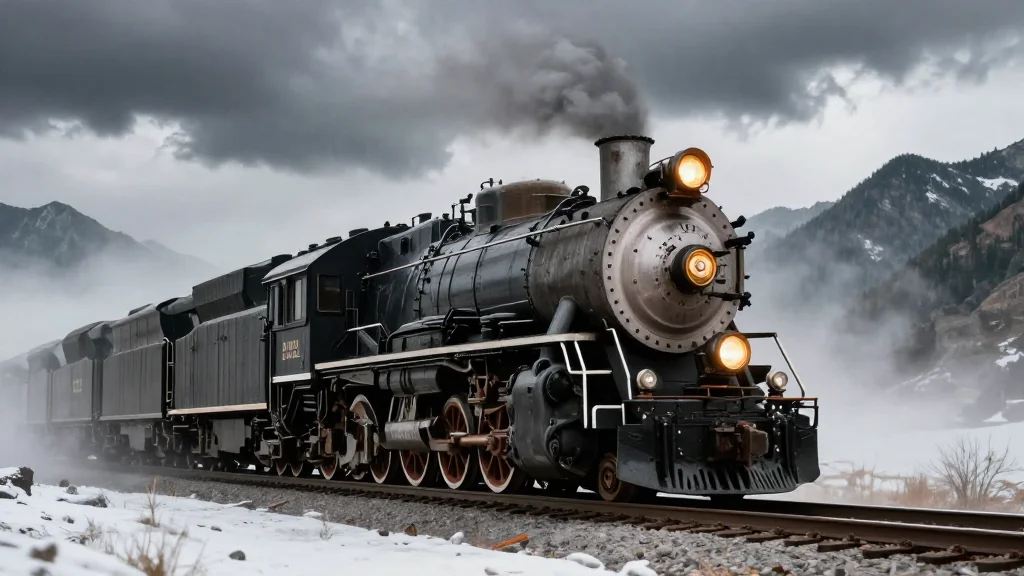
Storm Forces Union Pacific to Reroute Big Boy Tour, Cancels California Stops

Companies Mentioned
Why It Matters
The rerouting of Union Pacific’s Big Boy tour spotlights the growing operational risk that extreme weather poses to rail heritage events. These tours generate significant local economic activity, drawing thousands of visitors who spend on food, lodging, and souvenirs. When storms force cancellations, communities lose both cultural exposure and revenue, highlighting a need for more resilient scheduling and contingency funding. Moreover, the incident underscores broader concerns for freight and passenger rail networks, where climate‑induced disruptions can affect supply chains and commuter reliability. The Big Boy’s experience may prompt railroads to invest in advanced weather monitoring and flexible routing strategies. Beyond economics, the tour serves an educational purpose, connecting the public with the engineering feats of the 1940s. Interruptions diminish opportunities for younger generations to engage with tangible history, potentially weakening public support for rail preservation initiatives. As climate change intensifies, preserving and showcasing such artifacts will require proactive collaboration between rail companies, municipalities, and climate scientists.
Key Takeaways
- •Storm in Sacramento and Sierra Nevada forces Union Pacific to reroute Big Boy No. 4014 for three days.
- •Cancelled public displays in Colfax, CA; Truckee, CA; and Lovelock, NV.
- •Train will exit California via Feather River Canyon instead of Donner Pass.
- •Roseville Vice Mayor Karen Alvord praised the locomotive’s community impact.
- •Tour began March 29 in Cheyenne and will resume its eastern leg on May 25.
Pulse Analysis
Union Pacific’s decision to divert the Big Boy locomotive reflects a pragmatic shift in heritage rail operations, where the romance of historic routes must now contend with climate realities. Historically, railroads have leveraged iconic equipment to bolster brand image and community goodwill, but the increasing frequency of severe weather events forces a recalibration of risk tolerance. By opting for the Feather River Canyon—a lower‑elevation corridor less prone to heavy snowfall—UP demonstrates an emerging operational doctrine that prioritizes schedule integrity over scenic allure.
The financial ripple effect of canceled stops is modest in absolute terms but significant for small towns that rely on the surge of visitors. A single day of foot traffic can translate into thousands of dollars for local businesses, and the loss of that revenue underscores the need for municipal contingency plans. In the longer term, rail operators may consider insurance products or public‑private partnerships to offset weather‑related losses, similar to models used in outdoor festivals.
Strategically, the incident may accelerate the adoption of predictive analytics within rail heritage programming. Real‑time satellite data, coupled with machine‑learning forecasts, could enable operators to pre‑emptively adjust itineraries, communicate changes to the public, and minimize disappointment. As railroads balance historic preservation with operational safety, the Big Boy’s detour could become a case study in integrating climate resilience into the cultural mission of rail transport.
Storm Forces Union Pacific to Reroute Big Boy Tour, Cancels California Stops
Comments
Want to join the conversation?
Loading comments...