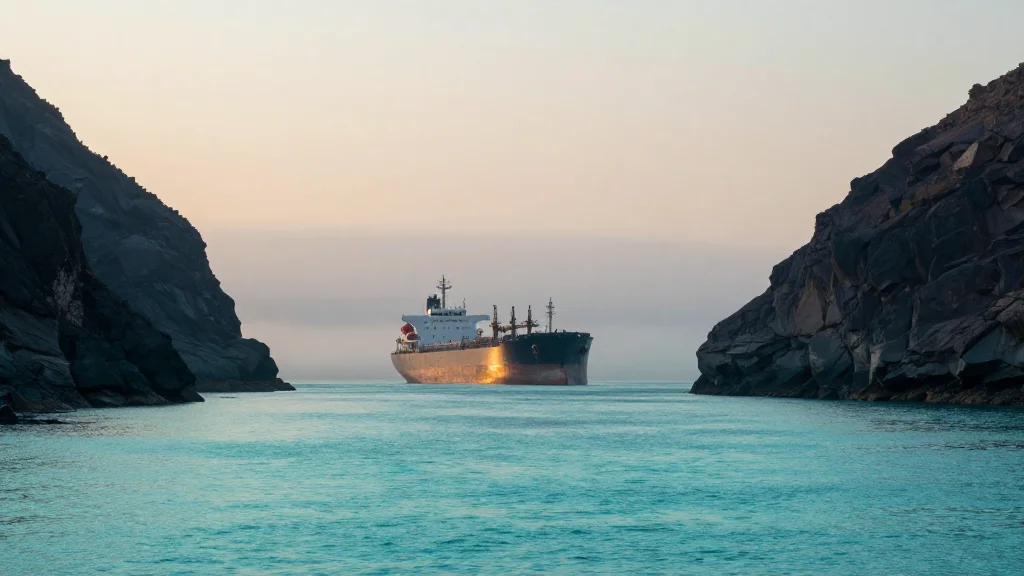
Strait of Hormuz Traffic Fades to a Crawl
Companies Mentioned

Bloomberg
Why It Matters
The strait handles roughly a fifth of global oil flow, so any disruption can spike energy prices and reshape trade routes, impacting both investors and consumers worldwide.
Key Takeaways
- •Only two ships entered Persian Gulf on May 27.
- •Chinese fuel tanker halted after passing Iran’s Larak Island.
- •109 commercial vessels rerouted since mid‑April due to blockade.
- •AIS signal loss hampers accurate tracking of Hormuz traffic.
- •U.S.–Iran talks remain fragile amid regional security tensions.
Pulse Analysis
The Strait of Hormuz remains the world’s most critical energy conduit, channeling about 20% of daily oil shipments. Recent Bloomberg AIS data shows a dramatic contraction in traffic on May 27, with merely two inbound vessels and a Chinese tanker stranded after clearing Larak Island. This lull follows a fleeting uptick when two supertankers briefly exited the waterway, underscoring the volatility of maritime flows in a region where political maneuvering can instantly alter supply dynamics.
Energy markets are acutely sensitive to such disruptions. A near‑shutdown of Hormuz can tighten global oil supplies, prompting price spikes that reverberate through commodity futures, refinery margins, and consumer gasoline costs. The current slowdown aligns with high‑stakes U.S.–Iran negotiations seeking a cease‑fire extension, yet the talks are fragile amid Israel’s escalating campaign in Lebanon and broader Middle‑East tensions. Investors watch the dialogue closely, as any setback could force rerouting of crude, elevate shipping premiums, and pressure alternative routes such as the Cape of Good Hope.
Accurate monitoring of Hormuz traffic is increasingly challenging. Iran‑linked vessels routinely deactivate AIS transponders to evade detection, a practice amplified by heightened U.S. naval presence that may compel ships to “go dark.” Moreover, reported interference with AIS signals adds uncertainty, meaning official transit counts could be revised upward once vessels reappear in safer waters. Analysts therefore combine satellite imagery, commercial tracking, and intelligence reports to gauge real‑time flow. As diplomatic efforts continue, the interplay between geopolitical risk, maritime security, and data transparency will dictate the strait’s operational status and its ripple effects on the global energy landscape.
Strait of Hormuz Traffic Fades to a Crawl
Comments
Want to join the conversation?
Loading comments...